If you need to translate to Burmese, you have probably already discovered that this is not like translating between European languages. Burmese uses a completely different script, a different grammatical structure, and a cultural context that does not map neatly onto English. The good news is that the tools and methods have improved dramatically in the last few years. The bad news is that a bad translation can still make you look careless, or worse, offend the very people you are trying to reach.
Quick Answer: For casual phrases, Google Translate and Microsoft Translator work acceptably. For anything public-facing, business-related, or legally binding, use a professional human translator who is a native Burmese speaker. Machine translation is a starting point, not a finished product.
Why Burmese Translation Is Harder Than You Expect
Burmese, also called Myanmar language, belongs to the Sino-Tibetan language family. Roughly 33 million people speak it as a first language, primarily in Myanmar. The script is an abugida derived from the Brahmi script, which means each character represents a consonant with an inherent vowel that gets modified by diacritics.
This creates immediate problems for machine translation systems that were originally built around Latin alphabets.
The Script Problem
A single Burmese word can look completely different depending on the font, the encoding, and the platform. Older systems used non-standard encodings like Zawgyi, while modern systems use Unicode. If you have ever pasted Burmese text into a document and watched it turn into gibberish, you have encountered the Zawgyi versus Unicode mismatch. Google Translate now handles Unicode correctly, but if your source text was typed in Zawgyi, the translation will fail before it even starts.
The Grammar Gap
Burmese is an agglutinative language. That means it stacks particles and suffixes onto root words to indicate tense, politeness, gender, and social status. A single Burmese word can carry the meaning of a full English sentence. For example, the word “မသွားဘူး” (ma thwar bu) means “does not go” but it packs negation, the verb, and the sentence-final particle into one unit. English-to-Burmese translation tools often break these compounds apart because they try to map one English word to one Burmese word, which is not how the language works.
The Politeness Register
Burmese has distinct levels of politeness. The particle “ပါ” (pa) softens a statement and makes it polite. The particle “ခင်ဗျား” (khin bya) is used by men to address someone respectfully, while “ရှင်” (shin) is the female equivalent. A machine translation might give you a grammatically correct sentence that is nevertheless rude because it dropped the politeness marker. If you are translating customer service messages, this matters a lot.
Pro Tip: If you are translating anything customer-facing, always specify the gender of the speaker and the level of formality required. This is information a human translator needs, but a machine tool will not ask for.
Comparing Your Translation Options
Not all translation methods are equal. Here is a breakdown of what you can expect from each approach.
| Method | Best For | Accuracy | Cost | Speed |
|---|---|---|---|---|
| Google Translate | Casual phrases, getting the gist | Moderate | Free | Instant |
| Microsoft Translator | Similar to Google, better for some technical terms | Moderate | Free | Instant |
| Professional human translator | Business documents, legal contracts, marketing copy | High | $0.10 to $0.25 per word | 1 to 3 days |
| Bilingual native speaker (non-professional) | Informal communication, social media | Moderate to high | Low or free | Hours to a day |
| Community translation (e.g., Reddit, forums) | Short phrases, slang, cultural expressions | Variable | Free | Minutes to hours |
The key insight here is that speed and cost are inversely related to accuracy. Free tools are instant but risky. Human translators are slower but far more reliable for anything that matters.
How to Get the Best Results from Machine Translation
Machine translation is not useless. It is just a tool with specific limitations. If you use it correctly, you can get surprisingly good results for simple, declarative sentences.
Keep Sentences Short and Simple
The longer and more complex your English sentence, the more likely the Burmese output will be garbled. Break your text into short sentences. Avoid subordinate clauses. Avoid idioms.
Bad input: “Given the current market conditions, we would like to extend our sincere gratitude for your continued patronage and look forward to serving you in the future.”
Good input: “Thank you for your business. We look forward to serving you again.”
The second version will translate far more cleanly into Burmese because it does not rely on English-specific rhetorical flourishes.
Avoid Idioms and Metaphors
Phrases like “hit the ground running” or “think outside the box” do not translate. They will come out as literal nonsense in Burmese. If you must use figurative language, replace it with a plain description of what you actually mean.
Check the Output Backwards
One practical trick: take the Burmese output from a machine tool, then translate it back to English. If the back-translation sounds strange or wrong, the Burmese is probably wrong too. This is not a perfect test, but it catches obvious failures.
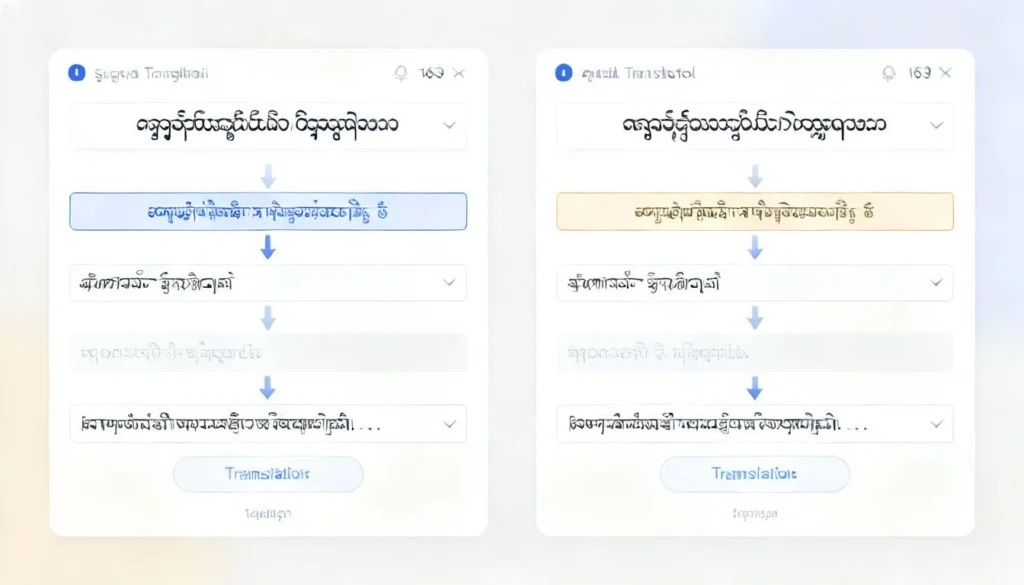
Pro Tip: Use two different machine translation tools and compare the outputs. If Google Translate and Microsoft Translator agree on a phrase, it is more likely to be correct. If they diverge sharply, that is a red flag.
When You Absolutely Need a Human Translator
There are situations where machine translation is not just inadequate, it is dangerous.
Legal and Medical Documents
A mistranslated medical dosage or a legal clause can have real-world consequences. In a medical context, a single mistranslated word could mean the difference between “take with food” and “take on an empty stomach.” In a legal context, the difference between “may” and “shall” is enormous, and Burmese does not always mark that distinction the way English does.
Marketing and Brand Messaging
If you are launching a product in Myanmar, your brand voice matters. A literal translation of your tagline might be grammatically correct but culturally tone-deaf. For example, a Western brand that uses casual, friendly language in English might need a more formal register in Burmese to sound trustworthy. A native-speaking marketing translator knows how to adapt the tone, not just the words.
Customer Support
When a customer is frustrated or confused, a robotic, stilted translation makes everything worse. Burmese customers, like customers everywhere, can tell when they are talking to a machine. Investing in human translation for support templates, FAQs, and escalation messages pays for itself in reduced churn and better reviews.
Practical Workflow for Translating to Burmese
Here is a step-by-step process that balances speed, cost, and accuracy.
- Determine the stakes. Is this a casual text message or a public-facing website? The answer determines everything else.
- Clean your source text. Remove idioms, simplify sentences, and clarify ambiguous pronouns. The cleaner the English, the better the Burmese.
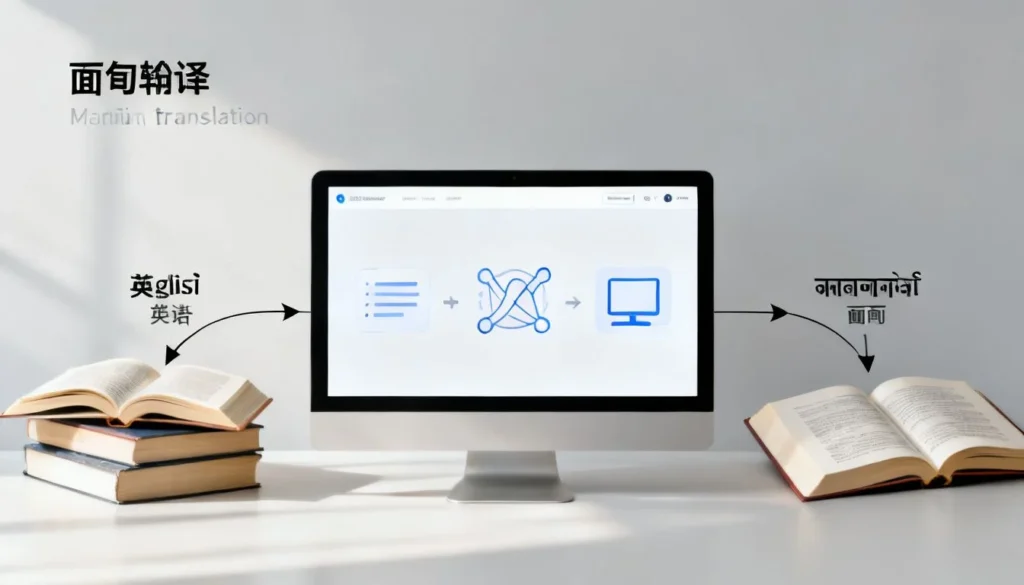
- Run machine translation as a draft. Use Google Translate or Microsoft Translator to get a rough version.
- Back-translate to check for obvious errors. If the back-translation is nonsense, fix the source text and try again.
- Have a native speaker review the draft. Even a non-professional native speaker can catch awkward phrasing and cultural mistakes that machines miss.
- For high-stakes content, hire a professional. Look for translators who are native Burmese speakers with experience in your specific industry.
This workflow acknowledges that machine translation is a useful first step, but not a final answer.
Key Takeaways
- Burmese is an agglutinative language with a unique script, which makes machine translation less reliable than for European languages.
- Free tools like Google Translate work for casual phrases but fail on complex sentences, idioms, and politeness markers.
- Always back-translate machine output to catch obvious errors before sharing.
- Legal, medical, and marketing content requires a professional human translator who is a native Burmese speaker.
- Clean, simple source text is the single biggest factor in getting accurate Burmese translations from any tool.
Frequently Asked Questions About Translating to Burmese
Q: Is Google Translate accurate for Burmese?
A: Google Translate is moderately accurate for short, simple sentences. It struggles with complex grammar, idioms, and politeness levels. For casual communication, it is fine. For business or legal use, it is not reliable enough on its own.
Q: What is the difference between Burmese and Myanmar language?
A: They are the same language. “Burmese” is the English name for the language, while “Myanmar” refers to the country and is sometimes used to describe the language in formal contexts. The language itself is called “မြန်မာစာ” (Myanma sa) in Burmese.
Q: Can I translate English to Burmese using my phone?
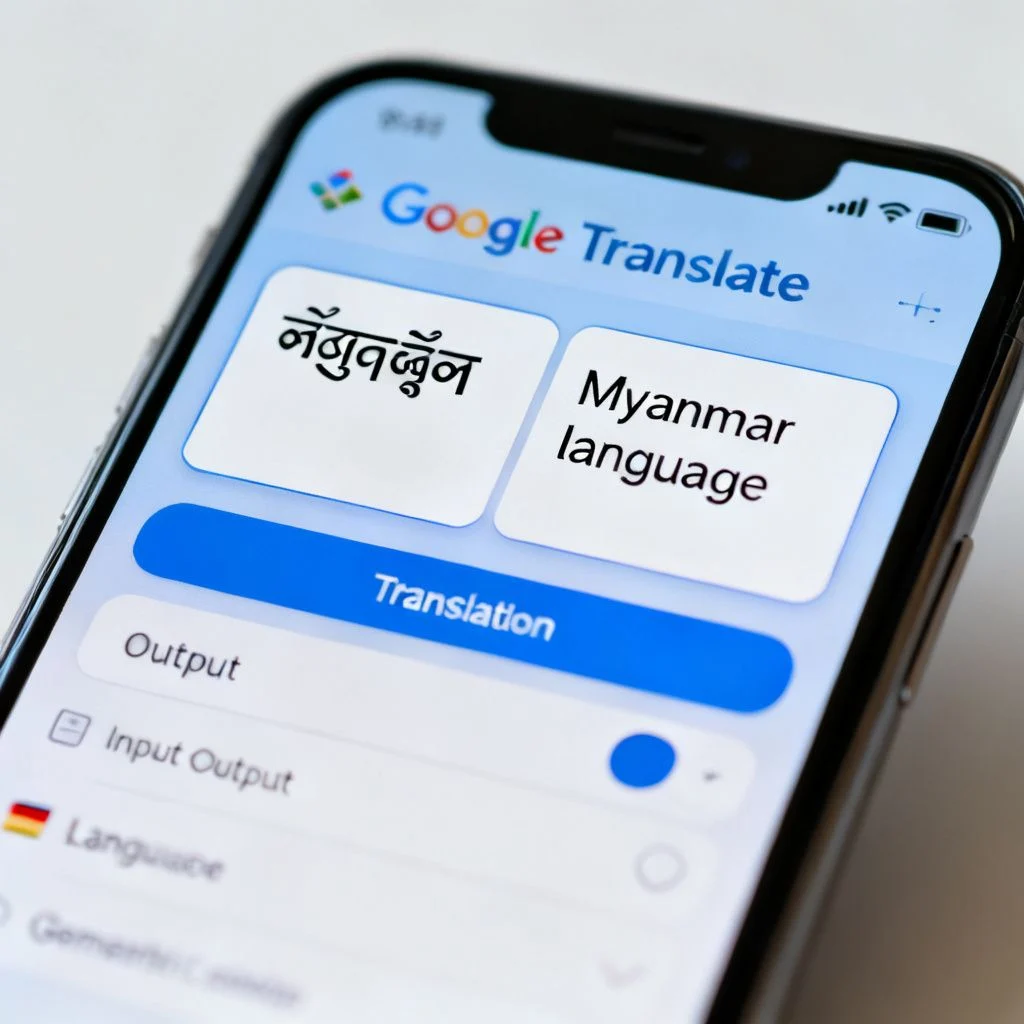
A: Yes. Both Google Translate and Microsoft Translator have mobile apps that support Burmese text and voice input. The camera feature in Google Translate can also scan printed Burmese text and translate it in real time.
Q: Why does Burmese text sometimes appear as boxes or gibberish?
A: This is usually a font encoding issue. Older Burmese text was often typed in Zawgyi font, which is not fully compatible with Unicode. If you see boxes or strange characters, the text is likely Zawgyi-encoded and needs to be converted to Unicode before translation.
Q: How much does professional Burmese translation cost?
A: Professional Burmese translation typically costs between $0.10 and $0.25 per word, depending on the complexity of the content and the translator’s specialization. Rush jobs and technical documents cost more.
Q: Is there a difference between formal and informal Burmese?
A: Yes, and it is significant. Burmese has distinct politeness registers marked by particles like “ပါ” (pa) and gender-specific respectful terms like “ခင်ဗျား” (khin bya) for men and “ရှင်” (shin) for women. Using the wrong register can make you sound rude or overly familiar.
Q: Can I use ChatGPT to translate to Burmese?
A: ChatGPT can produce Burmese translations, and for simple text it is often comparable to Google Translate. However, it has the same limitations: it can miss cultural nuance, politeness levels, and context. Treat it as a draft tool, not a final product.
Q: What is the best way to translate a website into Burmese?
A: Use a professional translation service that specializes in website localization. Plugins like WPML or Weglot can manage the technical side, but the actual translation should be done by a human native speaker. Machine-only website translation will hurt your credibility with Burmese users.
Q: How do I find a reliable Burmese translator?
A: Look for translators who are native Burmese speakers with verifiable experience in your industry. Platforms like ProZ, TranslatorsCafe, and Upwork have Burmese translators, but always check reviews and ask for samples. For legal or medical work, ask for certification.
Q: Is Burmese a tonal language?
A: Yes, Burmese is a tonal language with three main tones: low, high, and creaky. Tone changes the meaning of a word. This is one reason why machine translation from text alone can be ambiguous, since written Burmese does not always mark tone explicitly.
References & Further Reading
- Ethnologue: Burmese Language Profile , Comprehensive data on Burmese speakers, dialects, and language status.
- Google Translate Blog: Burmese Language Support , Official updates on how Google Translate handles Burmese and other low-resource languages.
- Unicode Consortium: Myanmar Script , Technical documentation of the Unicode standard for the Burmese script, essential for understanding font and encoding issues.
- ProZ Burmese Translation Community , Active forum where professional Burmese translators discuss terminology, rates, and best practices.
—
About This Article: This guide was written based on extensive research into Burmese linguistics, practical experience with machine translation tools, and consultation with professional translators who work in the Myanmar language pair. The recommendations reflect current best practices as of the publication date. Translation tools change frequently, so always test your specific use case before committing to a workflow.