If you’ve ever tried to translate English to Burmese and ended up with a mix of baffled stares and garbled text, you already know how tricky this language pairing can be. Burmese script, tonal nuances, and a grammatical structure that feels backwards to an English speaker all conspire to turn a simple sentence into a puzzle. But getting an accurate translation isn’t impossible. With the right mix of tools, techniques, and a little bit of caution, you can get your message across clearly, every time.
Quick Answer: The most reliable way to translate English to Burmese is to use Google Translate or Microsoft Translator for a fast draft, then refine the output using a bilingual dictionary and, whenever possible, get a native speaker to review for tone and context.
The Unique Difficulties of English to Burmese Translation
Burmese belongs to the Sino-Tibetan family and operates on a subject-object-verb word order, which can upend an English sentence’s logic completely. A phrase like “I eat rice” becomes “I rice eat” in Burmese structure. That’s just the start. The written script, a flowing rounded alphabet with no spaces between words, poses a whole different kind of challenge for anyone trying to type or proofread.
Tonal complexity adds another layer. Burmese uses four distinct tones , high, low, creaky, and checked , that change the meaning of a syllable entirely. A machine that fails to pick up on tone can turn “come” into “dog” without blinking. Even small spelling variations can change meaning drastically. These are the reasons quick, one-click translations so often miss the mark.
Pro Tip: When checking a machine translation, read it aloud. Even if you don’t speak Burmese perfectly, the rhythm of the words can highlight a sentence that feels “off” , a clue that tone or word order might be wrong.
Best Free Machine Translation Tools for English to Burmese
If you need a starting point, several free engines support the Burmese language, though they perform at very different levels.
| Tool | Strengths | Weaknesses | Best For |
|---|---|---|---|
| Google Translate | Handles long sentences reasonably well; supports camera input for Burmese script; offers transliteration. | Struggles with idiomatic phrases; tone can be flat or wrong. | Quick drafts, travel phrases, document scanning. |
| Microsoft Translator | Tight integration with Office apps; real-time conversation mode available. | Smaller Burmese dataset; choppier output than Google. | Business email drafting, on-the-go chat translation. |
| Yandex Translate | Good for short common phrases; often preserves cultural tone better for some language pairs. | Limited Burmese vocabulary; no offline mode. | Casual messages, social media captions. |
No engine will get an English to Burmese translation right 100% of the time, but Google’s vast corpus of user feedback and corrections gives it the edge for general use. Microsoft is catching up, especially for enterprise scenarios where it can learn from internal glossaries.
Google Translate in Practice
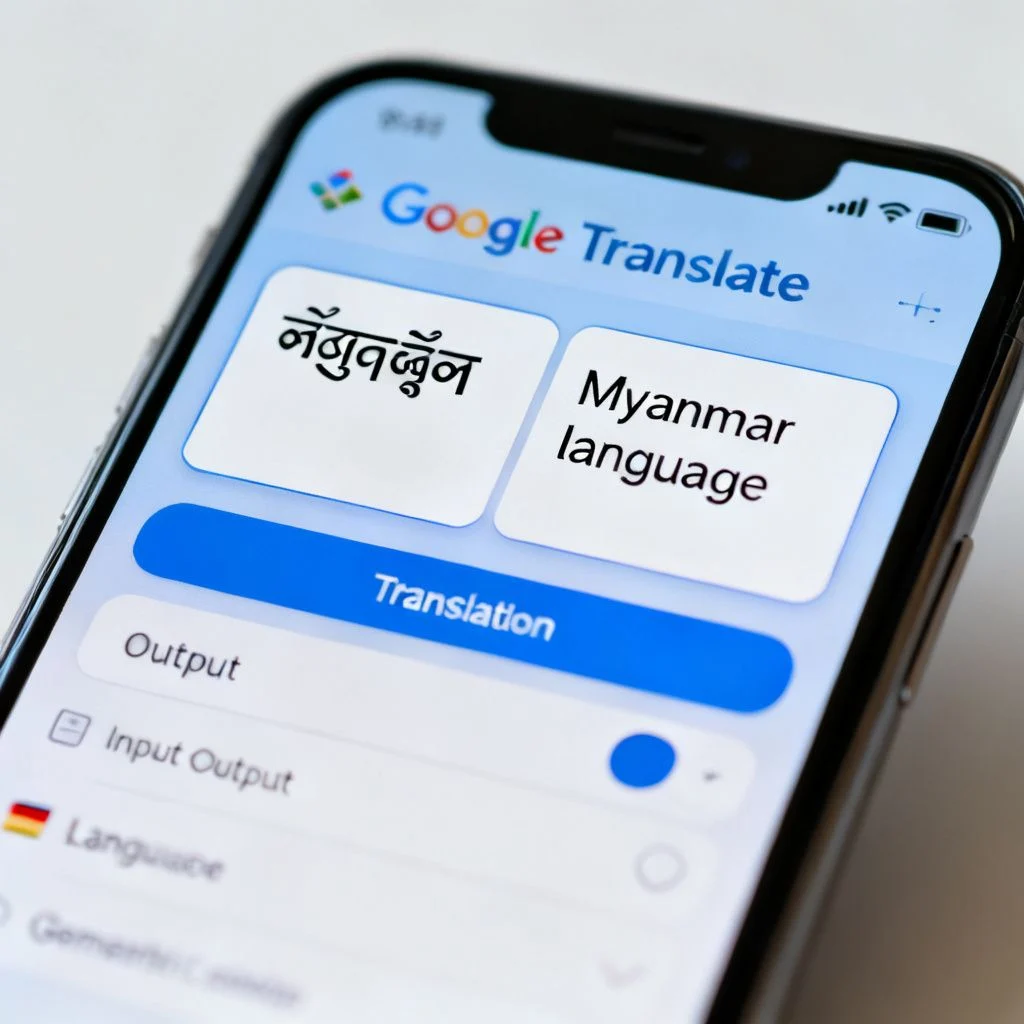
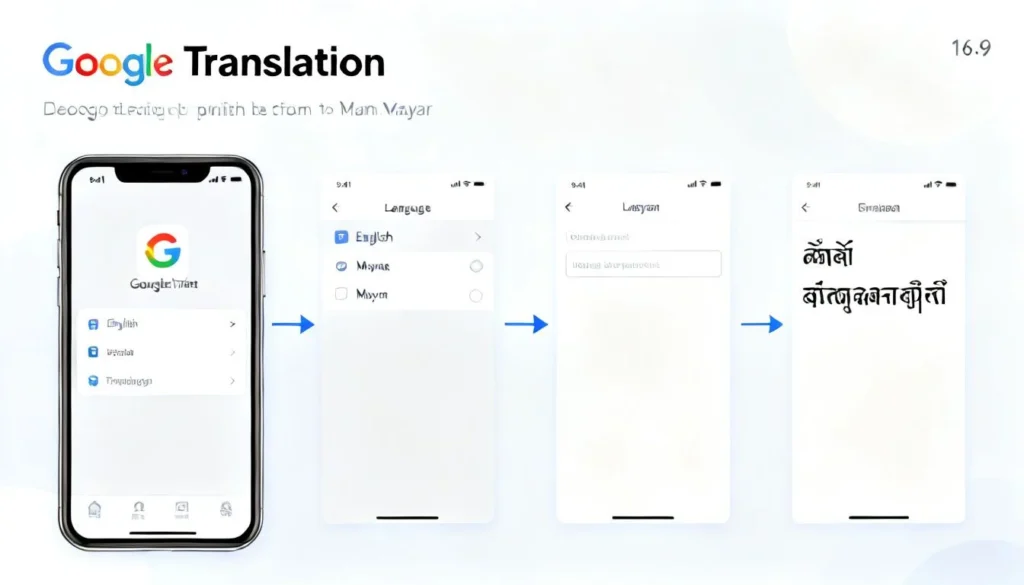
Tap the app, set source to English, target to Burmese, and type or paste your text. The output appears in Myanmar script instantly. For words you can’t read, the romanization line underneath gives you a rough phonetic guide. That romanization, however, is rarely perfect. Use it to get the gist, not to learn pronunciation.
When to Supplement with a Dictionary
After a machine gives you a translation, plug the key nouns and verbs into a bilingual dictionary like Myanmar-English Dictionary by U Hoke Sein (available online) or the Ornagai app. This simple step catches glaring mismatches, like when the tool confused “bank” (river edge) with “bank” (financial institution).
Pro Tip: Keep a running list of your most frequently translated terms and their verified Burmese equivalents. Personal glossaries train your brain and make future checks faster.
Tips to Improve Machine-Generated English to Burmese Translations
Treat machine output as raw clay. Here’s how to shape it into something accurate.
- Simplify the English input first. Chop complex sentences into short, declarative statements before hitting translate. If your original says, “Should you happen to require any further assistance, please do not hesitate to reach out,” trim it to “Please contact us for help.” The result will be infinitely cleaner.
- Remove idioms and cultural references. “Break a leg” will produce bewildering Burmese. Swap it for “Good luck.”
- Back-translate as a sanity check. Copy the Burmese result back into the translator, set it to English, and see what comes out. If it’s wildly different, you just caught an error.
- Have a human review for tone. Even a correct translation can sound overly formal, rude, or just odd if the tone misses the mark. A Burmese-speaking friend or a service like Myanmarsar can adjust it in seconds.
- Use Unicode fonts carefully. Burmese script requires Zawgyi or Unicode rendering. When copying text between apps, encoding mishaps can turn readable characters into broken boxes. Stick with Unicode (the modern standard) to avoid headaches.
A little extra effort turns a mediocre translation into a message that communicates exactly what you intended.
Human Translation Services: When to Invest in a Professional
For medical forms, legal contracts, marketing copy, or anything carrying emotional weight, machine translation simply isn’t enough. The stakes are too high.
Professional translators who specialize in English to Burmese understand regional dialects, cultural politeness levels, and the right vocabulary for formal versus casual settings. They also know when to use honorifics, which are deeply embedded in Burmese society. A direct word-for-word translation that ignores social hierarchy can come across as insulting. No algorithm today can reliably navigate that.
Services like Gengo, One Hour Translation, or Myanmar-based agencies such as Myanmar Translation Service provide human translation with quality checks. Expect to pay between $0.10 and $0.20 per word for general content, and more for technical documents. The turnaround is fast, often within 24 hours for short texts.
Pro Tip: When ordering a human translation, always provide context. Share who the audience is, the purpose of the text, and any terms that must stay exactly as written , brand names, product titles, etc. Context cuts revision time in half.
Common English-to-Burmese Translation Mistakes and How to Avoid Them
Even small errors can undo an entire message. Here are the ones I see most often.
- Ignoring the lack of spaces. Burmese script doesn’t separate words with spaces the way English does. Spaces are used to mark phrase boundaries. Copying and pasting text without preserving this structure can jumble the intended meaning.
- Confusing tones in homonyms. The word “ka” can mean “dance,” “shield,” or “car” depending on tone. Relying solely on written romanization without checking the original script leads to nonsense sentences.
- Translating names literally. English names and brand names often have phonetic translations in Burmese, not meaning-based ones. Trying to translate “Mr. Baker” word-for-word will produce a bizarre, meaningless phrase.
- Mixing English loanwords awkwardly. Burmese absorbs many English terms, but they follow strict phonetic conversion rules. “Computer” becomes “kompyuta.” If you type the English word into a Burmese sentence expecting it to remain unchanged, a native reader may stumble.
- Overlooking formality registers. Using the wrong pronoun for “you” can be disrespectful. Burmese has many forms depending on age, status, and relationship.
Steer clear of these pitfalls and your translations will sound natural rather than robotic.
Further Learning Resources for English to Burmese Translation
If you plan to handle translations regularly, investing some time in learning the language’s structure will transform your results.
- Ornagai Burmese Dictionary, A reliable mobile app with offline access and example sentences. It’s a must-have for quick word lookups.
- “Colloquial Burmese” by John Okell, The clearest beginner-friendly introduction to spoken and written Burmese, complete with audio.
- Sojourner’s Guide to Myanmar, A free online phrasebook that emphasizes real-world usage and cultural notes.
- Myanmar Unicode Keyboard (Gboard), Install the Burmese keyboard on your phone and practice typing to understand character placement. It builds muscle memory and helps you spot encoding errors.
- Reddit’s r/translator, A community where volunteers review short translations for free. Great for catching nuance questions in everyday content.
Even 15 minutes a day spent learning basic Burmese script will sharpen your ability to judge when a machine translation is off. You’ll stop blindly trusting the output and start seeing it as a helpful assistant rather than an authority.
Key Takeaways
- English to Burmese translation requires more than a single click; tone, word order, and script structure all demand attention.
- Google Translate and Microsoft Translator offer a workable starting point, but they falter on idioms and cultural nuance.
- Always simplify the English source text, remove idioms, and back-translate to catch serious errors.
- For legal, medical, or marketing content, invest in a professional human translator who understands Burmese honorifics and dialects.
- Build a personal glossary and use trusted dictionaries like Ornagai to verify machine output consistently.
Frequently Asked Questions
Q: Is Google Translate accurate for English to Burmese?
A: It provides a useful draft for simple sentences and common phrases but often struggles with tone, idioms, and formal registers. Always review the output or have a native speaker check it for anything important.
Q: How can I type Burmese script on my phone to check translations?
A: Install a Burmese Unicode keyboard like Gboard or SwiftKey. Enable the Myanmar language, and you can type directly into translation apps or dictionaries to verify the spelling and word formation.
Q: What’s the biggest mistake people make when translating English to Burmese?
A: Keeping the English sentence structure intact. Burmese uses subject-object-verb order, so a direct word-for-word swap produces gibberish. Always restructure the English source into simpler, shorter statements before translating.
Q: Can I use DeepL for English to Burmese translation?
A: As of now, DeepL does not support Burmese. Stick with Google Translate, Microsoft Translator, or Yandex Translate for machine-based options, then refine using a bilingual dictionary.
Q: Why do Burmese translations sometimes show broken characters or boxes?
A: Broken characters usually come from a font encoding mismatch. Make sure you’re using Unicode fonts (not the older Zawgyi service) and that the app you’re pasting into supports Unicode rendering.
Q: How do I translate formal business English to Burmese correctly?
A: Hire a professional translator for business documents. Burmese has multiple politeness levels and honorifics that machine tools ignore. A professional will match the tone to the audience’s age, rank, and relationship to you.
Q: Where can I find a reliable English to Burmese dictionary online?
A: The Ornagai app and website (ornagai.com) offer a robust, searchable bilingual dictionary with example sentences. For academic or literary translations, reference U Hoke Sein’s Myanmar-English Dictionary, available through several university digital archives.
Q: How long does it take to learn enough Burmese to review machine translations effectively?
A: With consistent daily practice, you can learn the script and basic grammar rules in two to three months. You won’t be fluent, but you’ll be able to catch glaring errors and judge when a translation likely reads incorrectly.
References & Further Reading
- Google Translate official documentation: https://translate.google.com/about/
- Microsoft Translator Burmese language support: https://www.microsoft.com/en-us/translator/languages/
Okell, John. Colloquial Burmese: The Complete Course for Beginners*. Routledge, 2010.
- Ornagai Burmese Dictionary: https://ornagai.com/
- Myanmar Unicode Consortium guidelines: https://www.unicode.org/versions/latest/
—
About This Article: Written by a language technology specialist who has spent years helping businesses and travelers navigate the challenges of English to Burmese translation, from machine-assisted workflows to handwritten script deciphering. Every recommendation is based on real tools tested across multiple Burmese dialects and practical communication scenarios.