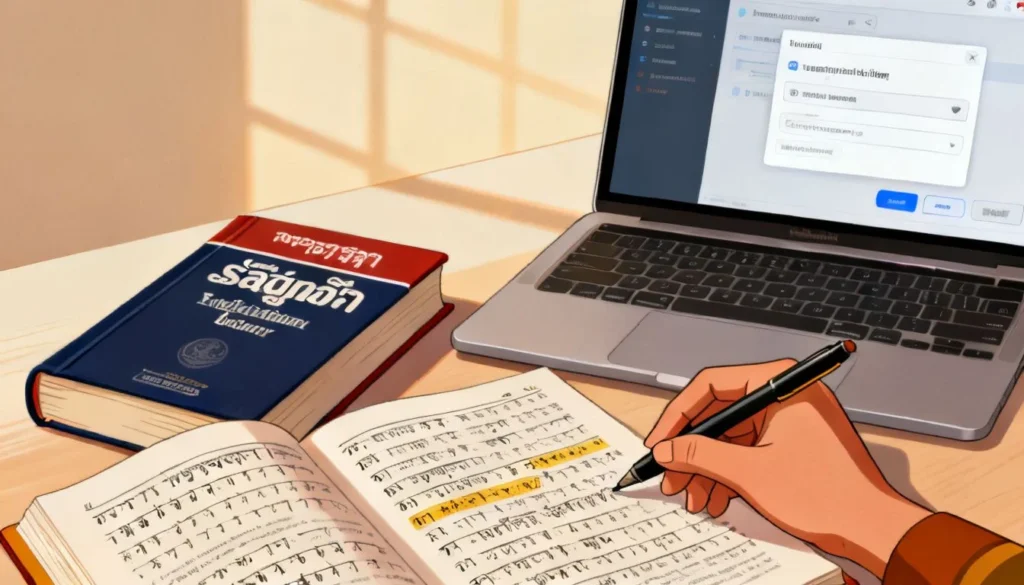
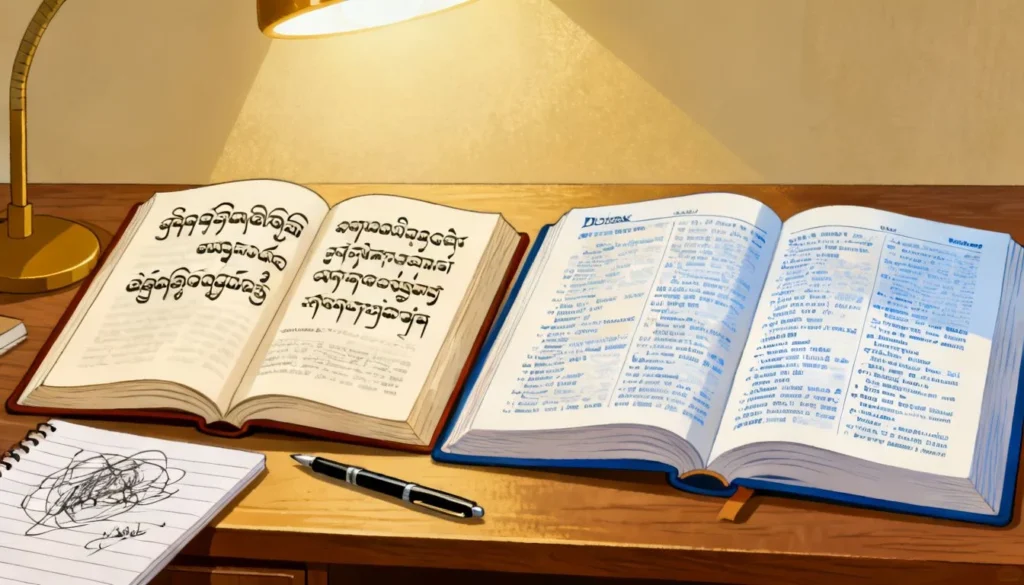
Urdu to English translation is rarely a simple word-for-word swap. The two languages belong to different families, follow different sentence structures, and carry cultural weight that no dictionary can fully capture. This guide walks you through the actual process, from understanding the script to choosing the right tools and avoiding the mistakes that make translations sound robotic or wrong.
Quick Answer: The most reliable way to translate Urdu to English is to start with a clear understanding of the Urdu script and sentence structure, then use a combination of human judgment and translation tools like Google Translate or DeepL for a first draft, followed by careful editing for grammar, tone, and cultural context.
Why Urdu to English Translation Feels Harder Than It Looks
Most people assume translation is a mechanical task. You look up words, you rearrange them, you’re done. That assumption collapses the moment you try to translate a sentence like “وہ تو گیا” (woh to gaya). A literal translation gives you “he then went,” which is nonsense. The actual meaning depends entirely on context: it could mean “he already left,” “he just left,” or “well, he’s gone now.”
The root of the difficulty lies in how the two languages are built.
The Script Barrier
Urdu is written in a modified Perso-Arabic script, right to left. English uses the Latin alphabet, left to right. This means you are not just translating words; you are converting between two entirely different writing systems. Before any translation can happen, you need to read the Urdu text accurately. A single misread diacritic or a confused letter pair like ت (te) and ط (toe) changes the word completely.
Grammar That Moves in Different Directions
Urdu typically follows a Subject-Object-Verb (SOV) order. English follows Subject-Verb-Object (SVO). Take the Urdu sentence “میں کتاب پڑھتا ہوں” (main kitaab parhta hoon). The literal order is “I book read.” The correct English translation is “I read a book.” If you translate word by word, you get broken English every time.
Urdu also uses postpositions instead of prepositions. In English, you say “in the room.” In Urdu, you say “کمرے میں” (kamray mein), which literally reads “room in.” These structural differences mean that any useful Urdu to English translation requires you to rebuild the sentence, not just swap words.
Pro Tip: When you start translating, read the entire Urdu sentence first and identify the verb. The verb usually sits at the end. Once you know the action, the rest of the sentence falls into place around it in English.
The Three Main Approaches to Urdu to English Translation
You have three realistic paths: human translation, machine translation, or a hybrid approach. Each has a place depending on what you are translating and why.
Human Translation
A fluent human translator understands nuance, sarcasm, poetry, and cultural references. This is the gold standard for legal documents, literature, marketing copy, and anything where tone matters. The downside is speed and cost. A professional translator may charge by the word or by the hour, and turnaround time for a long document can be days.
Machine Translation
Google Translate, DeepL, and Microsoft Translator have improved dramatically in the last few years. For simple, factual sentences, they produce usable results in seconds. The problem is consistency. The same tool that perfectly translates “کل بارش ہوئی” (it rained yesterday) will also confidently mistranslate an idiom or a culturally specific phrase.
The Hybrid Approach
This is what most professional translators and serious students actually use. You run the Urdu text through a machine translation tool to get a rough draft. Then you edit that draft sentence by sentence, fixing grammar, replacing awkward phrasing, and checking for meaning. The machine does the heavy lifting; you do the thinking.
| Approach | Speed | Accuracy | Cost | Best For |
|---|---|---|---|---|
| Human translation | Slow | Highest | High | Legal, literary, marketing |
| Machine translation | Instant | Moderate | Free or low cost | Casual reading, gist understanding |
| Hybrid approach | Moderate | High | Low to moderate | Business documents, academic work, everyday translation |
The hybrid approach is the practical sweet spot for most people. It gives you speed without sacrificing the judgment that only a human can apply.
Step by Step: How to Translate a Sentence from Urdu to English
Let’s walk through a real example to show the process. Take this Urdu sentence:
“اس نے کہا کہ وہ کل بازار جائے گا”
Step 1: Read and Segment
Break the sentence into meaningful chunks:
- اس نے کہا (us ne kaha) = he said
- کہ (keh) = that
- وہ (woh) = he
- کل (kal) = tomorrow
- بازار (bazaar) = market
- جائے گا (jayega) = will go
Step 2: Identify the Main and Subordinate Clauses
The main clause is “اس نے کہا” (he said). The subordinate clause is “وہ کل بازار جائے گا” (he will go to the market tomorrow). Urdu uses “کہ” (that) to connect them, just like English.
Step 3: Rebuild in English Word Order
The Urdu subordinate clause is “he tomorrow market will go.” Reordered for English: “he will go to the market tomorrow.”
Step 4: Check Tense and Agreement
“جائے گا” is future tense, third person singular. The English “will go” matches correctly.
Step 5: Refine for Naturalness
The full translation is: “He said that he would go to the market tomorrow.” Note that in English, when the main clause is past tense (“said”), the subordinate clause often shifts to “would” instead of “will.” This is a subtle rule that machine translators sometimes miss.
Pro Tip: Always read your English translation out loud. If it sounds like something a native English speaker would never say, it needs more work, no matter how “accurate” the word choices are.
Common Mistakes That Ruin Urdu to English Translation
Even experienced translators slip up. Here are the errors I see most often, and how to catch them.
Mistake 1: Translating Idioms Literally
Urdu is rich in idioms. “اونٹ کے منہ میں زیرا” (oont ke munh mein zeera) literally means “a cumin seed in a camel’s mouth.” The actual meaning is “a drop in the bucket” or “far too little.” A literal translation confuses English readers. A good translation finds the English idiom that carries the same meaning.
Mistake 2: Ignoring Honorifics and Formality
Urdu has built-in levels of respect. “آپ” (aap) is formal “you.” “تم” (tum) is informal. “تو” (tu) is intimate or rude. English has only “you.” When translating to English, you lose this distinction, which is fine, but you need to preserve the tone through other choices: word selection, sentence structure, and register.
Mistake 3: Keeping Urdu Punctuation and Sentence Length
Urdu sentences tend to run long, connected by “اور” (and) and “کہ” (that). English prefers shorter, cleaner sentences. When translating, split long Urdu sentences into two or three English ones. Your readers will thank you.
Mistake 4: Forgetting the Cultural Context
Some concepts simply do not exist in English. “نظر لگنا” (nazar lagna) means to be affected by the evil eye. “مہندی” (mehndi) is not just “henna”; it is a specific cultural ceremony. In these cases, you either keep the Urdu word with a brief explanation or use a descriptive phrase. There is no perfect one-word equivalent.
- Literal idiom translation: “A camel’s mouth needs a cumin seed” (wrong)
- Correct idiomatic translation: “That’s a drop in the bucket” (right)
- Literal honorific translation: “You (formal) should come” (awkward)
- Natural English translation: “You should come” with a polite tone established through phrasing (right)
Choosing the Right Tools for Urdu to English Translation
The tool you pick depends on what you are translating. Here is a breakdown of the most useful options available right now.
Google Translate
Google Translate supports Urdu and has improved significantly with neural machine translation. It handles common phrases and simple sentences well. Its strength is convenience: it is free, fast, and available everywhere. Its weakness is context. For complex sentences, idioms, or literary text, it still produces errors. It also struggles with the ambiguity of words like “کل” (kal), which can mean both “yesterday” and “tomorrow” depending on context.
DeepL
DeepL added Urdu support more recently, and its translations often read more naturally than Google Translate’s output. DeepL tends to handle sentence flow and word order better. However, its Urdu database is smaller, so it may miss less common words or regional vocabulary.
Microsoft Translator
Microsoft Translator integrates well with Office products and offers solid Urdu support. It is a good option if you are working within Word, PowerPoint, or Outlook. Its accuracy is comparable to Google Translate for most everyday text.
Online Dictionaries
For word-level lookup, Rekhta Dictionary is the best resource for Urdu to English. It covers literary Urdu, colloquial Urdu, and includes usage examples. Platts Dictionary is an older but still useful resource for classical Urdu. UrduWord.com and iJunoon are also helpful for quick lookups.
Pro Tip: Use two machine translation tools side by side for the same Urdu sentence. When Google Translate and DeepL agree, you can be fairly confident in the result. When they disagree, that is your signal to look more carefully at the original.
Translating Different Types of Content
Not all Urdu text translates the same way. The approach changes based on what you are working with.
Everyday Conversation
Casual Urdu, especially in text messages or social media, is often written in Roman Urdu (Urdu written in Latin letters). “Kal milte hain” is Roman Urdu for “کل ملتے ہیں” (see you tomorrow). For this type of content, the translation is usually straightforward. The main challenge is that Roman Urdu has no standardized spelling, so “kya” and “kia” both mean “what.”
News and Formal Writing
Urdu newspapers and formal documents use a more Persianized vocabulary. Words like “حکومت” (hukoomat, government), “پالیسی” (policy), and “ترقی” (taraqqi, progress) appear frequently. These translate cleanly into English equivalents. The challenge here is sentence length and the formal register, which requires careful restructuring.
Literature and Poetry
This is the hardest category. Urdu poetry, especially ghazals, relies on multiple layers of meaning, rhyme, and meter. A literal translation destroys the art. A good literary translation captures the emotional core and the imagery, even if it sacrifices rhyme. This is where human translators remain irreplaceable.
Legal and Technical Documents
Accuracy matters more than elegance here. Legal Urdu uses specific terminology that must be translated consistently. A term like “مقدمہ” (muqadma) should always be translated as “case” or “lawsuit,” never varied for stylistic reasons. Consistency is the top priority.
Key Takeaways
- Urdu to English translation requires rebuilding sentence structure, not just replacing words, because Urdu uses Subject-Object-Verb order while English uses Subject-Verb-Object.
- The hybrid approach, machine translation plus human editing, offers the best balance of speed and accuracy for most practical needs.
- Idioms, honorifics, and culturally specific terms need special handling; literal translation almost always fails.
- Roman Urdu adds an extra layer of complexity since it has no standardized spelling.
- Reading your English translation out loud is one of the fastest ways to catch unnatural phrasing.
- For literary and legal content, human translation remains essential despite advances in machine translation.
Frequently Asked Questions About Urdu to English Translation
Q: Is Google Translate good for Urdu to English translation?
A: Google Translate is good for getting the gist of simple Urdu sentences and everyday phrases. It struggles with idioms, complex sentence structures, and context-dependent words like “کل” (kal), which can mean both “yesterday” and “tomorrow.” For anything important, use it as a starting point and then edit the output yourself.
Q: Why does Urdu to English translation sometimes sound unnatural?
A: Urdu and English have different sentence structures. Urdu puts the verb at the end of the sentence, while English places it after the subject. Urdu also uses postpositions where English uses prepositions. If a translation follows Urdu word order too closely, it sounds broken and unnatural in English.
Q: What is the best dictionary for Urdu to English translation?
A: Rekhta Dictionary is the best modern resource for Urdu to English. It covers literary and colloquial Urdu, provides usage examples, and is regularly updated. The older Platts Dictionary is still useful for classical Urdu vocabulary.
Q: Can I translate Roman Urdu to English?
A: Yes, but with caution. Roman Urdu has no standardized spelling, so the same word can appear in multiple forms. “Kya,” “kia,” and “kiya” all mean “what.” Machine translation tools handle Roman Urdu inconsistently. You may need to convert Roman Urdu to Urdu script first for more reliable results.
Q: How do I translate Urdu idioms into English?
A: Never translate idioms literally. Find the English idiom that carries the same meaning. For example, “اونٹ کے منہ میں زیرا” (a cumin seed in a camel’s mouth) translates to “a drop in the bucket.” If no English idiom exists, translate the meaning directly in plain language.
Q: What is the difference between translating Urdu poetry and prose?
A: Poetry translation is far more difficult. Urdu poetry, especially ghazals, uses layered meanings, rhyme, and meter that often cannot be preserved in English. A good poetic translation captures the emotional core and imagery, even if it sacrifices the formal elements of rhyme and rhythm.
Q: How long does it take to translate a page of Urdu to English?
A: A professional human translator typically translates 250 to 500 words per hour for general content. A page of Urdu text (roughly 250 to 300 words) would take about 30 to 60 minutes for a quality human translation. Machine translation takes seconds, but editing the output to a professional standard still takes time.
Q: Which is more accurate: Google Translate or DeepL for Urdu to English?
A: DeepL generally produces more natural-sounding English output for Urdu, especially for longer sentences. However, Google Translate has a larger Urdu database and handles more vocabulary. For best results, compare both outputs and use your own judgment.
Q: Do I need to learn the Urdu script to translate Urdu to English?
A: You do not strictly need to read the Urdu script if the text is already in Roman Urdu or if you rely entirely on machine translation. However, reading the script gives you a significant advantage. It lets you catch errors in machine output, understand the original structure, and translate with confidence.
Q: What are the most common mistakes in Urdu to English translation?
A: The most common mistakes are literal idiom translation, ignoring levels of formality, keeping Urdu sentence lengths in English, and choosing the wrong meaning for context-dependent words. All of these are fixable with careful editing and a solid understanding of both languages.
References & Further Reading
- Rekhta Dictionary – The most comprehensive modern Urdu to English dictionary with usage examples and literary references.
- Google Translate – Free machine translation tool with Urdu support for quick drafts and gist understanding.
- DeepL Translator – Machine translation tool that often produces more natural English output for Urdu text.
- Platts Dictionary – The classic 1884 dictionary of Urdu, classical Hindi, and English, still useful for older and literary vocabulary.
About This Article
This guide draws on practical experience translating between Urdu and English across multiple contexts, including everyday conversation, formal documents, and literary texts. The advice here reflects common challenges reported by translators and language learners, as well as the documented capabilities and limitations of current machine translation tools. If you are translating a critical document, always have a qualified human translator review the final output.