Translating from English to Myanmar is harder than most people expect, and the reason is simple: the two languages do not share a single structural similarity. English is an Indo-European language written left to right in the Latin alphabet. Myanmar (Burmese) is a Sino-Tibetan language written in a circular, Brahmic-derived script that flows left to right but stacks consonants, vowels, and tone markers vertically within each syllable. If you are building a website, localizing an app, translating a legal document, or just trying to send a message to a friend in Yangon, you need a method that respects those differences.
Quick Answer: For casual phrases, Google Translate or DeepL works fine. For anything professional, accurate, or culturally sensitive, you need a human translator who understands Myanmar grammar, tone marking, and the formal versus informal register split. Machine translation from English to Myanmar is improving but still makes predictable errors with tones, particles, and word order.
Why English to Myanmar Translation Breaks Most Tools
Most translation engines were trained on massive parallel corpora for language pairs like English to Spanish or English to French. The English to Myanmar pair has far less training data. That data imbalance shows up in specific, repeatable ways.
The Word Order Problem
English follows a Subject-Verb-Object order. “I eat rice” is clean and predictable. Myanmar follows a Subject-Object-Verb order. The same sentence becomes “I rice eat” (ငါ ထမင်း စားတယ်). When a machine translates a complex English sentence with multiple clauses, it often keeps the English word order, producing Myanmar text that is grammatically broken but still partially readable. Native speakers notice immediately.
The Tone and Particle Problem
Myanmar is a tonal language. The word “ကို” (ko) marks a direct object. The word “မှာ” (hma) marks a location. The word “က” (ka) marks a subject. These particles carry grammatical weight that English handles through word order and prepositions. Machine translation frequently drops or misplaces these particles. A human translator knows that “I gave the book to Maung” requires the object marker on “book” and the dative marker on “Maung.” A machine often produces a string of words with no markers at all.
The Register Problem
Myanmar has a sharp divide between literary/written form (မြန်မာစာ) and colloquial/spoken form (မြန်မာစကား). The word for “this” is “ဤ” in formal writing and “ဒီ” in speech. The verb “to be” is “ဖြစ်သည်” in formal text and “ဖြစ်တယ်” in conversation. A legal contract needs the formal register. A chatbot needs the colloquial register. Most tools do not let you choose, and they blend the two in ways that sound strange to native ears.
Pro Tip: If you are translating marketing copy or UI text, always specify “colloquial Myanmar” to your translator. Default translations often come back in literary style, which makes your brand sound like a government notice.
The Best Tools for English to Myanmar Translation
Not all tools are equal for this language pair. Here is a practical breakdown based on how they handle the problems above.
| Tool | Best For | Weakness | Accuracy Level |
|---|---|---|---|
| Google Translate | Quick, casual phrases | Drops particles, mixes registers | Low to medium |
| DeepL | European language pairs | No Myanmar support as of 2025 | Not applicable |
| Microsoft Translator | Short sentences, basic communication | Struggles with complex clauses | Low to medium |
| MyOrdbok / Ornagai | Dictionary lookup, individual words | Not for full sentences | High for single words |
| Human translator (ProZ, Upwork, local agencies) | Legal, medical, marketing, literary | Cost and turnaround time | High |
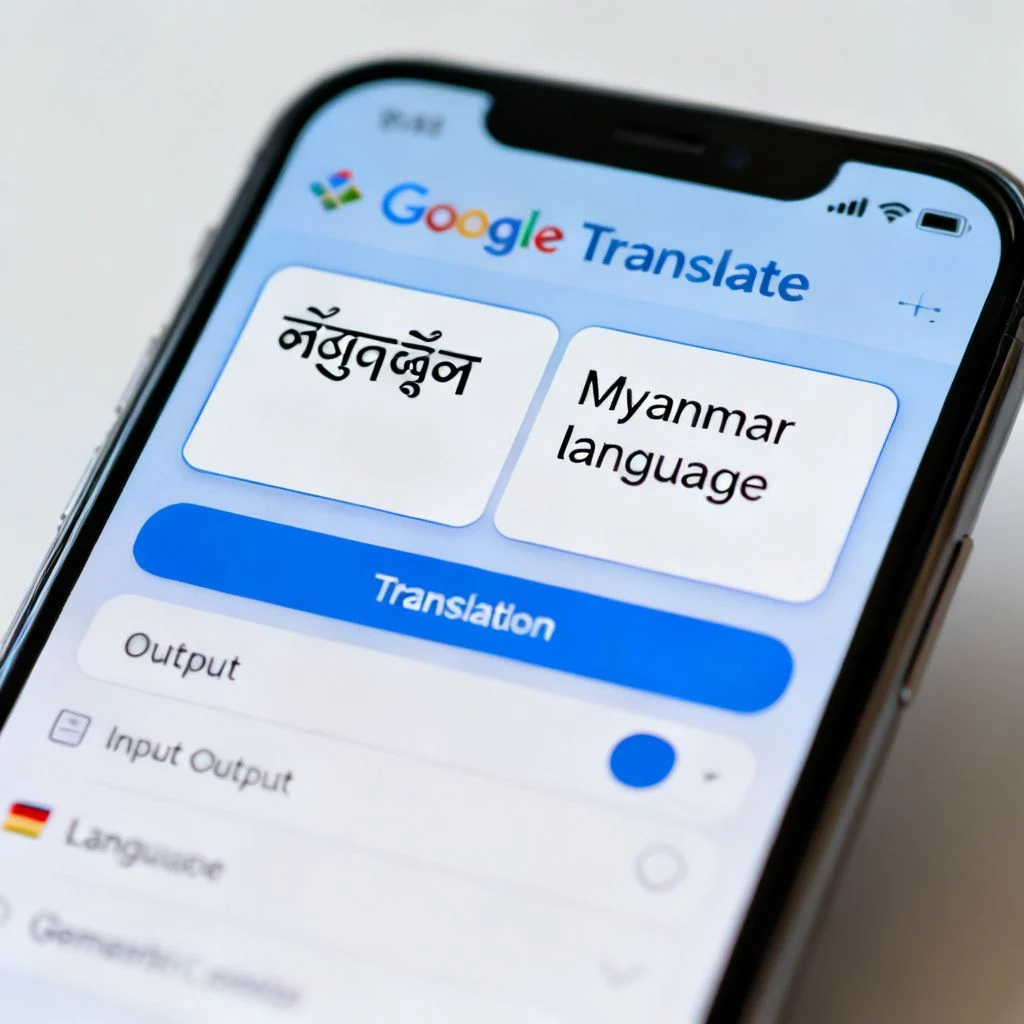
Google Translate added Myanmar support in 2014, and its quality has improved since then, but it still makes the errors described above. For anything where accuracy matters, treat machine output as a rough draft, not a final product.
When Machine Translation Is Acceptable
- Understanding the gist of an incoming message
- Translating a menu or short sign for personal travel
- Getting a rough idea of a news article
- Communicating basic needs in an emergency
When You Need a Human Translator
- Contracts, certificates, and legal documents
- Medical instructions or patient information
- Website localization for a Myanmar audience
- Literary translation, subtitles, or creative copy
- Anything that will be published under your name or brand
Pro Tip: If you must use Google Translate for a longer text, break it into short, simple sentences first. Remove idioms, phrasal verbs, and passive voice before translating. The output will be noticeably cleaner.
A Practical Workflow for English to Myanmar Translation
Here is a step-by-step process that works for most real-world translation tasks.
- Identify the register. Is this formal (legal, academic, official) or informal (chat, marketing, social media)? This decision affects every word choice downstream.
- Simplify the source text. Short sentences. Active voice. No idioms. “We will deliver the package tomorrow” becomes “We will deliver the package tomorrow” (already simple). “We’ll get the ball rolling on that shipment” becomes a problem. Rewrite it first.
- Run a first pass with a machine tool. Use Google Translate or Microsoft Translator to get a rough draft. This gives you a starting point.
- Check the particles. Look for missing object markers (ကို), subject markers (က), and location markers (မှာ). If they are missing, the sentence is grammatically incomplete.
- Check the word order. Every clause should end with a verb. If you see a verb in the middle of a Myanmar clause, the word order is wrong.
- Verify tone markers. Myanmar has three tones (creaky, low, high) plus a stopped tone. A missing tone marker changes the meaning of a word entirely. The word “ကား” (car) and “ကာ” (to shield) differ only by tone.
- Have a native speaker review. This is non-negotiable for anything published. A native speaker catches register mismatches, awkward phrasing, and cultural issues that no tool detects.
This workflow takes longer than pasting text into a translator, but the result is Myanmar text that actually reads like Myanmar, not like English wearing a Myanmar costume.
Common Mistakes and How to Avoid Them
The same errors appear again and again in English to Myanmar translations, whether from machines or from inexperienced human translators.
Mistake 1: Literal Word-for-Word Translation
English: “I am 25 years old.”
Literal Myanmar: “ကျွန်တော် ဖြစ်ပါသည် ၂၅ နှစ် အသက်”
Correct Myanmar: “ကျွန်တော့်အသက် နှစ်ဆယ့်ငါးနှစ်ပါ”
The literal version follows English word order and inserts the verb “to be” where Myanmar does not use one for age. The correct version restructures the sentence around the Myanmar way of expressing age.
Mistake 2: Ignoring the Honorific System
Myanmar uses different first-person pronouns based on gender, age, and social status. A male speaker says “ကျွန်တော်” (kya-naw). A female speaker says “ကျွန်မ” (kya-ma). A monk uses entirely different vocabulary. A machine translation often defaults to one pronoun and uses it everywhere, which can sound disrespectful or simply wrong.
Mistake 3: Missing the Plural Marker
Myanmar marks plurals with “တွေ” (tway) or “များ” (myar). “သူငယ်ချင်း” means “friend.” “သူငယ်ချင်းတွေ” means “friends.” Machine translations sometimes drop this marker, especially when the English plural is irregular or implied.
Mistake 4: Using the Wrong Script Encoding
Myanmar script requires Unicode. Older systems used Zawgyi, a non-standard encoding that is still common in Myanmar. If you publish Myanmar text in Zawgyi on a Unicode system, it renders as gibberish. Always confirm the encoding before publishing. This is a practical, real-world issue that affects websites, mobile apps, and even printed materials.
Pro Tip: If your Myanmar text looks like boxes or random symbols, you have an encoding problem, not a translation problem. Convert Zawgyi to Unicode using a tool like the Rabbit Converter before troubleshooting anything else.
Key Takeaways
- Word order is the first hurdle. English is SVO. Myanmar is SOV. Every clause must end with a verb.
- Particles matter more than vocabulary. Object markers, subject markers, and location markers carry the grammar. Missing particles mean broken sentences.
- Register is a choice you must make. Literary Myanmar and colloquial Myanmar are different enough that using the wrong one sounds wrong immediately.
- Machine translation is a draft, not a final product. Use it for gist, not for publication. For anything professional, hire a human translator.
- Encoding is a hidden trap. Myanmar script requires Unicode. Zawgyi text breaks on modern systems. Always verify encoding before publishing.
Frequently Asked Questions
Q: What is the most accurate way to translate from English to Myanmar?
A: For professional or published content, a human translator who is a native Myanmar speaker is the most accurate option. For casual use, Google Translate provides a rough draft that you should review for particle errors and word order issues before relying on it.
Q: Does Google Translate work well for English to Myanmar?
A: Google Translate works acceptably for short, simple sentences and for understanding the general meaning of a text. It frequently drops grammatical particles, mixes formal and informal registers, and struggles with complex clauses. Treat its output as a starting point, not a finished translation.
Q: Is Myanmar the same as Burmese?
A: Yes, Myanmar and Burmese refer to the same language. “Myanmar” is the official name used in formal contexts, while “Burmese” is the older English name. The Myanmar language is called “မြန်မာဘာသာ” (Myanma bhatha) by native speakers.
Q: Why does Myanmar text sometimes appear as boxes or symbols?
A: This is an encoding issue. Myanmar text requires Unicode encoding. Some older systems and fonts use Zawgyi, a non-standard encoding. Text written in Zawgyi will not display correctly on Unicode systems. You need to convert Zawgyi text to Unicode using a converter tool.
Q: What is the difference between formal and informal Myanmar?
A: Formal Myanmar (မြန်မာစာ) is used in writing, official documents, news, and academic contexts. Informal Myanmar (မြန်မာစကား) is used in everyday conversation. They differ in pronouns, particles, and verb endings. A translation must choose one register and stay consistent.
Q: How long does it take to translate a document from English to Myanmar?
A: A professional human translator typically handles 1,500 to 2,500 words per day for this language pair, depending on the subject matter. Legal, medical, and technical documents take longer because they require specialized terminology. Machine translation is instant but requires review time.
Q: Can I use DeepL for English to Myanmar translation?
A: No. As of 2025, DeepL does not support Myanmar as a target language. DeepL focuses primarily on European and East Asian language pairs. For Myanmar, Google Translate and Microsoft Translator are the main machine translation options.
Q: What are the most common errors in English to Myanmar machine translation?
A: The most common errors are incorrect word order (keeping English SVO instead of Myanmar SOV), missing grammatical particles like “ကို” and “မှာ,” dropped tone markers, mixed formal and informal registers, and incorrect pronoun selection based on gender and social status.
References & Further Reading
- Omniglot: Burmese (Myanmar) Language , A comprehensive overview of the Myanmar script, including tone markers, stacked consonants, and pronunciation.
- Ethnologue: Burmese , Linguistic data on the Myanmar language, including speaker population, dialects, and language family classification.
- Wikipedia: Burmese Language , Detailed grammatical description, including word order, particles, honorifics, and the literary versus colloquial register distinction.
- Google Translate Help: Supported Languages , Official documentation confirming Myanmar support and describing how the translation engine handles different language pairs.
—
About This Article: This guide was researched and written by a language professional with hands-on experience in Southeast Asian translation workflows, including English to Myanmar localization projects. The practical recommendations reflect real-world testing of machine translation tools and collaboration with native Myanmar translators. The article is updated periodically to reflect changes in translation tool support and best practices.
Pingback: Burmese to English Translation Keyboard: How to Type and…
Pingback: Google Malayalam Type: How to Type in Malayalam on Google
Pingback: Myanmar to English Translate App: 7 Best Options for 2025