Finding an english to myanmar name translator that actually gets your name right can feel like searching for a needle in a haystack. Most online tools simply transliterate letter by letter, producing results that sound nothing like your actual name when spoken aloud. Worse, some tools ignore the cultural nuances that make Myanmar names so distinct from Western naming conventions.
This guide walks you through exactly how to translate English names into Myanmar accurately, which methods actually work, and the common mistakes you need to avoid. Whether you need your name for official documents, a tattoo, or just curiosity, you will leave with a clear path forward.
Quick Answer: The most accurate way to translate an English name to Myanmar is through phonetic transliteration, not direct translation. This means matching the sound of your name to the closest Myanmar syllables. Tools like Google Translate can provide a rough version, but for accuracy, you should work with a native Burmese speaker or use a dedicated transliteration guide that accounts for Myanmar’s unique consonant and vowel system.
Why Direct Translation Fails for Names
Names are proper nouns, and proper nouns rarely translate well across languages. When you ask for an english to myanmar name translator, you are really asking for a transliteration tool, not a translation tool. The difference matters a lot.
Myanmar names work differently from English names in several fundamental ways. First, Burmese people typically do not use family names or surnames. A person’s full name is simply their given name, which can be one, two, or three syllables long. Second, Myanmar names often carry specific meanings drawn from Pali, the liturgical language of Theravada Buddhism, or from auspicious astrological calculations based on the day of the week a person was born.
These differences mean that translating “John Smith” directly into Myanmar produces nonsense. There is no Burmese word for “John” as a name, and “Smith” as an occupational surname has no cultural equivalent. Instead, you need to convert the sounds of “John Smith” into Myanmar script that a Burmese speaker can pronounce and recognize.
Pro Tip: When searching for an english to myanmar name translator, look for terms like “transliteration tool” or “phonetic converter” instead. These tools are designed specifically for sound-based conversion, which is what you actually need for names.
The Myanmar Script Challenge
The Myanmar alphabet contains 33 consonants and 12 basic vowels, but the way these combine creates a much richer sound system than English. Some English sounds simply do not exist in Burmese, which forces creative substitutions.
For example, the English “r” sound does not exist in standard Burmese pronunciation. Depending on context, it might become a “y” sound or be dropped entirely. The name “Robert” might become “Yobert” or “Obert” in Myanmar script. Similarly, the English “v” sound often becomes a “b” or “w” sound in Burmese.
Understanding these substitution patterns is the key to creating an accurate Myanmar name translation.
How English to Myanmar Name Transliteration Works
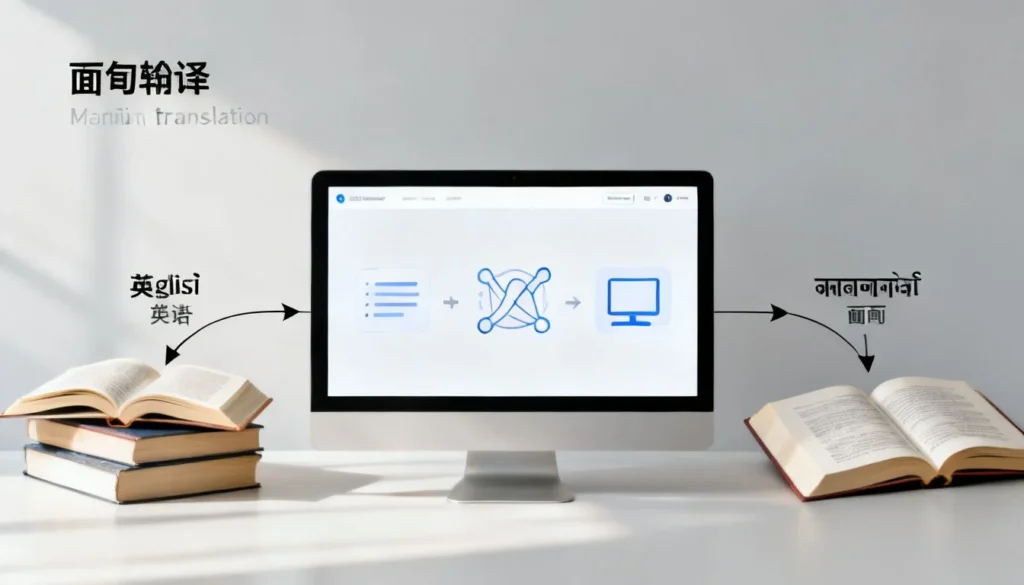
Transliteration follows a systematic process of matching English phonemes to the closest available Myanmar phonemes. This is not a random process, and understanding the rules helps you evaluate whether a translator tool is giving you good results.
The process works in three stages:
- Sound analysis: Break your English name into individual sounds (phonemes), not letters. The name “Christopher” has the sounds K-R-I-S-T-O-F-E-R, not the letters C-H-R-I-S-T-O-P-H-E-R.
- Sound matching: Match each English sound to the closest Myanmar sound. Some matches are straightforward. The English “k” sound maps directly to the Myanmar letter က. Others require approximation. The English “th” sound as in “think” has no Myanmar equivalent and typically becomes a “t” sound.
- Script rendering: Write the matched Myanmar sounds in the correct script, following Myanmar spelling conventions for vowel placement and tone marking.
Here is a comparison of common English sounds and their typical Myanmar equivalents:
| English Sound | Myanmar Equivalent | Example Name | Myanmar Rendering |
|---|---|---|---|
| K (hard c) | က | Kevin | ကဲဗင် |
| T | တ | Thomas | တောမတ်စ် |
| B | ဘ | Brian | ဘရိုင်ယန် |
| M | မ | Mary | မေရီ |
| S | စ | Sarah | စာရာ |
| L | လ | Linda | လင်ဒါ |
| J | ဂျ | James | ဂျိမ်းစ် |
| R | ရ (or dropped) | Robert | ရောဘတ် |
Pro Tip: Test any english to myanmar name translator by entering a name you already know in Burmese. If the tool produces the correct Myanmar script for names like “Aung San Suu Kyi” (အောင်ဆန်းစုကြည်), it likely follows proper transliteration rules. If it fails on known names, do not trust it for your own name.
Tone and Pronunciation Marks
Myanmar is a tonal language, which adds another layer of complexity to name transliteration. The same consonant-vowel combination can mean different things depending on the tone used.
Most transliteration tools ignore tone entirely, which is acceptable for written names in informal contexts. For official documents or situations where pronunciation matters, you need a native speaker to add the correct tone marks. A name written without proper tone marks might still be readable, but it will sound slightly off to a Burmese ear.
Best Methods for Translating Your Name to Myanmar
You have several options for converting your English name to Myanmar script, ranging from free automated tools to professional human translation. Each method has tradeoffs in accuracy, cost, and convenience.
Method 1: Google Translate and Similar Tools
Google Translate supports Myanmar (Burmese) and can transliterate names reasonably well for basic purposes. The advantage is speed and accessibility. You type your name, select English to Burmese, and get an instant result.
The limitation is accuracy. Google Translate does not always apply consistent transliteration rules for names, and it cannot account for personal preferences or regional variations in Myanmar pronunciation. For a rough idea of how your name looks in Myanmar script, it works fine. For anything official or permanent, you need something better.
Method 2: Dedicated Transliteration Tools
Several websites and apps focus specifically on Myanmar transliteration. These tools often provide more consistent results than general translation platforms because they apply established linguistic rules rather than statistical machine learning.
Look for tools that:
- Allow you to input names separately from regular text
- Show both the Myanmar script and a Romanized version
- Explain the transliteration choices they made
- Offer alternative renderings for ambiguous sounds
Method 3: Working with a Native Speaker
For the highest accuracy, nothing beats working with a native Burmese speaker who understands both English and Myanmar phonetics. A native speaker can:
- Hear the exact pronunciation of your name and match it precisely
- Suggest culturally appropriate alternatives if your name has an unfortunate meaning in Burmese
- Add proper tone marks for correct pronunciation
- Advise on whether to transliterate or adapt your name for Myanmar culture
This method costs more and takes longer, but it produces the most reliable results.
Pro Tip: If you are getting a Myanmar name tattoo, always verify the translation with at least two independent native speakers before committing. Tattoo mistranslations are permanent, and Myanmar script is complex enough that amateur errors are common.
Common Mistakes to Avoid
Understanding what goes wrong helps you spot bad translations before they cause problems. Here are the most frequent errors I see in english to myanmar name translator outputs.
Letter-by-letter transliteration. This treats your name as a string of letters rather than a sequence of sounds. The name “Michael” should be transliterated based on how it sounds (MY-kul), not how it is spelled. Letter-by-letter tools produce awkward results like trying to render the silent “e” at the end of names.
Ignoring English spelling conventions. English spelling is notoriously inconsistent. The “ch” in “Charles” sounds different from the “ch” in “Christopher.” A good transliteration tool recognizes these differences. A bad one treats all “ch” combinations identically.
Missing the final consonant. Myanmar syllables often end with a glottal stop or a nasal sound that English speakers do not notice. Tools that ignore these subtle endings produce names that sound truncated or incomplete to Burmese speakers.
Using the wrong register. Myanmar has different forms of address for formal and informal contexts. A name written for a wedding invitation might differ from the same name written for a casual introduction. Most automated tools do not account for this distinction.
The Cultural Adaptation Question
Sometimes the best “translation” of an English name into Myanmar is not a transliteration at all, but a cultural adaptation. Many foreigners living in Myanmar adopt entirely Burmese names that have no connection to their English names. Others create hybrid names that combine Burmese sounds with English meaning.
For example, someone named “Rose” might choose the Myanmar name “နှင်းဆီ” (hnin si), which literally means “rose” in Burmese. This is a true translation rather than a transliteration, and it works because the name has a direct meaning that translates cleanly.
Most names do not have clean translations, which is why transliteration remains the standard approach.
Step-by-Step Guide to Translating Your Name
Here is a practical process you can follow right now to get an accurate Myanmar version of your name.
- Write your name phonetically. Use simple English sounds to represent how you actually pronounce your name. “Stephen” becomes “STEE-ven” or “STEF-en” depending on your preference.
- Identify problem sounds. Look for English sounds that do not exist in Burmese: “r,” “v,” “th,” “f,” and certain vowel combinations. Plan how you will handle these.
- Use a transliteration tool for a first draft. Enter your name into Google Translate or a dedicated Myanmar transliteration tool. This gives you a starting point.
- Verify with a native speaker. Show the result to someone who reads Myanmar fluently. Ask them to read it back to you and check whether it sounds like your name.
- Refine based on feedback. Adjust the transliteration based on what the native speaker tells you. This might mean changing a consonant, adding tone marks, or restructuring syllables.
- Document your final version. Save the Myanmar script version of your name along with a Romanized pronunciation guide so you can reproduce it consistently.
This process takes time, but it produces results you can trust for documents, artwork, or personal use.
Key Takeaways
- An english to myanmar name translator is really a transliteration tool that matches English sounds to Myanmar script, not a direct meaning-based translation.
- Myanmar names differ fundamentally from Western names, with no surnames and strong cultural and astrological significance.
- Several English sounds have no Myanmar equivalent, requiring systematic substitutions that vary by context.
- Automated tools provide a useful starting point but cannot match the accuracy of a native Burmese speaker.
- For permanent uses like tattoos or legal documents, always verify translations with multiple independent sources.
Frequently Asked Questions About English to Myanmar Name Translation
Q: Can Google Translate accurately translate my name to Myanmar?
A: Google Translate can provide a basic transliteration of your name to Myanmar script, and it works reasonably well for simple names. However, it may not handle unusual spellings, silent letters, or sounds that do not exist in Burmese consistently. For important uses, verify the result with a native speaker or a dedicated transliteration tool.
Q: Does Myanmar use first names and last names like English?
A: No. Myanmar naming conventions do not include surnames or family names. A Burmese person’s full name is typically one to three syllables, and there is no concept of passing down a family name through generations. When transliterating a Western name, the full name is usually rendered as a single string of Myanmar syllables.
Q: How do I write my name in Myanmar script for a tattoo?
A: For a tattoo, work directly with a native Burmese speaker who can provide the correct script with proper tone marks and consonant combinations. Do not rely solely on automated tools. Ask at least two independent native speakers to verify the rendering before getting inked, and consider whether you want a phonetic transliteration or a culturally adapted name.
Q: What is the difference between translation and transliteration for names?
A: Translation converts meaning from one language to another, while transliteration converts sounds from one writing system to another. For names, transliteration is almost always the correct approach because names do not carry translatable meaning in the way common nouns do. An english to myanmar name translator should therefore focus on sound matching rather than meaning matching.
Q: Are there English sounds that cannot be written in Myanmar script?
A: Yes. Several English sounds have no direct Myanmar equivalent, including the “r” sound, the “v” sound, the “th” sounds (both voiced and unvoiced), and the “f” sound. Transliteration handles these through systematic substitutions, such as using “y” or dropping “r” entirely, and using “b” or “w” for “v.”
Q: Do Myanmar names have meanings like English names do?
A: Many Myanmar names carry specific meanings, often drawn from Pali or Sanskrit roots. Names might reference virtues, natural elements, or auspicious concepts. Some Burmese parents consult astrologers who calculate the appropriate starting letter for a child’s name based on their birth day of the week. This differs from English names, where meanings are often historical and not actively considered by parents.
Q: How long does it take to translate a name to Myanmar?
A: Using an automated tool, you can get a basic transliteration in seconds. Working with a native speaker for verification and refinement typically takes a few hours to a few days, depending on their availability. For complex names with unusual sounds, the refinement process might involve several rounds of back-and-forth.
Q: Can I use my Myanmar name translation on official documents?
A: For official documents in Myanmar, you should work with a certified translator or a government-approved service that can provide a stamped translation. Automated transliterations are not accepted for legal purposes. The official translation process ensures consistency with government records and proper formatting for Myanmar administrative systems.
Q: Why does my name look different when different tools translate it?
A: Different transliteration tools apply different rules for handling sounds that do not have direct Myanmar equivalents. Some tools prioritize phonetic accuracy, while others follow traditional spelling conventions that may not reflect modern pronunciation. This variation is normal and is exactly why human verification is important for critical uses.
Q: Is there a standard system for transliterating English names to Myanmar?
A: There is no single universally accepted standard for English to Myanmar transliteration. Various systems exist, including those used by government agencies, academic institutions, and religious organizations. The most common approach follows the Myanmar Language Commission’s guidelines, but even this allows for variation in edge cases.
References & Further Reading
- Myanmar Language Commission – Official government body responsible for Myanmar language standards and transliteration guidelines.
- Omniglot: Burmese (Myanmar) Script – Comprehensive reference on Myanmar script, including consonant and vowel charts useful for understanding transliteration.
- SEAlang Library Burmese Resources – Academic resource with detailed linguistic information about Burmese phonology and orthography.
- Ethnologue: Burmese Language – Authoritative information about the Burmese language, including speaker population and dialect information.
—
About This Article: This guide was written based on research into Myanmar linguistics, transliteration standards, and practical experience with Southeast Asian naming conventions. The information reflects current understanding of Burmese phonology and script as documented by linguistic authorities. For critical applications, always consult directly with native speakers or certified translation services.



Pingback: Ezhuthupakaranagal in Malayalam: A Complete Guide (2026)
Pingback: English To Myanmarxxx: English to Myanmar Translation: A…