If you’ve ever tried an english to myan translation and gotten back something that made a Burmese speaker tilt their head in confusion, you’re not alone. Burmese, or Myanmar language, is one of those languages where a direct word-for-word swap just doesn’t work. The grammar rules are different. The sentence structure is different. Even the way politeness works is baked into the language itself. This guide breaks down exactly how to get an accurate english to myan translation, whether you’re sending a quick message to a friend in Yangon or preparing business documents for a client in Mandalay.
Quick Answer: For casual phrases and single words, Google Translate and similar tools work okay. For anything important, like business communication, legal documents, or cultural content, use a combination of translation tools plus a native Burmese speaker for review. The language has formal and informal registers that machines often miss.
Why English to Myan Translation Is Harder Than It Looks
Burmese belongs to the Sino-Tibetan language family, which means it shares almost nothing with English structurally. English follows a Subject-Verb-Object order. Burmese uses Subject-Object-Verb. So “I eat rice” becomes “I rice eat” in Burmese. That alone trips up most automated tools.
But the bigger issue is register and politeness. Burmese has distinct forms for speaking to monks, elders, peers, and children. The word for “eat” changes depending on who you’re talking to. A machine translation might give you the technically correct word but the socially wrong one. If you’re sending a message to your girlfriend’s grandmother using casual speech, you’ve just committed a serious cultural faux pas.
Another complication is the Burmese script itself. It’s a circular, flowing alphabet with 33 consonants and 12 vowels. Many translation tools struggle with rendering the script properly, especially in different fonts and sizes. Some older systems still use non-standard encodings that produce gibberish on modern devices.
The Register Problem in Burmese
Most english to myan translation tools default to the colloquial register, which is fine for texting friends but wrong for business or formal writing. Burmese has three main registers:
- Colloquial Burmese: Used in everyday conversation and informal writing
- Formal literary Burmese: Used in news, official documents, and academic writing
- Religious Burmese: Used when speaking to or about monks and Buddhist topics
A good translation needs to know which register you’re targeting. Most free tools don’t give you that option.
Pro Tip: If you’re sending a message to someone older or in a position of authority, add the word “ခင်ဗျား” (kin-bya, for males) or “ရှင်” (shin, for females) at the end of sentences. It’s the polite particle that signals respect. Machines often omit this entirely.
The Script Encoding Issue
If you’ve ever seen Burmese text render as a bunch of boxes or scrambled characters, you’ve encountered the Zawgyi vs. Unicode problem. For years, most Burmese internet users typed in Zawgyi, a non-standard font encoding. The official standard is Unicode, but many older websites, apps, and documents still use Zawgyi. A translation tool might output perfect Unicode Burmese, but if the recipient’s device is set to Zawgyi, they’ll see nonsense.
This is slowly resolving as Myanmar shifts fully to Unicode, but it’s still a real issue in 2024 and 2025. Always ask your recipient which encoding they use if the text looks wrong.

English to Myan Translation Methods Compared
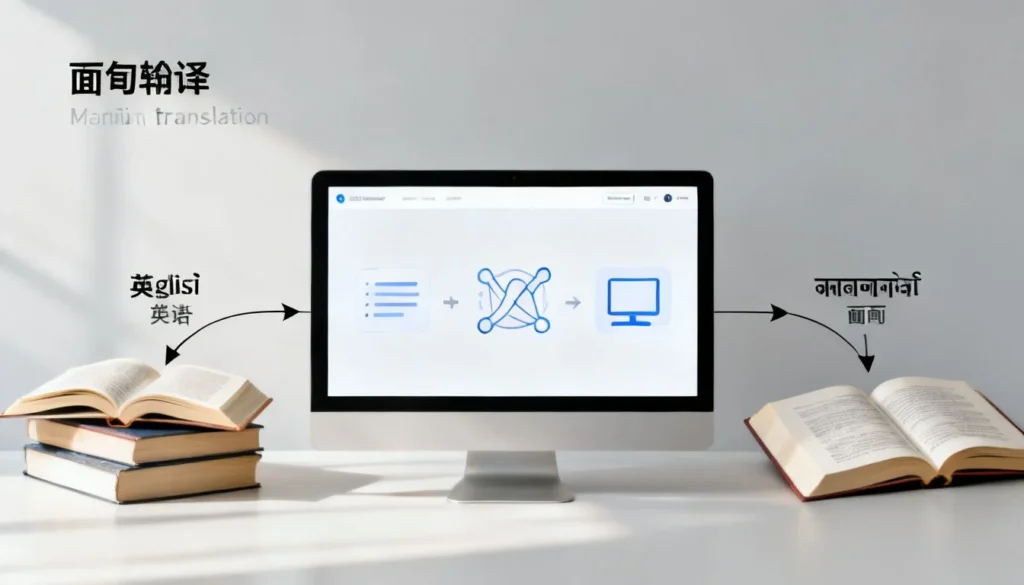
There are four main ways to translate english to myan. Each has tradeoffs in speed, cost, and accuracy.
| Method | Cost | Accuracy | Speed | Best For |
|---|---|---|---|---|
| Google Translate | Free | 60-70% for simple sentences | Instant | Casual messages, single words |
| Paid AI tools (DeepL, etc.) | $8-30/month | 70-80% | Instant | Longer texts, better grammar handling |
| Human freelance translator | $0.05-0.15/word | 95%+ | Hours to days | Business, legal, medical documents |
| Bilingual native speaker | Free to low cost | 90%+ | Varies | Personal messages, cultural nuance |
Google Translate added Burmese support in 2014, but its quality has improved slowly compared to languages like Spanish or Japanese. The main problem is data scarcity: there simply isn’t as much parallel Burmese-English text online for training models compared to other language pairs.
DeepL, which many people consider the gold standard for European languages, does not yet support Burmese as of early 2025. That leaves Google Translate and Microsoft Translator as the main free options.
When Free Tools Are Good Enough
For these situations, a free tool will probably get the job done:
- Translating a single word or short phrase
- Getting the gist of a Burmese message someone sent you
- Communicating basic needs while traveling
- Understanding a menu or street sign
When You Need a Human
For these situations, do not rely on a machine:
- Business contracts or any legally binding document
- Medical information where a mistranslation could cause harm
- Marketing content where tone and cultural resonance matter
- Personal messages to elders where politeness is critical
- Anything with idioms or wordplay
Pro Tip: For mid-level needs, use a two-step process. Run the text through Google Translate to get a draft, then send that draft to a native Burmese speaker for review. You’ll pay for maybe 15 minutes of their time instead of a full translation, and the result will be dramatically better.
Step-by-Step: How to Get an Accurate English to Myan Translation
Here’s a practical workflow I’ve used and refined over the years. It works for everything from a WhatsApp message to a business proposal.
- Identify the register you need. Are you writing to a friend, a colleague, or an elder? This changes everything about the translation.
- Simplify your English first. Break long sentences into shorter ones. Remove idioms and slang. “Let’s touch base next week” becomes “Let’s meet next week.” Machines handle simple sentences far better.
- Run the translation through a tool. Google Translate or Microsoft Translator are your starting points, not your final answer.
- Back-translate to check meaning. Take the Burmese output and translate it back to English. If the meaning changed, you’ve got a problem.
- Have a native speaker review it. This is the step most people skip. A fluent Burmese speaker can catch register errors, awkward phrasing, and cultural issues in seconds.
- Verify the script encoding. Make sure the Burmese text displays correctly on the recipient’s device. If they use Zawgyi, convert it.
The entire process takes maybe 10 minutes for a short message, but the difference in quality is massive.
Common English to Myan Translation Mistakes to Avoid
Certain English phrases translate terribly into Burmese because the concepts don’t map cleanly. Here are the worst offenders:
- “How are you?”: Burmese speakers don’t use this as a casual greeting the way English speakers do. The literal translation sounds awkward. A better greeting is “Have you eaten?” (ထမင်းစားပြီးပြီလား), which is the actual cultural equivalent.
- “Thank you very much”: Burmese has multiple ways to say thank you, and the intensity matters. Using the most formal version with a close friend sounds sarcastic.
- “I love you”: The direct translation exists, but Burmese culture expresses affection more through actions than words. Using it casually can feel overly intense or even inappropriate in some contexts.
- “Good morning/afternoon/evening”: Burmese doesn’t have time-based greetings. The standard greeting is “မင်္ဂလာပါ” (mingalaba), which works at any time of day.
- Sarcasm and irony: These don’t translate well at all. The tone markers that signal sarcasm in English have no Burmese equivalent, so the meaning gets completely lost.
Key Takeaways
- Burmese grammar puts verbs at the end of sentences, making direct translation tricky
- Register and politeness levels are critical and machines often miss them
- The Zawgyi vs. Unicode encoding issue still causes display problems
- Free tools work for casual use but fail for business or formal contexts
- A two-step process (machine translation plus native review) gives the best balance of speed and accuracy
- Certain English phrases like “How are you?” don’t map cleanly to Burmese culture
- DeepL does not support Burmese, so Google Translate and Microsoft Translator are your main free options
Frequently Asked Questions About English to Myan Translation
Q: Is Google Translate accurate for English to Myan?
A: Google Translate handles simple, short sentences reasonably well, with accuracy around 60-70% for basic phrases. It struggles with longer sentences, formal registers, and anything involving cultural context. For important communications, always have a native Burmese speaker review the output.
Q: Does DeepL support Burmese translation?
A: No. As of early 2025, DeepL does not support Burmese. Google Translate and Microsoft Translator are the main free machine translation options for english to myan. You can also check services like MyMemory or Glosbe for smaller translation databases.
Q: What is the difference between Myanmar and Burmese language?
A: Myanmar is the country name, while Burmese is the language spoken by the majority Bamar ethnic group. The language is sometimes called Myanmar language in English, but Burmese is the more common term. In Burmese itself, the language is called “မြန်မာစာ” (Myanma sa) for written Burmese and “မြန်မာစကား” (Myanma zaga) for spoken Burmese.
Q: How do I type in Burmese on my phone or computer?
A: On iPhone, go to Settings, General, Keyboard, Add New Keyboard, and select Burmese. On Android, go to Settings, System, Languages & Input, Virtual Keyboard, and add Burmese. On Windows, you can add the Myanmar Unicode keyboard through Language settings. On Mac, go to System Preferences, Keyboard, Input Sources, and add Myanmar.
Q: Why does Burmese text sometimes show up as boxes or gibberish?
A: This is almost always the Zawgyi vs. Unicode encoding problem. Older systems and fonts used Zawgyi, a non-standard encoding. Modern systems use Unicode. If the text looks wrong, the sender is likely using a different encoding than your device. You can use conversion tools like the Google Input Tools or the Rabbit Converter to fix it.
Q: Is Burmese a hard language for English speakers to learn?
A: Yes, the U.S. Foreign Service Institute classifies Burmese as a Category IV language, meaning it takes approximately 1,100 class hours for an English speaker to reach professional working proficiency. The tonal system, unfamiliar script, and grammatical differences all contribute to the difficulty.
Q: Can I use english to myan translation for legal documents?
A: You should not rely on machine translation for legal documents. A mistranslated clause in a contract could have serious legal consequences. Always use a professional human translator who specializes in legal Burmese. In Myanmar, certified translators are available through the Myanmar Translators Association.
Q: What does “mingalaba” mean in Burmese?
A: “မင်္ဂလာပါ” (mingalaba) is the standard Burmese greeting, roughly equivalent to “hello.” It works in both formal and informal situations and at any time of day. The word comes from Pali and literally relates to auspiciousness or blessing.
Q: How do I say “thank you” in Burmese?
A: The standard phrase is “ကျေးဇူးတင်ပါတယ်” (kyay zu tin ba deh). For more formal situations, you can say “ကျေးဇူးအထူးတင်ပါတယ်” (kyay zu a htu tin ba deh), which means “thank you very much.” Men add “ခင်ဗျား” (khin bya) and women add “ရှင်” (shin) at the end for politeness.
Q: Are there different dialects of Burmese?
A: Yes. Standard Burmese is based on the Yangon-Mandalay dialect, but regional variations exist. The Rakhine dialect, spoken in Rakhine State, is different enough that some linguists consider it a separate language. The Dawei dialect in Tanintharyi Region also has significant differences. Most translation tools only handle standard Burmese.
References & Further Reading
- Ethnologue: Burmese Language Profile – Comprehensive linguistic data on Burmese, including speaker counts and dialect information
- Omniglot: Burmese Script and Pronunciation – Detailed guide to the Burmese alphabet, tones, and writing system
- Google Translate Community: Burmese Language Support – Official discussion on Burmese translation quality and limitations
- Myanmar Unicode Standard Documentation – Official Unicode Consortium documentation for the Myanmar script block
- U.S. Foreign Service Institute Language Difficulty Rankings – Official FSI data on language learning difficulty for English speakers
—
About This Article
This guide was written based on practical experience working with Burmese translation projects and ongoing research into machine translation quality for Southeast Asian languages. The recommendations reflect current tool capabilities as of early 2025. Burmese is a living language with evolving digital standards, so translation tools will continue to improve. For anything that matters, the human review step remains essential.

Pingback: English to Myanmar Name Translator: A Complete Guide to…