Finding a reliable Myanmar translator is harder than it should be. You might need to translate a birth certificate for immigration, localize a website for the Yangon market, or just understand what your neighbor is saying. The problem is that Burmese, the official language of Myanmar, has a unique script, a complex tonal system, and a digital ecosystem that lags behind languages like Spanish or Chinese. That means the usual tools often fail, and human translators are hard to vet.
This guide breaks down every option, from free machine translation to hiring a certified professional, so you can pick the right approach for your budget and accuracy needs.
Quick Answer: For casual use, Google Translate and Bing handle basic Burmese text okay. For legal, medical, or business documents, hire a professional human Myanmar translator through a vetted platform like ProZ, TranslatorsCafe, or a specialized agency. For app or website localization, use a translation API like Google Cloud Translation or Azure Translator, but always have a native speaker review the output.
What a Myanmar Translator Actually Does
The term “Myanmar translator” covers three very different services, and confusing them leads to wasted money and embarrassing errors.
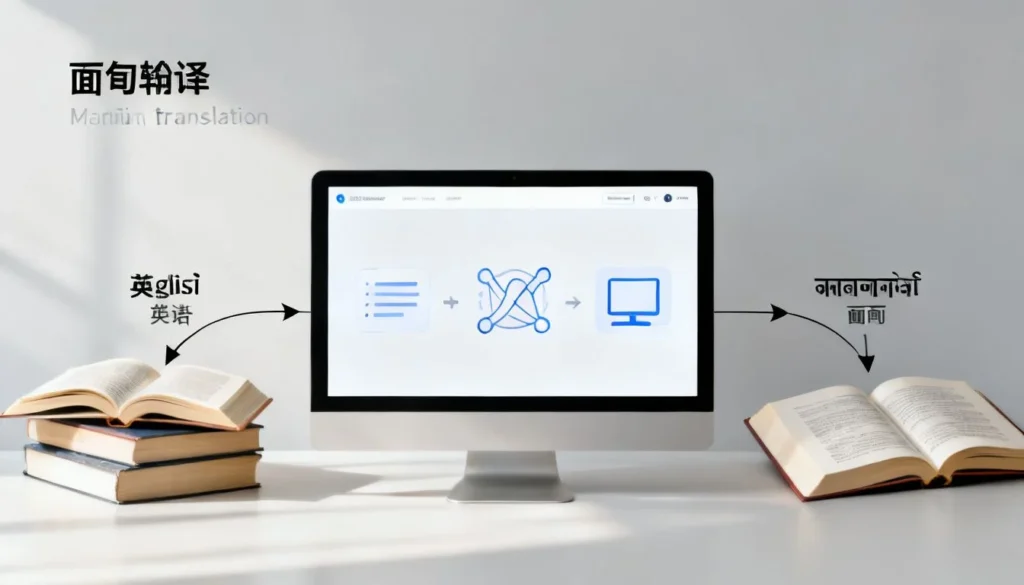
A human translator converts written text from one language to another. In this case, that means Burmese (also called Myanmar language) to English, or English to Burmese. A human interpreter handles spoken language, either in person, over the phone, or via video. A machine translation tool does the written conversion automatically using algorithms.
That distinction matters because you cannot hire a translator to interpret a live court hearing, and you should not rely on Google Translate for an immigration document. The skill sets, certification processes, and pricing are completely different.
Burmese Language Basics That Affect Translation
Burmese uses a circular, flowing script derived from the Mon script, which itself came from Brahmi. It has 33 consonants and 12 vowels, with tone marks that change meaning entirely. The word “sa” can mean “letter,” “eat,” or “star” depending on the tone.
Most machine translation systems struggle with this because Burmese has no spaces between words. The system has to segment the text first, then translate. That segmentation step introduces errors before translation even begins.
Another challenge is the formal register. Burmese has a polite particle, “ပါ” (pa), and honorifics that do not map cleanly to English. A direct translation often sounds stiff or rude. A skilled human translator makes judgment calls that software cannot.
Pro Tip: If you need a document translated for official use, ask the translator if they are certified by a recognized body like the American Translators Association (ATA) or have a degree in translation studies, not just native fluency. Native speakers are not automatically good translators.

Machine Translation Options for Burmese
For quick, informal translations, machine tools are free or cheap. They are also fast. The tradeoff is accuracy, especially with formal documents, names, and numbers.
Google Translate
Google Translate supports Burmese and has improved significantly since adding neural machine translation for the language. It handles basic sentences and common phrases reasonably well. It is free, works on mobile, and offers camera translation for signs and menus.
The weaknesses are real. Google Translate often drops the honorific particles, mangles names, and produces literal translations that miss the intended meaning. For anything where a mistake costs money or causes legal problems, it is not sufficient.
Microsoft Bing Translator
Bing Translator also supports Burmese and sometimes produces slightly different results than Google. It integrates with Microsoft Office products, which is handy for translating Word documents or Outlook emails. The accuracy is comparable to Google for Burmese, meaning it is fine for gisting but not for official use.
Specialized Burmese Translation Apps
A few smaller apps focus specifically on Southeast Asian languages. Ornagai is a popular Burmese to English dictionary app built by a developer in Myanmar. It is not a full sentence translator, but it is excellent for looking up individual words and seeing example sentences. Myanmar Unicode Converter helps with the legacy Zawgyi font problem, which we cover below.
| Tool | Cost | Best For | Accuracy | Offline Use |
|---|---|---|---|---|
| Google Translate | Free | Casual text, travel | Medium | Yes (download pack) |
| Bing Translator | Free | Office integration | Medium | No |
| Ornagai | Free | Dictionary lookups | High (word level) | Yes |
| Human translator | $0.08 to $0.25 per word | Official, legal, medical | High | N/A |
| Translation API | $20 per 1M characters | App/website localization | Medium | No |
Pro Tip: Test any machine translation tool with a sentence you already know the correct translation for. That gives you a baseline for how much you can trust the output. Do not test with a sentence you need translated, because you will not know if the result is right.
The Zawgyi and Unicode Problem
This is the single biggest technical headache in Burmese translation, and most outsiders do not know about it until it bites them.
For years, Myanmar had two competing font standards. Zawgyi was a popular but non-standard font that encoded Burmese characters in a way that was incompatible with the official Unicode standard. Most websites, apps, and documents in Myanmar used Zawgyi because it was easier to type on older devices.
The problem is that Zawgyi text looks like gibberish when rendered in Unicode, and vice versa. If you copy text from a Myanmar website and paste it into Google Translate, you might get nonsense because the source was Zawgyi-encoded.
Myanmar’s government officially adopted Unicode in 2019, and most modern systems now use it. But older documents, archived websites, and some local apps still use Zawgyi.
How to Detect and Convert
If your Burmese text looks like random symbols when pasted into a translator, it is probably Zawgyi. You can convert it using free online tools like Rabbit Converter or the Myanmar Font Converter. These tools detect the encoding and convert Zawgyi to Unicode or vice versa.
Always convert to Unicode before translating. Google Translate and Bing both work better with Unicode Burmese.
Pro Tip: If you are building an app or website for the Myanmar market, force Unicode encoding from day one. Do not support Zawgyi as a fallback. It creates a mess that is expensive to clean up later.
Hiring a Professional Myanmar Translator
When the document matters, hire a human. Here is how to do it without getting burned.
Where to Find Qualified Translators
ProZ.com is the largest freelance translator marketplace and has a dedicated Burmese language pair section. You can post a job and receive bids from translators who list their credentials, rates, and client feedback. TranslatorsCafe works similarly and has a smaller but still active Burmese community.
Upwork and Fiverr also have Burmese translators, but quality varies wildly. Anyone can create a profile and claim fluency. Look for translators with verified credentials, long work histories, and specific experience in your document type.
For legal and immigration documents, consider an agency. Agencies like RushTranslate, Rev, and GTS Translation offer certified Burmese translation with a certificate of accuracy, which USCIS and other government bodies often require.
What to Expect to Pay
Burmese translation rates are lower than European language pairs but higher than many people expect. A common range is $0.08 to $0.25 per word for professional Burmese to English translation. For a standard one-page document of 300 words, that means $24 to $75.
Rush jobs cost more, often 50% to 100% extra. Certified translations for immigration usually have a flat fee per page, typically $20 to $40 per page depending on the agency.
Questions to Ask Before Hiring
- Are you a native Burmese speaker?
- Do you have experience with [your specific document type, e.g., medical records, legal contracts]?
- Can you provide a certificate of accuracy?
- What is your turnaround time?
- Do you use CAT tools like SDL Trados or memoQ?
The last question matters for consistency on large projects. A translator using CAT tools can maintain a translation memory, which keeps terminology consistent and reduces cost on repeated phrases.
Pro Tip: Always ask for a short sample translation of 50 to 100 words before committing to a large project. Most professional translators will do this free or for a small fee. It lets you assess their style and accuracy without risking the full job.
Translation APIs for Developers and Businesses
If you are building software, you need a translation API, not a human translator or a consumer app.
Google Cloud Translation API
Google Cloud Translation supports Burmese and charges $20 per 1 million characters for the standard tier. The advanced tier costs more but allows custom glossaries, which let you define specific translations for brand names, product terms, or technical vocabulary.
This is the most popular choice because it is easy to integrate, well-documented, and the Burmese quality is as good as any machine option.
Microsoft Azure Translator
Azure Translator also supports Burmese and has a similar pricing structure. The advantage is tight integration with other Azure services and Microsoft’s enterprise compliance certifications. If you are already in the Azure ecosystem, this is the natural choice.
When to Use an API vs. a Human
Use an API when you need to translate large volumes of user-generated content, product descriptions, or internal communications where perfect accuracy is not critical. Use a human when the text is customer-facing, legally binding, or culturally sensitive.
A hybrid approach works best for most businesses. Use the API for the first pass, then have a native Burmese speaker review and edit the output. This cuts cost by 50% to 70% compared to full human translation while maintaining acceptable quality.
Pro Tip: If you use a translation API for Burmese, build a custom glossary from day one. Burmese has many loanwords from English and Pali, and the API will often translate them literally when they should stay in the original form.
Key Takeaways
- A “Myanmar translator” can mean a human translator, a human interpreter, or a machine translation tool. Know which one you need before you start.
- Google Translate and Bing work okay for casual Burmese, but they fail on formal documents, names, and tone-sensitive content.
- The Zawgyi vs. Unicode font issue is the most common cause of garbled Burmese text. Always convert to Unicode before translating.
- Professional Burmese translators charge roughly $0.08 to $0.25 per word. Certified translations for immigration cost $20 to $40 per page.
- For software localization, use a translation API with a custom glossary, then have a native speaker review the output.
Frequently Asked Questions
Q: Is Myanmar translator the same as Burmese translator?
A: Yes. Myanmar and Burmese are two names for the same language. “Myanmar” is the formal name of the country and the language, while “Burmese” is the older, more commonly used English term. A Myanmar translator and a Burmese translator do the same work.
Q: How much does a Myanmar translator cost?
A: Professional human translation for Burmese to English typically costs between $0.08 and $0.25 per word. A standard one-page document of 300 words costs $24 to $75. Certified translations for immigration or legal use often have flat per-page fees of $20 to $40.
Q: Can Google Translate handle Burmese accurately?
A: Google Translate handles basic Burmese sentences and common phrases reasonably well, but it struggles with formal documents, names, honorifics, and tone-dependent meanings. It is fine for casual understanding but not for official, legal, or medical use.
Q: How do I know if my Burmese text is Zawgyi or Unicode?
A: If the text looks like random symbols, boxes, or garbled characters when pasted into a modern app, it is probably Zawgyi-encoded. You can convert it using a free tool like Rabbit Converter or the Myanmar Font Converter, which detect the encoding and convert to Unicode.
Q: Do I need a certified Myanmar translator for immigration documents?
A: Most government agencies, including USCIS, require a certified translation with a signed certificate of accuracy. The translator does not need a specific government license, but they must attest that they are competent in both languages and that the translation is accurate.
Q: What is the difference between a Myanmar translator and interpreter?
A: A translator works with written text. An interpreter works with spoken language, either in person, by phone, or by video. The skills are different, and most professionals specialize in one or the other.
Q: Can I use a translation API for Burmese website localization?
A: Yes. Google Cloud Translation and Microsoft Azure Translator both support Burmese. However, you should use a custom glossary for brand terms and have a native speaker review the output before publishing customer-facing content.
Q: How long does it take to translate a document from Burmese to English?
A: A professional translator can typically handle 2,000 to 3,000 words per day for Burmese to English. A one-page document usually takes a few hours. Rush jobs are possible but cost 50% to 100% more.
References & Further Reading
- Google Cloud Translation Languages – Official list of supported languages and pricing for the Translation API.
- Microsoft Azure Translator Languages – Supported languages and features for Azure Translator.
- American Translators Association – Professional organization with resources for finding and vetting certified translators.
- Myanmar Unicode Standard – Official Unicode Consortium documentation on the Burmese script standard.
- ProZ Burmese Translation Community – Active forum for Burmese translators with job postings and peer discussions.
—
About This Article
This guide draws on practical experience working with Burmese language technology, including the Zawgyi to Unicode transition, machine translation evaluation, and freelance translator hiring. The pricing ranges reflect current market rates observed across major translation platforms and agency websites. No specific translator or agency is endorsed; the recommendations are based on documented feature sets and publicly available pricing information.