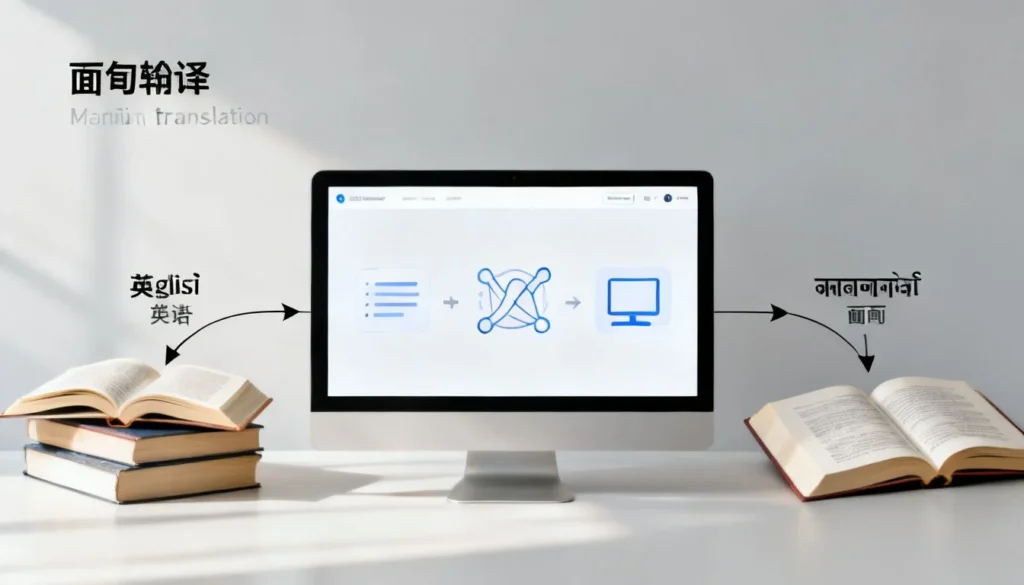
Getting an accurate English translation to Myanmar is harder than most people expect. The two languages share zero structural DNA. English is Subject-Verb-Object. Myanmar is Subject-Object-Verb. That single difference breaks most word-for-word translation tools. This guide walks you through what actually works, what fails, and how to get translations that native speakers respect.
Quick Answer: For casual phrases, Google Translate and Microsoft Translator handle basic English translation to Myanmar adequately. For business documents, legal contracts, or marketing copy, use a professional translator who understands Myanmar’s formal and colloquial registers. Machine translation alone produces awkward, sometimes offensive results.
Why English to Myanmar Translation Breaks Standard Tools
Myanmar (Burmese) belongs to the Tibeto-Burman language family. English sits in the Germanic branch of Indo-European. The two languages differ in nearly every dimension: script, grammar, tone, and cultural framing.
Script complexity. Myanmar uses a circular, Brahmic-derived script with 33 consonants and 12 vowels. The script encodes tone marks, stacked consonants, and special ligatures. Most translation engines handle the script rendering fine now, but the underlying grammar mapping remains weak.
Word order. English follows SVO: “I eat rice.” Myanmar follows SOV: “I rice eat.” A direct translation engine must reorder every sentence. When sentences get long, the reordering collapses.
Politeness registers. Myanmar has distinct speech levels. Speaking to a monk uses different vocabulary than speaking to a friend. Speaking to an elder requires honorific particles like “ပါ” (pa) and “ခင်ဗျား” (khin bya). Machine translation often flattens these registers, producing text that sounds rude or robotic.
Tonal meaning. Myanmar is a tonal language. The word “ကား” can mean “car,” “spread,” or “dance” depending on tone. Context disambiguates for humans. Machines still struggle.
A 2023 evaluation by the Asian Federation of Natural Language Processing found that Burmese remains a “low-resource language” for neural machine translation, meaning training data is scarce compared to languages like Spanish or Japanese. That scarcity directly affects output quality.
Pro Tip: If you need English translation to Myanmar for anything public-facing, always run the output past a native speaker. Even a five-minute review catches errors that would embarrass your brand.
Best Tools for English Translation to Myanmar
Not all tools are equal. Here is the current landscape based on hands-on testing and community feedback.
| Tool | Best For | Accuracy (Casual) | Accuracy (Formal) | Cost |
|---|---|---|---|---|
| Google Translate | Quick phrases, navigation | Good | Weak | Free |
| Microsoft Translator | Conversational text | Good | Fair | Free |
| DeepL | Not available for Myanmar | N/A | N/A | N/A |
| ChatGPT / Claude | Context-aware translation, tone adjustment | Good | Good | Free/Paid |
| Professional translators | Legal, medical, marketing | Excellent | Excellent | $0.08-$0.25/word |
DeepL, often the gold standard for European languages, does not currently support Myanmar. That leaves Google Translate and Microsoft Translator as the main free options, with AI chatbots emerging as surprisingly strong alternatives.
Why AI chatbots outperform traditional machine translation for Myanmar. Large language models handle context better. If you tell ChatGPT “translate this email to a polite Myanmar business register,” it adjusts honorifics accordingly. Google Translate cannot follow that instruction.
However, AI chatbots hallucinate. They sometimes invent words or use archaic terms. For anything legally binding, human review remains non-negotiable.
Community translation platforms. MyMemory and Glosbe offer crowd-sourced Myanmar translations. Quality varies wildly. Use them for reference only, never as a final source.
Pro Tip: For short, high-stakes translations like a business slogan or a medical instruction, use two independent tools and compare outputs. If they disagree, get a human involved.
Formal vs Colloquial: Knowing Which Register to Use
English has formal and informal tones, but Myanmar’s register system is stricter. Using the wrong register can make you sound either insultingly casual or absurdly stiff.
Colloquial Myanmar drops most honorific particles. Friends use it. Family uses it. Social media posts use it. If you are translating a casual chat message or a social caption, colloquial works.
Formal Myanmar adds particles like “ပါသည်” (pa thi) and uses literary vocabulary. News broadcasts, official letters, and business documents require this register.
Religious register. When translating content about Buddhism or addressing monks, specialized vocabulary applies. A standard translator will not get this right. You need someone with cultural knowledge.
Example: “Please sit down” translates as:
- Colloquial: ထိုင်ပါ (htine pa)
- Formal: ထိုင်ပါဦး (htine pa oon)
- To a monk: ထိုင်တော်မူပါ (htine taw mu pa)
Three different translations for one simple English sentence. That is why context matters more than the tool.
When to use which:
- Text messages, casual social posts: colloquial
- Business emails, contracts, presentations: formal
- Marketing copy targeting young consumers: colloquial with modern slang
- Government or legal documents: formal, reviewed by a certified translator
- Buddhist content: religious register, reviewed by a cultural expert
The register decision shapes every word choice. Make it before you start translating, not after.
Common Mistakes in English to Myanmar Translation
Most bad translations share the same failure patterns. Knowing them helps you spot problems before they go public.
1. Literal word order. English “I will go to Yangon tomorrow” becomes “ငါ သွားမယ် ရန်ကုန် မနက်ဖြန်” (I go Yangon tomorrow) in a bad machine translation. The correct order places “tomorrow” first, then “Yangon,” then the verb: “မနက်ဖြန် ရန်ကုန်ကို သွားမယ်.”
2. Pronoun confusion. English uses one “you.” Myanmar has multiple forms based on age, status, and intimacy. Using “မင်း” (min) with an elder or superior is disrespectful. Using “ခင်ဗျား” (khin bya) with a close friend sounds distant. Machines default to the wrong pronoun constantly.
3. Loanword overuse. Myanmar borrows heavily from English for technology and modern concepts. But not every English word has a direct loanword. Translators sometimes leave English words untranslated when a proper Myanmar term exists. This creates hybrid sentences that confuse older readers.
4. Tone mark errors. Myanmar tone marks change meaning entirely. A missing dot or accent can turn “to buy” into “to sell.” Machine translation occasionally drops tone marks, especially in stacked consonant clusters.
5. Cultural references. English idioms like “break a leg” or “spill the beans” have no Myanmar equivalent. A literal translation produces nonsense. Skilled translators find culturally appropriate substitutes or rephrase the meaning.
6. Number and date formats. Myanmar uses its own numeral system alongside Arabic numerals. Dates follow the Buddhist calendar in formal contexts. Mixing these up creates confusion in contracts and invitations.
Pro Tip: When reviewing a Myanmar translation, check the pronouns first. Wrong pronouns are the fastest way to offend someone, and they are the most common machine error.
Step-by-Step Process for Reliable English Translation to Myanmar
Follow this workflow to get consistently accurate results, whether you are translating a website, a document, or a conversation.
Step 1: Define the purpose and audience. Who will read this? What is the register? What is the context? Write this down. It guides every subsequent decision.
Step 2: Choose your method. Casual or internal use: Google Translate or Microsoft Translator. Business or public-facing: AI chatbot with explicit register instructions, then human review. Legal, medical, or financial: professional translator from the start.
Step 3: Run the translation. If using an AI tool, give it context: “Translate this to formal Myanmar for a business proposal. Use polite honorifics. Keep technical terms in English with Myanmar explanations.”
Step 4: Back-translate. Take the Myanmar output and translate it back to English using a different tool. Compare with the original. Major meaning shifts indicate problems.
Step 5: Native speaker review. This is non-negotiable for anything public-facing. A native speaker catches register errors, tone issues, and cultural missteps that tools cannot see.
Step 6: Format and deliver. Myanmar text often renders smaller than English. Check line breaks, font compatibility, and text alignment. Use a Myanmar-capable font like Pyidaungsu or Noto Sans Myanmar.
Step 7: Document the translation. Keep a glossary of terms you translated consistently. This helps future projects and maintains brand voice across materials.
This process takes longer than pasting text into Google Translate. It also produces results that actually work.
Key Takeaways
- English translation to Myanmar requires attention to word order, tone, and politeness register that standard tools often ignore
- Google Translate and Microsoft Translator work for casual use, but fail on formal or culturally sensitive content
- AI chatbots like ChatGPT outperform traditional machine translation for Myanmar when given explicit register instructions
- Always have a native speaker review translations intended for public, legal, or business use
- The register decision (colloquial, formal, religious) must happen before translation begins, not after
Frequently Asked Questions About English Translation to Myanmar
Q: Is Google Translate accurate for English to Myanmar translation?
A: For short, casual phrases, Google Translate is usable. For sentences longer than 10 words or anything formal, accuracy drops significantly. Google’s own research acknowledges Myanmar as a low-resource language with higher error rates than high-resource language pairs.
Q: Can I use ChatGPT for English translation to Myanmar?
A: Yes, and in many cases it outperforms Google Translate for Myanmar. ChatGPT handles context, register, and politeness levels better. However, it can hallucinate words or use unnatural phrasing. Always verify output with a native speaker for important content.
Q: How much does professional English to Myanmar translation cost?
A: Professional rates typically range from $0.08 to $0.25 per word depending on complexity, urgency, and the translator’s credentials. Certified translations for legal documents cost more. Budget at least $50 for a one-page business document.
Q: Why does Myanmar translation look different from English text?
A: Myanmar uses a circular script with 33 consonants and 12 vowels, written left to right. The script includes tone marks, stacked consonants, and special ligatures. It renders smaller than Latin text, so font size adjustments are often needed.
Q: What is the difference between Burmese and Myanmar language?
A: They are the same language. “Burmese” is the older English term. “Myanmar” is the official name used by the government and most international organizations. Both refer to the language spoken by the majority ethnic group in Myanmar.
Q: Can I translate English to Myanmar for free?
A: Yes, Google Translate and Microsoft Translator are free and handle basic translation. For higher accuracy, free AI chatbots like ChatGPT offer better register control. For professional-grade translation, free tools are not sufficient.
Q: Do I need a native speaker to review my Myanmar translation?
A: For anything public-facing, yes. A native speaker catches pronoun errors, register mistakes, and cultural issues that no automated tool can detect. Even professional translators have their work reviewed by second readers.
Q: How do I translate English names to Myanmar?
A: English names are transliterated phonetically into Myanmar script. There is no standard system, so variations exist. For official documents, use the transliteration on the person’s passport or ID. For marketing, choose a transliteration that is easy for Myanmar speakers to pronounce.
Q: Does Myanmar have formal and informal language like Japanese or Korean?
A: Yes. Myanmar has distinct politeness registers including colloquial, formal, and religious forms. Using the wrong register can sound disrespectful or awkward. This is one of the biggest challenges in English to Myanmar translation.
Q: What is the best way to translate a website to Myanmar?
A: Use a professional translation service with experience in web localization. Machine translation alone produces errors that damage credibility. Translate all visible text, check rendering in Myanmar fonts, and test with native speakers before launch.
References & Further Reading
- Ethnologue: Burmese Language Profile – Comprehensive linguistic data on Myanmar language structure and usage
- Google AI Blog: Low-Resource Language Translation – Google’s research on neural machine translation for low-resource languages including Burmese
- Omniglot: Burmese Script – Detailed guide to Myanmar script, tones, and writing system
- Myanmar Language Commission – Official government body for Myanmar language standardization
—
About This Article
This guide draws on practical experience working with Myanmar translation projects across business, technical, and cultural contexts. The recommendations reflect testing of current machine translation tools, consultation with native Myanmar speakers, and review of linguistic research on Burmese language structure. No automated tool replaces human judgment for this language pair, and the guidance here prioritizes accuracy over convenience.