Getting Burmese translations right matters more than most people realize. A poorly translated document can break a business deal, confuse a medical patient, or even create legal problems. This guide walks you through how Burmese translation actually works, what to expect, and how to get results you can trust.
Quick Answer: Professional Burmese translations cost between $0.10 and $0.25 per word for standard documents. Certified translations for legal or immigration use typically cost more. The quality of your translation depends heavily on whether the translator understands the specific dialect and context of your document.
Why Burmese Translation Is Harder Than It Looks
Burmese is not a simple language to translate. The written script, called Myanmar script, evolved from the Mon script and has 33 consonants and 12 vowels. It looks beautiful but creates real challenges for translation software.
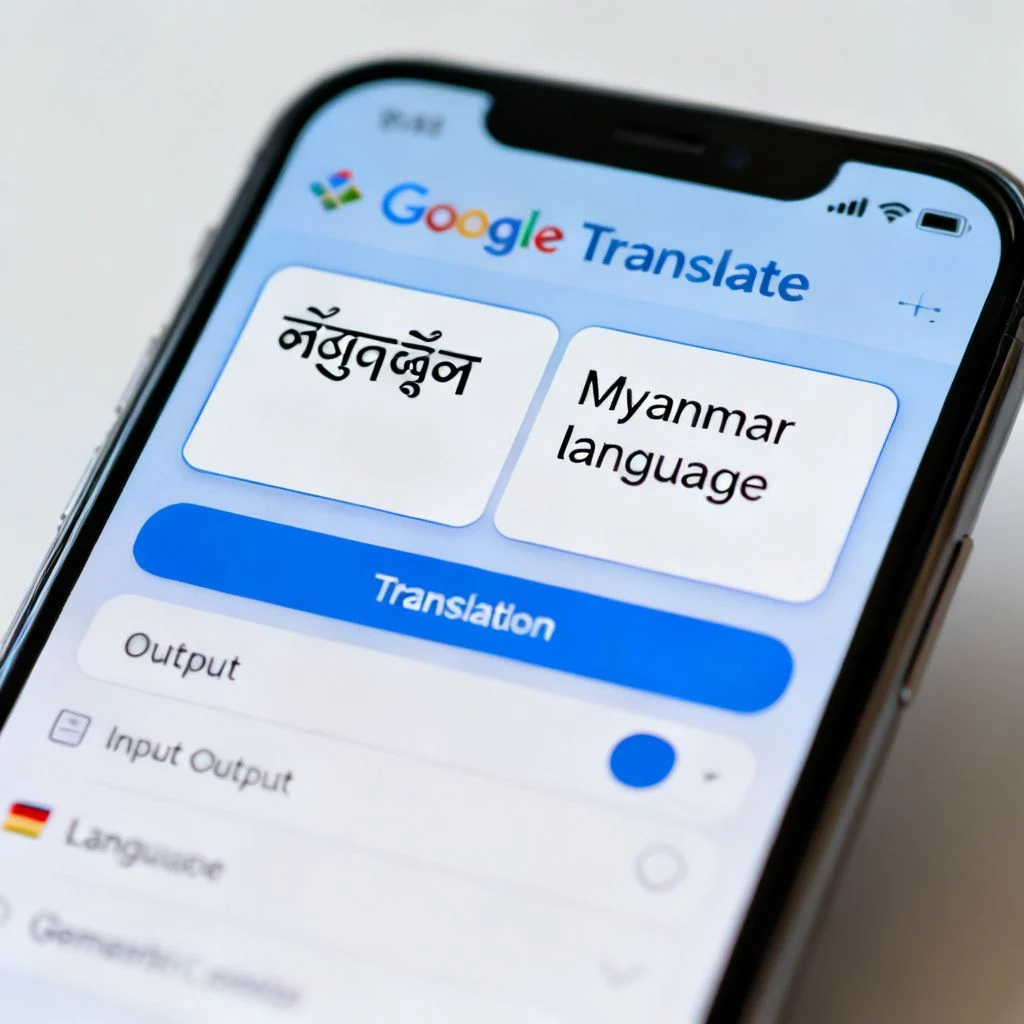
Machine translation tools like Google Translate have improved, but they still struggle with Burmese. The language has a different sentence structure than English. Verbs come at the end of sentences. There are no spaces between words in the traditional written form, though modern usage sometimes adds them for clarity. These structural differences mean that word-for-word translation produces awkward, sometimes incomprehensible results.
Another layer of complexity is the difference between formal written Burmese and colloquial spoken Burmese. A legal contract uses formal language. A marketing campaign needs colloquial language that sounds natural to a native speaker. A translator who only knows one register will produce work that feels wrong to the target audience.
Pro Tip: When you request a Burmese translation, always specify whether the text will be read or spoken. Written Burmese and spoken Burmese use different grammatical structures, and a good translator will adjust accordingly.
The bottom line: Burmese translation requires a human translator who understands both the language mechanics and the cultural context. Software can help with rough drafts, but it cannot replace a skilled professional for anything that matters.

When You Need Professional Burmese Translations
Different situations require different levels of translation quality. A quick email to a colleague might be fine with machine translation. A birth certificate for immigration purposes absolutely is not.
Here are the most common scenarios where professional Burmese translation is essential:
- Legal documents: Contracts, court records, and patents require certified translations with a statement of accuracy
- Immigration paperwork: USCIS requires certified translations for any document not in English, including Burmese birth certificates, marriage licenses, and police clearances
- Medical records: Patient histories, discharge summaries, and prescription instructions need precise medical terminology
- Business materials: Websites, product descriptions, and marketing campaigns need culturally appropriate language
- Academic transcripts: University applications require certified translations of diplomas and grade reports
Each of these use cases has different requirements. A certified translation includes a signed statement from the translator or translation agency attesting to accuracy. This is what government agencies and courts expect.
Pro Tip: For USCIS submissions, the translator’s certification statement must include their name, address, signature, and the date of translation. Without all four elements, your submission may be rejected.
Understanding your specific need determines the type of service you should request and the price you should expect to pay.
The Burmese Translation Process: What to Expect
A professional translation project follows a defined workflow. Knowing this process helps you communicate with your translator and set realistic expectations.
Step 1: Document review and quote. The translator or agency reviews your document, counts the words, and assesses the complexity. Technical or legal documents cost more than general text.
Step 2: Translation. A native Burmese speaker translates the document. For high-stakes projects, this person should be a subject matter expert in your field.
Step 3: Editing. A second linguist reviews the translation for accuracy, grammar, and terminology consistency. This is called the TEP process (Translation, Editing, Proofreading).
Step 4: Proofreading. A final check catches typos, formatting issues, and any remaining errors.
Step 5: Certification (if required). For legal or immigration documents, the agency adds a signed certificate of accuracy.
The timeline depends on volume. A standard document of 1,000 to 2,000 words typically takes 2 to 3 business days with the full TEP process. Rush service is available from most agencies for an additional fee, usually 25% to 50% of the base price.
Pro Tip: If you need a certified translation, ask the agency whether they provide a notarized certificate. Some government offices require notarization in addition to the translator’s certification, and adding this after the fact costs time and money.
A clear process protects both you and the translator. It ensures accountability at every stage and gives you a document you can actually use.
Burmese Translation Costs: A Realistic Breakdown
Pricing for Burmese translations varies based on several factors. Here is what you can expect to pay in the current market.
| Service Type | Price Range | Turnaround | Best For |
|---|---|---|---|
| Machine translation (free tools) | $0 | Instant | Personal understanding only |
| Standard human translation | $0.10 to $0.18 per word | 2-4 business days | Business documents, websites |
| Certified translation | $20 to $40 per page | 2-5 business days | Legal, immigration, academic |
| Technical or specialized translation | $0.15 to $0.25 per word | 3-7 business days | Medical, engineering, legal |
| Rush translation | Add 25% to 50% | 24-48 hours | Urgent deadlines |
Several factors influence where your project falls within these ranges:
- Document complexity: A simple birth certificate is straightforward. A patent application with technical terminology takes much longer.
- Language direction: Burmese to English and English to Burmese are both common, but Burmese to English often costs slightly more due to higher demand.
- Formatting requirements: Documents with complex layouts, tables, or images require desktop publishing work that adds to the cost.
- Certification level: Plain certified translations are standard. Notarized or apostilled translations cost extra.
Most agencies charge per word for longer documents and per page for shorter ones like certificates. A one-page birth certificate typically costs $25 to $35 for a certified translation.
Pro Tip: Before requesting a quote, scan your document and check the word count. Many agencies have minimum fees, often around $30 to $50, even for very short documents. Bundling multiple small documents into one project can save you money.
Understanding these pricing factors helps you budget accurately and avoid surprise charges.
Choosing the Right Burmese Translation Provider
Not all translation providers are equal. Your choice depends on your document type, your budget, and your deadline.
Freelance translators offer the most competitive pricing. Platforms like ProZ and TranslatorsCafe list Burmese translators with verified credentials. A qualified freelance translator charges between $0.08 and $0.15 per word. The risk is that you are relying on one person without a second review.
Translation agencies provide the full TEP process, project management, and certification. They cost more but offer accountability. Agencies like Rev, Gengo, and TransPerfect all offer Burmese translation services, though their pricing and quality vary.
Specialized legal and immigration services focus specifically on certified translations for government submissions. Companies like RushTranslate and ImmiTranslate handle Burmese documents regularly and understand USCIS requirements.
When evaluating any provider, ask these questions:
- Are the translators native Burmese speakers?
- Does the service include a second reviewer or editor?
- Is certification included in the price or an add-on?
- What is the revision policy if you find an error?
- Do they have experience with your specific document type?
Pro Tip: Request a short sample translation (100 to 200 words) from any new provider. A reputable translator will do this for free or at a small cost. It lets you evaluate quality before committing to a larger project.
The right provider depends on your risk tolerance and the stakes of your document. A $10 freelance translation might be fine for internal communication. It is not fine for a court submission.
Common Burmese Translation Mistakes to Avoid
Even professional translations can go wrong if the process is not managed carefully. Here are the most frequent problems and how to prevent them.
Mistake 1: Using the wrong dialect. Burmese has regional variations. The standard form is based on the Yangon dialect, but speakers from Mandalay or ethnic minority regions may use different vocabulary. Specify that you need standard Burmese unless your audience is regional.
Mistake 2: Ignoring honorifics. Burmese uses complex honorifics based on age, status, and relationship. A translator who does not understand the social context of your document may use inappropriate forms of address. This is especially important in business correspondence and legal documents.
Mistake 3: Literal translation of idioms. English idioms rarely translate directly into Burmese. “Think outside the box” becomes meaningless. A skilled translator finds a culturally equivalent expression or rewrites the sentence entirely.
Mistake 4: Formatting problems. Burmese script renders differently than Latin script. Fonts, line spacing, and text alignment can break if the translator does not use proper Unicode fonts. Always request a PDF proof before final delivery.
Mistake 5: Missing certification requirements. If your document needs certification, the translator’s statement must be complete and accurate. An incomplete certification can invalidate the entire translation for official purposes.
Pro Tip: When reviewing a Burmese translation, ask a native speaker who was not involved in the translation to read it. A fresh set of eyes catches errors that the translator and editor both missed.
Avoiding these mistakes requires clear communication with your translator and a basic understanding of what can go wrong.
Key Takeaways
- Professional Burmese translations cost $0.10 to $0.25 per word depending on complexity and certification requirements
- Always specify whether you need formal written Burmese or colloquial spoken Burmese, as the two registers differ significantly
- Certified translations for USCIS or legal use require a signed statement with the translator’s name, address, and date
- The full TEP process (Translation, Editing, Proofreading) is essential for high-stakes documents
- Test any new translator with a short sample before committing to a large project
Frequently Asked Questions About Burmese Translations
Q: How long does a Burmese translation take?
A: A standard document of 1,000 to 2,000 words typically takes 2 to 3 business days with professional editing and proofreading. Rush service can deliver within 24 hours for an additional fee of 25% to 50%.
Q: How much does a certified Burmese translation cost?
A: Certified Burmese translations typically cost $20 to $40 per page for standard documents like birth certificates and marriage licenses. Longer documents are usually priced per word at $0.10 to $0.18.
Q: Is Google Translate accurate for Burmese?
A: Google Translate has improved for Burmese but is not reliable for official, legal, or medical documents. The structural differences between Burmese and English mean that machine translation often produces grammatically incorrect or unnatural results. Use it for personal understanding only.
Q: What is the difference between certified and notarized translation?
A: A certified translation includes a signed statement from the translator attesting to accuracy. A notarized translation adds a notary public’s seal verifying the translator’s identity. Some government agencies require both.
Q: Do I need a certified translation for USCIS?
A: Yes. USCIS requires certified translations for any document not in English, including Burmese birth certificates, marriage licenses, and police clearances. The certification must include the translator’s name, address, signature, and date.
Q: Can a Burmese translator work with PDF documents?
A: Most professional translators and agencies can work with PDF files, though scanned documents may require OCR (optical character recognition) first. Complex formatting may add to the cost.
Q: How do I verify a Burmese translator’s qualifications?
A: Look for translators certified by organizations like the American Translators Association (ATA) or with documented professional experience. Request samples of previous work and check client reviews. Native fluency alone does not guarantee translation skill.
Q: What is the difference between Burmese and Myanmar language?
A: Burmese and Myanmar language refer to the same language. “Burmese” is the English name, while “Myanmar” is the official name used within the country. Both terms are correct and interchangeable.
Q: Can Burmese translations be done from audio or video?
A: Yes, but this requires transcription first. The audio is transcribed into written Burmese, then translated into the target language. This service costs more than document translation due to the additional step.
Q: What file formats do translation agencies accept?
A: Most agencies accept common formats including DOCX, PDF, TXT, XLSX, and PPTX. Some also work with HTML, XML, and design files. Check with your provider for specific format requirements.
References & Further Reading
- American Translators Association: Burmese Language Resources
- USCIS: Translation Requirements for Immigration Documents
- Ethnologue: Burmese Language Profile
- ProZ Burmese Translation Community
—
About This Article: This guide was written based on research into current Burmese translation practices, pricing data from multiple translation agencies, and publicly available information about Burmese language structure and translation requirements. It is intended as a practical resource for individuals and businesses seeking Burmese translation services. For legal or immigration documents, always verify current requirements with the relevant government agency.