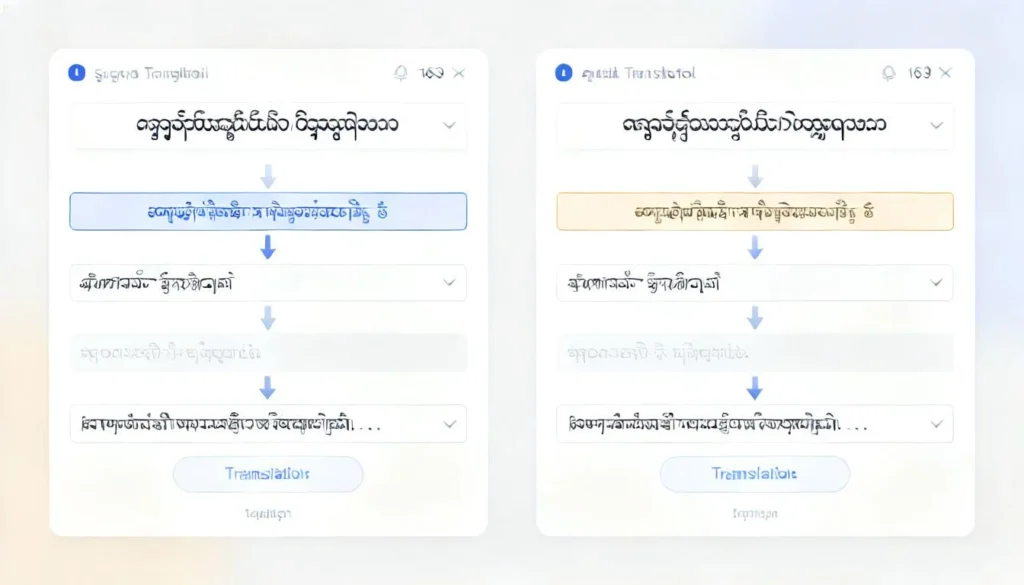
Finding an english to myanmar name translator that actually works is harder than it should be. Most tools treat name translation like word translation, and that approach falls apart quickly. Names carry sound, meaning, and cultural weight. This guide walks you through how Burmese names work, why standard translators fail, and what to use instead when you need your name written in Myanmar script.
Quick Answer: Burmese names don’t translate word-for-word from English. They are transliterated phonetically into Myanmar script based on how the name sounds. Use a dedicated transliteration tool or consult a native speaker for accurate results, especially for official documents.
Why Direct Translation Fails for Burmese Names
Burmese names operate on a completely different system than English names. In Myanmar, people don’t have family surnames in the Western sense. A person’s full name is typically two or three syllables chosen for their meaning and astrological significance. Names like “Aung San Suu Kyi” contain no inherited family name at all. Each syllable stands alone as a meaningful unit.
When you run “John Smith” through a standard english to myanmar name translator, the tool tries to find equivalent words. “John” becomes something meaningless, and “Smith” gets translated as the word for a blacksmith. That’s not how names work. You don’t translate the meaning of a name. You preserve the sound.
This distinction matters for anyone filling out forms, creating business cards, or introducing themselves in Myanmar. A mistranslated name can cause confusion at best and legal problems at worst. According to Myanmar’s official naming conventions documented by cultural heritage organizations, transliteration follows phonetic rules, not semantic ones.
Pro Tip: Always ask which type of conversion you need: phonetic transliteration (sound-based) or semantic translation (meaning-based). For names, you almost always want phonetic.
How Burmese Script and Phonetics Work
The Myanmar script is an abugida, meaning each consonant carries an inherent vowel sound that changes with diacritic marks. It contains 33 consonants and 12 basic vowels, with tone markers that alter pronunciation. This creates challenges when mapping English sounds to Burmese characters.
Some English sounds simply don’t exist in Burmese. The “th” sound in “Theodore” has no direct equivalent. The “v” sound gets approximated with a “b” or “w” sound depending on context. Final consonants often get dropped or modified because Burmese syllables typically end in vowels, nasal sounds, or glottal stops.
Here’s a comparison of common English name sounds and their Burmese approximations:
| English Sound | Burmese Approximation | Example Name | Transliterated Result |
|---|---|---|---|
| “John” (j) | ဂျ (gya) | John | ဂျွန် |
| “Mary” (m) | မ (ma) | Mary | မေရီ |
| “David” (d) | ဒ (da) | David | ဒေးဗစ် |
| “Sarah” (s) | ဆ (sa) | Sarah | ဆာရာ |
| “Peter” (p) | ပ (pa) | Peter | ပီတာ |
| “Linda” (l) | လ (la) | Linda | လင်ဒါ |
Notice how each English name gets stretched or compressed to fit Burmese syllable structure. “David” becomes three syllables: “Dei-vit.” “Linda” becomes two: “Lin-da.” This phonetic adaptation is the core of any accurate english to myanmar name translator.
Tools and Methods for Name Transliteration
You have several options when converting English names to Myanmar script, each with tradeoffs in accuracy, speed, and cost.
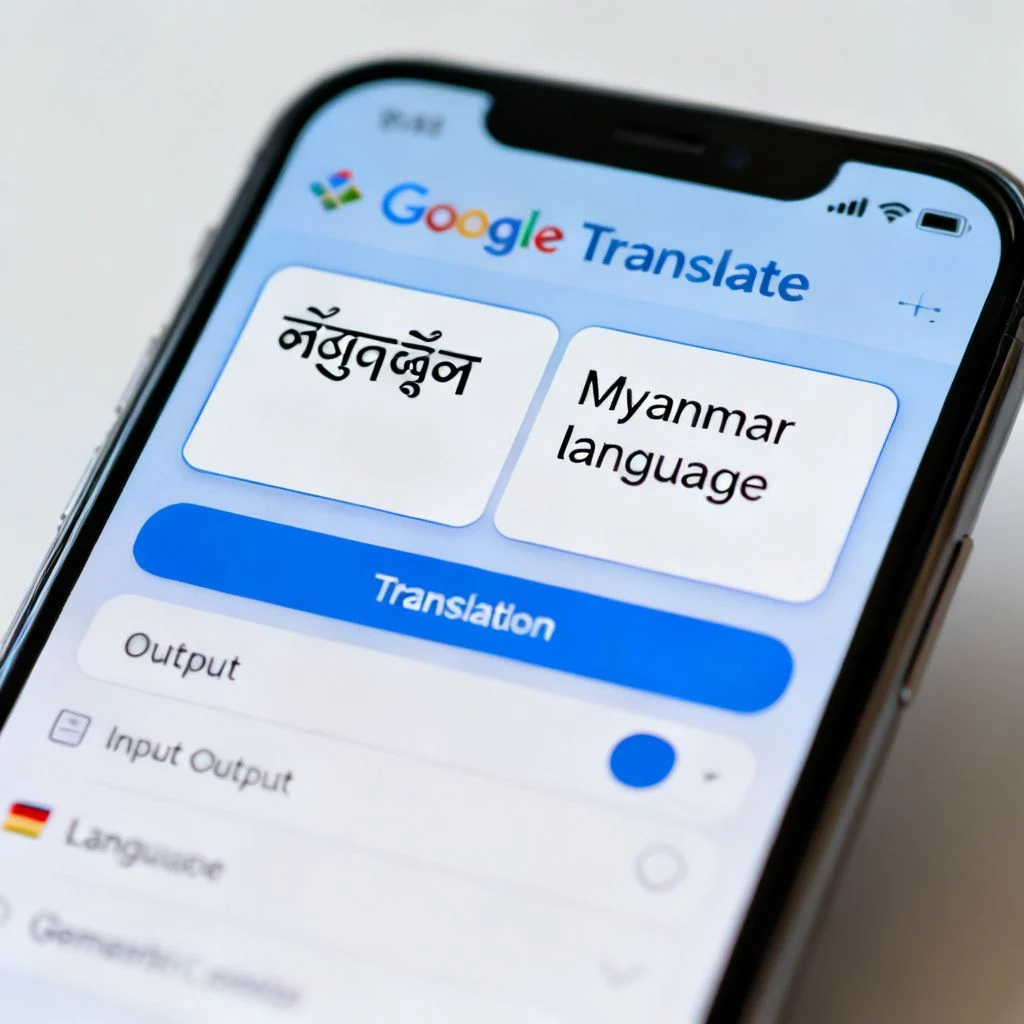
Online transliteration tools offer instant results but vary wildly in quality. Google Translate includes Myanmar as a supported language and can transliterate names phonetically, though it sometimes produces awkward results for less common names. Dedicated Burmese transliteration tools like those built by the Myanmar NLP community tend to perform better because they’re trained specifically on name patterns.
Native speaker consultation remains the gold standard. A Burmese speaker understands subtle pronunciation nuances, regional variations, and cultural appropriateness that automated tools miss. For official documents, marriage certificates, or legal paperwork, this is the only reliable option.
Language learning resources like the Burmese language courses from SOAS University of London or the materials published by the Myanmar Language Commission provide systematic transliteration rules you can apply yourself. This takes longer but builds genuine understanding.
The method you choose depends on your purpose:
- Casual use or social media: Free online tools work fine
- Business cards or professional materials: Use a paid service or native speaker
- Legal documents or official records: Native speaker verification is essential
- Learning the language: Study the transliteration rules yourself
Pro Tip: Test any online translator with a name you already know the correct transliteration for. If it gets “Aung San Suu Kyi” wrong, don’t trust it with your own name.
Common Mistakes When Translating Names to Myanmar
Even well-intentioned attempts at name transliteration go wrong in predictable ways. Understanding these pitfalls helps you avoid them.
Translating meaning instead of sound is the most common error. Someone named “Rose” doesn’t want the Burmese word for the flower (နှင်းဆီ, hnin si). They want their name to sound like “Rose” when spoken aloud. The correct transliteration is ရို့စ်, preserving the phonetics.
Ignoring tone markers creates confusion. Burmese is a tonal language with three tones: low, high, and creaky. A name transliterated without proper tone markers might still be readable but sounds wrong to native ears. This subtlety is why automated tools often produce technically correct but awkward results.
Applying English syllable stress patterns doesn’t work. Burmese has different stress rules, and forcing English rhythm onto Burmese syllables makes names sound unnatural. Native speakers instinctively adjust stress when adapting foreign names.
Using outdated romanization systems causes inconsistency. Myanmar has used multiple romanization standards over the years, and names transliterated under old systems look different from modern ones. Stick with the current standard used by the Myanmar government and international organizations.
Cultural Context: How Burmese People Use Names
Understanding how Burmese people actually use names helps you use your transliterated name appropriately.
Burmese people typically address each other by full name, not by a “last name” equivalent. “Aung San Suu Kyi” is addressed as “Daw Aung San Suu Kyi” with the honorific “Daw” for older women. There’s no “Ms. Suu Kyi” in Burmese culture. This means your transliterated name will be used in full whenever someone addresses you.
Honorifics matter enormously in Burmese social interaction. Men use “U” (ဦး) for older men, “Ko” (ကို) for peers, and “Maung” (မောင်) for younger men. Women use “Daw” (ဒေါ်) for older women and “Ma” (မ) for younger women. When you introduce yourself with your transliterated name, Burmese speakers will likely attach an appropriate honorific based on your age and status.
Many Burmese people also have an English name alongside their Burmese name, especially in business contexts. This dual naming practice means your transliterated name serves a specific purpose: helping Burmese speakers who don’t read English pronounce and remember your name. It’s a bridge, not a replacement for your identity.
Step-by-Step Guide to Transliterating Your Name
Here’s a practical process for getting your name into Myanmar script correctly.
Step 1: Break your name into syllables. “Christopher” becomes “Chris-to-pher.” “Elizabeth” becomes “E-liz-a-beth.” This syllable breakdown determines how the name maps to Burmese characters.
Step 2: Identify sounds that don’t exist in Burmese. The “ch” in “Christopher” approximates to ခ (kha) or ချ (cha) depending on the dialect. The “ph” becomes ဖ (pha). Write down each problem sound.
Step 3: Apply Burmese syllable structure. Each Burmese syllable follows a consonant-vowel pattern with optional final consonants. Fit your English syllables into this pattern, adding vowels where Burmese requires them and dropping sounds that don’t fit.
Step 4: Check with a native speaker or reliable tool. Run your transliteration through at least two independent sources. If they disagree, investigate why.
Step 5: Practice the pronunciation. Your transliterated name should sound close to your original name when a Burmese speaker reads it aloud. If it doesn’t, adjust the transliteration.
This process takes time but produces results you can actually use. A rushed transliteration leads to embarrassment or confusion later.
Pro Tip: Record yourself saying your name slowly, then find a Burmese speaker who can listen and write what they hear. This reverse approach often produces better results than starting from written English.
Key Takeaways
- Burmese names are transliterated phonetically, not translated by meaning
- The Myanmar script has 33 consonants and 12 vowels that don’t map one-to-one with English sounds
- Automated tools work for casual use, but native speaker verification is essential for official purposes
- Honorifics like “U,” “Daw,” “Ko,” and “Ma” change how your transliterated name gets used in conversation
- Testing any translator with a known name reveals its accuracy before you trust it with your own
Frequently Asked Questions About English to Myanmar Name Translators
Q: Can Google Translate convert English names to Myanmar script?
A: Google Translate can transliterate English names into Myanmar script phonetically, but results vary in quality. It works reasonably well for common names like “John” or “Mary” but struggles with less common names, names with unusual spellings, or names containing sounds that don’t exist in Burmese. For anything important, verify with a native speaker or dedicated transliteration tool.
Q: Do Burmese people have last names?
A: No, Burmese people traditionally do not have family surnames. A person’s full name consists of two or three given syllables chosen for their meaning and astrological significance. Children do not inherit any part of their parents’ names. This is why transliterating a Western name with a surname requires explaining the concept to Burmese speakers unfamiliar with the practice.
Q: How do I write my name in Burmese for a tattoo?
A: For a tattoo, work directly with a native Burmese speaker who understands calligraphy and can advise on appropriate script styles. Machine translation errors become permanent and embarrassing on skin. Also consider cultural sensitivity: some Burmese script styles carry religious or ceremonial significance that might make them inappropriate for casual use.
Q: What’s the difference between translation and transliteration?
A: Translation converts meaning from one language to another. Transliteration converts sounds from one writing system to another. For names, you want transliteration. “Rose” translated into Burmese becomes the word for the flower (နှင်းဆီ), but “Rose” transliterated preserves the sound of the name (ရို့စ်). Names almost always require transliteration.
Q: Are there different Burmese dialects that affect name transliteration?
A: Yes. Standard Burmese, based on the Yangon-Mandalay dialect, is used for most transliteration. But regional variations exist, and ethnic minority languages in Myanmar like Shan, Karen, and Kachin have their own scripts and pronunciation systems. A name transliterated for standard Burmese might not match how a Shan speaker would write it.
Q: How accurate are free online English to Myanmar name translators?
A: Free online tools typically achieve 70 to 80 percent accuracy for common names but drop significantly for uncommon names. They often miss tone markers, produce awkward syllable breaks, or apply inconsistent romanization standards. They’re fine for casual reference but not reliable enough for official documents or permanent use.
Q: Can I use my transliterated Burmese name on official documents in Myanmar?
A: For official documents, you need transliteration that matches the standards used by Myanmar government agencies. The Myanmar Language Commission publishes official transliteration guidelines, and government offices expect names to follow these standards. Working with a certified translator or government office ensures your documents won’t be rejected for inconsistent naming.
Q: Why does my name sound different when Burmese speakers say it?
A: Burmese phonology restricts which sounds can appear at the beginning and end of syllables. Final consonants get dropped or changed, certain English sounds get substituted with the closest Burmese equivalent, and tone patterns shift to match Burmese speech habits. This is normal and expected. The goal is the closest possible approximation, not an exact match.
References & Further Reading
- Myanmar Language Commission – Official government body for Burmese language standards and transliteration guidelines
- SOAS University of London Burmese Language Resources – Academic resources on Burmese linguistics and script
- Omniglot Burmese Script Guide – Detailed overview of Myanmar script, consonants, vowels, and tone markers
- Ethnologue Burmese Language Entry – Linguistic data on Burmese dialects, speaker populations, and related languages
—
About This Article: This guide draws on established Burmese linguistic resources and transliteration standards published by Myanmar government agencies and academic institutions. The transliteration examples follow current standard Burmese romanization conventions. For official purposes, always verify name transliterations with a certified native speaker or government-recognized translation service.