Need to Myanmar translate something and not sure where to start? Whether you have a business document, a website, a voice message, or a simple phrase you want to share with a Burmese speaker, getting an accurate translation into Myanmar language (Burmese) is trickier than most people expect. This guide breaks down the tools, the process, and the common pitfalls so you can get a translation that actually makes sense to a native reader.
Quick Answer: To Myanmar translate text, use a combination of Google Translate for quick drafts, a dedicated Burmese dictionary like Ornagai or MyOrdbok for word verification, and a native speaker for review if the content matters. For formal documents, professional translation services are the safest choice.
Why “To Myanmar Translate” Is Harder Than It Looks
The phrase “to Myanmar translate” itself tells you something important. People search for this in dozens of different ways because the language has two names: Myanmar and Burmese. The country is Myanmar, the language is officially called Myanmar language, but most people still say Burmese. That naming confusion is just the first hurdle.
The bigger challenge is the script. Burmese uses a circular, flowing alphabet that looks nothing like Latin characters. It is an abugida, meaning each consonant carries an inherent vowel sound that changes with diacritics. A single word can have stacked consonants, tone markers, and vowel shifts all packed into one visual cluster.
Here is what that means for translation:
- Word order differs. Burmese typically follows Subject-Object-Verb, unlike English’s Subject-Verb-Object.
- Tones matter. Burmese is a tonal language with three main tones (creaky, low, high). A wrong tone changes the meaning entirely.
- Politeness registers exist. You speak differently to monks, elders, and peers. Direct translation often misses this.
- No spaces between words. Burmese script uses spaces between phrases, not individual words, which makes automated segmentation harder.
Pro Tip: When you paste Burmese text into a translation tool, the tool first has to guess where one word ends and the next begins. This segmentation step is where many machine translations fail. Short, simple sentences give you much better results than long paragraphs.
The Best Tools for Myanmar Translation in 2024
Not all translation tools handle Burmese equally well. Some are built with Southeast Asian languages as an afterthought. Others, especially those developed in Myanmar or Thailand, do a far better job.
Here is a comparison of the most commonly used options:
| Tool | Best For | Burmese Accuracy | Offline Support | Cost |
|---|---|---|---|---|
| Google Translate | Quick phrases, basic documents | Moderate | Yes (app) | Free |
| Microsoft Translator | Business use, API integration | Moderate | Yes | Free / Paid API |
| Ornagai | Word lookup, dictionary definitions | High (word level) | No | Free |
| MyOrdbok | English-Myanmar dictionary | High (word level) | No | Free |
| iTranslate | Travel phrases, voice input | Moderate | Yes (premium) | Freemium |
| Professional services (Gengo, Translated.net) | Legal, medical, certified docs | High (human) | N/A | Paid |
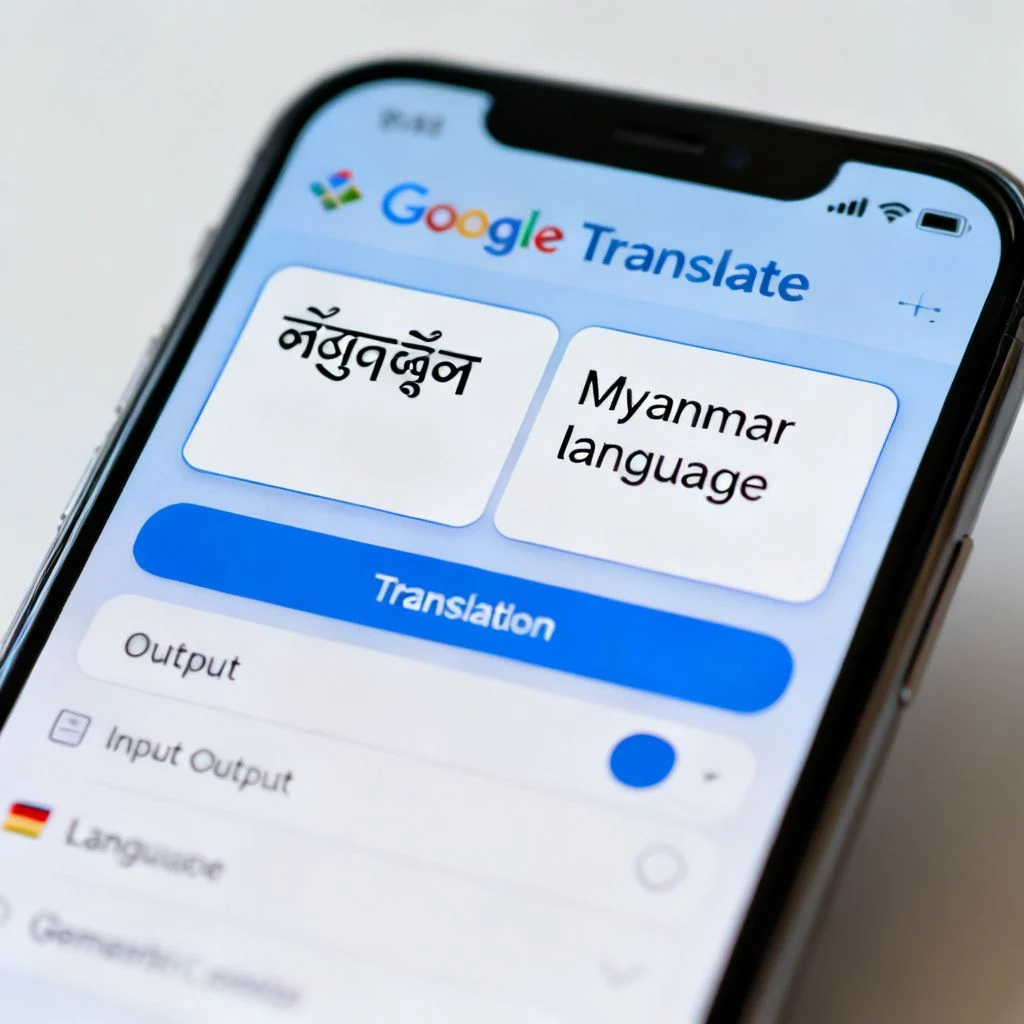
Google Translate supports Burmese and has improved significantly since it first added the language in 2014. But the quality gap between Google Translate’s Burmese output and its output for languages like Spanish or French is still noticeable. For casual phrases, it works. For anything where accuracy matters, you need to layer in other tools.
Pro Tip: Use Google Translate for a first pass, then verify individual words with Ornagai. Ornagai was built specifically for Burmese and gives you tone markers, alternative meanings, and usage examples that generic tools skip.
Step-by-Step: How to Translate English to Myanmar
Here is a practical workflow that produces better results than any single tool:
- Simplify your source text. Break long sentences into short ones. Remove idioms, slang, and cultural references that don’t have direct equivalents.
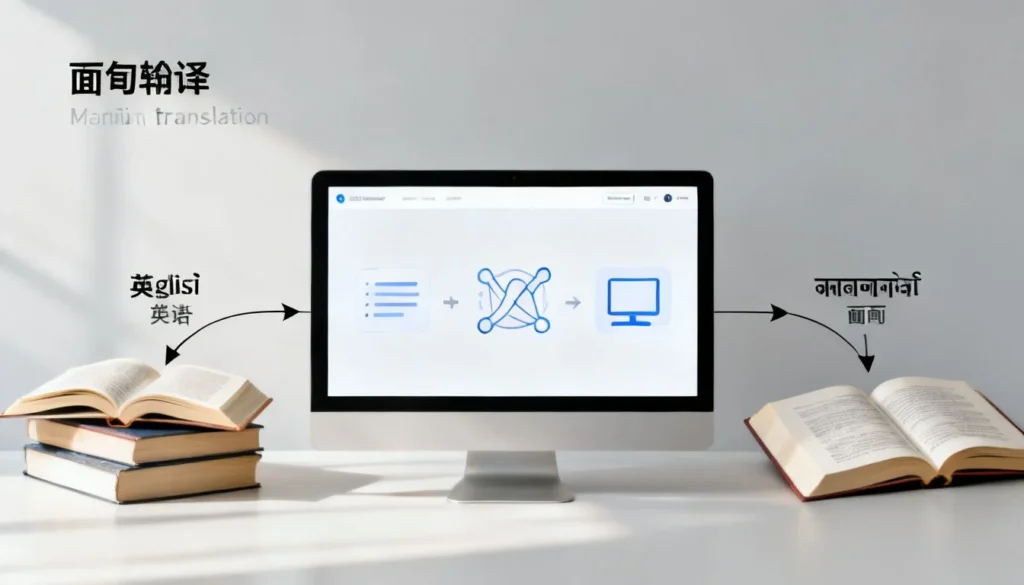
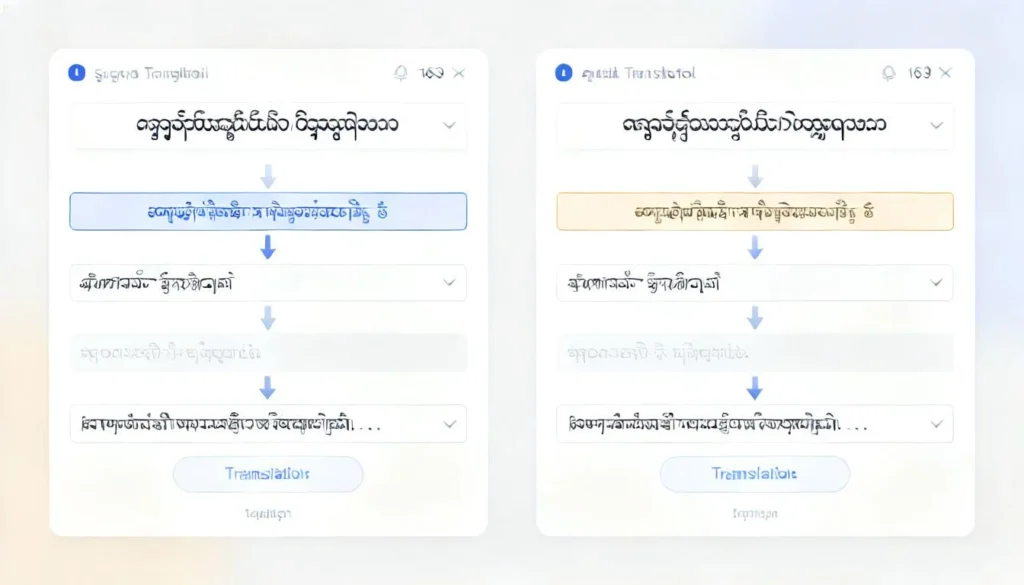
- Run it through Google Translate or Microsoft Translator. Get a rough draft.
- Verify key nouns and verbs with Ornagai or MyOrdbok. Look for words where the translation tool picked the wrong sense.
- Check the tone. If your text is formal (a business letter, a legal notice), the casual tone from machine translation will sound wrong. Adjust pronouns and particles.
- Have a native speaker review it. This is non-negotiable for anything public-facing. You can find reviewers on platforms like Upwork or through Myanmar community groups.
This workflow matters because Burmese has a lot of homonyms. The word “စာ” (sar) can mean “letter,” “writing,” or “to be written” depending on context and tone. A machine translator often guesses wrong.
Understanding Burmese Script and Its Impact on Translation
If you are translating into Burmese, you should understand at least the basics of how the script works. It will help you spot errors.
Burmese script has 33 consonants and 12 basic vowels. Vowels are written as diacritics around the consonant. The script is written left to right, like English, but the visual structure is circular. This comes from the historical use of palm leaves as writing material. Straight lines would tear the leaf, so letters evolved into curves.
Key things to know:
- Consonant stacking: Many Burmese words combine two or more consonants in a stacked formation. This changes the sound and sometimes the meaning.
- Tone markers: Two main symbols ( း and . ) indicate tones. Missing these in a translation is a serious error.
- Kinship terms: Burmese uses different words for “older brother,” “younger brother,” “older sister,” and “younger sister.” English just says brother or sister. A good translation must specify.
- Honorifics: The particle “ပါ” (pa) adds politeness. “ခင်ဗျား” (khin bya) is a polite “you” for men. “ရှင်” (shin) is the female equivalent. Machine translation often drops these.
Pro Tip: If you see a Burmese translation that looks like a wall of text with no breaks, that is normal. Burmese uses spaces between clauses, not words. Don’t try to “fix” the spacing. But do check that tone markers are present, especially on words that could have multiple meanings.
When to Use Machine Translation vs. Human Translation
Machine translation has come a long way, but Burmese is still considered a “low-resource language” in the NLP world. That means there is less training data available compared to English, Chinese, or Spanish. The result is higher error rates.
Here is a quick decision guide:
Machine translation is fine when:
- You need to understand the gist of a Burmese message
- You are translating casual, non-critical text
- You are translating single words or very short phrases
- You have no budget and the stakes are low
Human translation is necessary when:
- The document is legal, medical, or financial
- The text will be published or seen by customers
- The content includes cultural nuances, humor, or marketing language
- You need a certified translation for official purposes
- The source text contains technical terminology
For certified translations (birth certificates, marriage licenses, academic transcripts for immigration), you cannot use machine translation at all. Government agencies and courts require a certified human translator. Services like Gengo, Translated.net, and local translation agencies in Yangon offer certified Burmese translation.
The cost for professional Burmese translation typically ranges from $0.08 to $0.20 per word depending on the complexity and turnaround time. Certified documents often have a flat fee per page.
Common Mistakes People Make When Translating to Myanmar
After years of working with Burmese content, I see the same errors over and over. Here are the most frequent ones:
- Using the wrong register. Translating a business proposal with casual pronouns makes the company look unprofessional. Translating a friendly message with overly formal language sounds stiff and cold.
- Ignoring tone markers. A missing or extra tone marker can turn “come here” into “come to a dog” (a classic example Burmese learners know well).
- Translating idioms literally. “It’s raining cats and dogs” has no Burmese equivalent. The closest natural expression is about heavy rain, not animals.
- Using English word order. Burmese readers can often understand English word order, but it sounds unnatural and confusing in longer sentences.
- Forgetting that Burmese has no gendered pronouns. English “he” and “she” both translate to “သူ” (thu). Context determines gender. If your translation needs to specify gender, you have to add words like “man” or “woman.”
- Assuming one English word equals one Burmese word. Burmese is more analytic than English. One English word often requires a phrase in Burmese, and vice versa.
Pro Tip: Before you translate, ask yourself: who will read this? A young person in Yangon uses different Burmese than an older person in a rural village. The audience should shape your word choices, especially for pronouns and honorifics.
Key Takeaways
- Burmese (Myanmar language) uses a circular script with tones, stacked consonants, and no spaces between words, which makes machine translation error-prone.
- Google Translate and Microsoft Translator work for rough drafts, but always verify with Burmese-specific dictionaries like Ornagai or MyOrdbok.
- For legal, medical, or certified documents, human translation is mandatory. Machine output is not accepted for official purposes.
- Tone markers and politeness registers are critical. A missing tone marker changes the meaning of a word completely.
- The best workflow is: simplify source text, machine translate, verify with a dictionary, adjust register, and have a native speaker review.
Frequently Asked Questions About Myanmar Translation
Q: Is Burmese the same as Myanmar language?
A: Yes, Burmese and Myanmar language refer to the same language. “Burmese” is the older English term, while “Myanmar language” is the official name used by the government and in formal contexts. Both are correct.
Q: Can Google Translate translate Burmese accurately?
A: Google Translate can handle basic Burmese phrases and simple sentences with moderate accuracy. For complex text, legal documents, or anything with cultural nuance, it makes significant errors. Always verify important translations with a native speaker.
Q: How do I translate a PDF document to Myanmar?
A: You can upload a PDF to Google Translate (via the documents feature), but the formatting will be lost and the translation quality for Burmese will be rough. For professional results, use a human translation service that handles PDF files. Many services accept PDFs directly and return formatted translations.
Q: Is Burmese a tonal language?
A: Yes, Burmese has three main tones: creaky, low, and high. The tone of a syllable changes its meaning. This is why tone markers are essential in written Burmese and why machine translation often struggles with tone-dependent words.
Q: How much does professional Myanmar translation cost?
A: Professional Burmese translation typically costs between $0.08 and $0.20 per word for standard documents. Certified translations for official use often have a flat fee per page, usually ranging from $25 to $50 per page depending on the service.
Q: Can I translate Burmese voice messages to English?
A: Yes, several apps support Burmese speech recognition, including Google Translate and Microsoft Translator. The accuracy depends on the speaker’s clarity and dialect. For important voice content, consider using a human transcription and translation service.
Q: What is the best Burmese-English dictionary?
A: Ornagai and MyOrdbok are the two most respected free Burmese-English dictionaries online. Both are built specifically for Burmese and include tone markers, usage examples, and alternative meanings that generic translation tools lack.
Q: Why does Burmese writing have no spaces between words?
A: Burmese script uses spaces to separate phrases or clauses, not individual words. Words are distinguished by the script’s internal structure (consonants, vowel diacritics, and tone markers). This makes automated word segmentation difficult for translation software.
Q: How do I get a certified translation into Myanmar for immigration purposes?
A: You need to use a certified translation service that provides a signed certificate of accuracy. Look for services that specialize in Burmese and offer notarized or certified documents. Check with the receiving agency first to confirm their specific requirements.
Q: Are there different dialects of Burmese?
A: Yes, there are regional variations. Standard Burmese is based on the Yangon-Mandalay dialect. Other dialects include Rakhine (Arakanese), Tavoyan, and Intha. Most translation tools and services use standard Burmese unless specified otherwise.
References & Further Reading
- Omniglot: Burmese Script and Pronunciation – A detailed guide to how the Burmese alphabet works, including tone markers and consonant stacking.
- Ornagai Burmese Dictionary – A free Burmese-English dictionary built specifically for accurate word-level translation with tone information.
- Ethnologue: Burmese Language Profile – Authoritative information on Burmese dialects, speaker population, and language classification.
- Google Translate Help: Supported Languages – Official documentation on Burmese support in Google Translate, including features and limitations.
—
About This Article: This guide was written based on practical experience working with Burmese language content, translation workflows, and the specific challenges of Southeast Asian language scripts. The recommendations reflect current tool capabilities and common professional translation practices as of 2024. For critical translations, always consult a certified human translator.