Learning to translate Myanmar to Japanese presents a unique challenge that most generic translation advice simply does not cover. These two languages come from completely different families. Burmese belongs to the Sino-Tibetan group while Japanese is a Japonic language. No shared alphabet, no shared grammar structure, and very few shared cultural reference points. If you are a Burmese speaker trying to communicate in Japanese, or you need to convert documents between these two languages, you have probably already discovered that Google Translate alone leaves a lot to be desired.
This guide breaks down the actual process, the tools worth using, and the mistakes that cost you accuracy.
Quick Answer: For casual Myanmar to Japanese translation, Google Translate and Bing Translator work for basic sentences. For professional or official documents, you need a human translator or a specialized service because the grammar structures are too different for machine-only translation to be reliable.
Why Myanmar to Japanese Translation Is So Difficult
The core problem is structural. Burmese is an agglutinative language that stacks particles and suffixes onto root words. Japanese does something similar, but with a completely different set of rules and a far more complex honorific system. When you translate Myanmar to Japanese, you are not just swapping words. You are rebuilding the sentence logic.
Take a simple Burmese sentence like “ကျွန်တော် စား ပါ တယ်” (I eat). The word order is Subject-Object-Verb, which actually matches Japanese. That is the good news. The bad news starts when you add politeness levels, tense markers, and particles. Burmese uses “ပါ” for politeness. Japanese has multiple levels: ます form, です form, humble form, honorific form. Choosing the wrong one in a business email can be embarrassing or even offensive.
Another major hurdle is the writing system. Burmese script is an abugida where consonants carry an inherent vowel. Japanese uses three scripts: hiragana, katakana, and kanji. Machine translation systems often struggle with Burmese script recognition before they even get to the translation step. If you scan a Burmese document with OCR, expect errors. Those errors compound when the text then gets translated into Japanese.
Pro Tip: Always clean up the Burmese source text before running it through any translation tool. Remove line breaks, fix OCR errors, and make sure the text is in Unicode. Zawgyi-encoded Burmese text will produce garbage results in almost every translation engine.
The Best Tools for Myanmar to Japanese Translation
No single tool handles this language pair perfectly. Here is an honest breakdown of what works and what does not.
| Tool | Best For | Accuracy Level | Cost |
|---|---|---|---|
| Google Translate | Casual phrases, getting the gist | Medium | Free |
| Bing Translator | Slightly better for Burmese script | Medium | Free |
| DeepL | Not available for Burmese directly | N/A | Paid |
| Professional translators (ProZ, Gengo) | Official documents, legal texts | High | $0.08-$0.15 per word |
| ChatGPT / Claude | Drafting with context, explaining nuances | Medium-High | Free to $20/month |
Google Translate supports Burmese to Japanese directly. The quality is passable for simple sentences. For example, “ဒီနေ့ ရာသီဥတု ကောင်းတယ်” (The weather is good today) translates reasonably well. But once you get into complex sentences with subordinate clauses, the output starts to break down.
ChatGPT and Claude actually perform surprisingly well for this pair, especially when you provide context. You can tell the model “I am writing a formal email to a Japanese business partner” and it will adjust the politeness level accordingly. Google Translate cannot do that.
Pro Tip: Use a two-step process for important translations. First, run the text through Google Translate or ChatGPT. Then, take the Japanese output and run it back through a Japanese to Burmese translation. Compare the results. If the back-translation does not match your original meaning, you have found a problem area.
Step-by-Step Process for Accurate Translation
Follow this workflow when you need to translate Myanmar to Japanese for anything that matters.
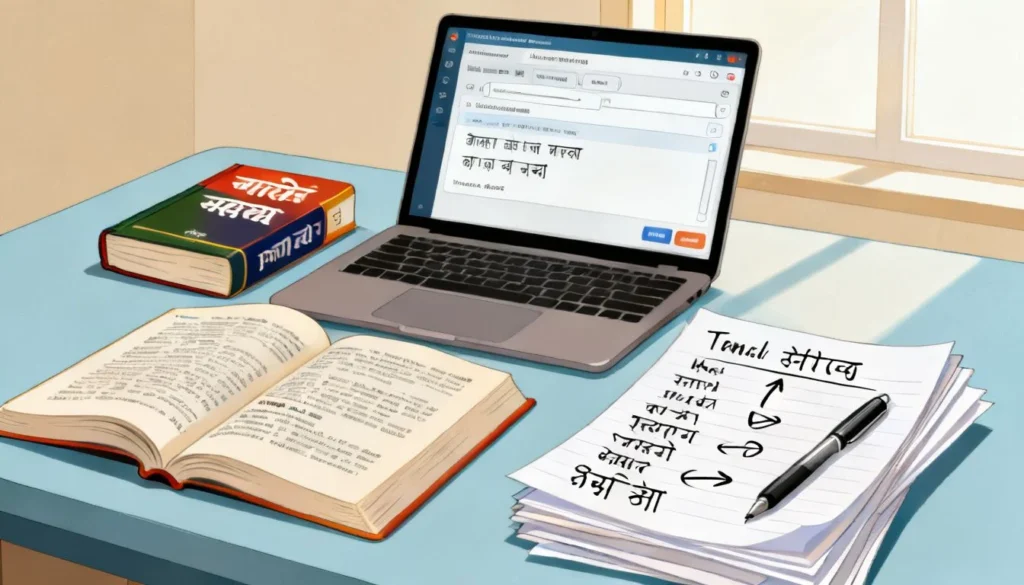
- Prepare the source text. Convert any Zawgyi text to Unicode. Fix spelling errors. Break long paragraphs into shorter sentences. This single step improves machine translation quality more than any tool choice.
- Run a first-pass machine translation. Use Google Translate or ChatGPT for the initial draft. Do not edit anything yet. Just get a rough version on the screen.
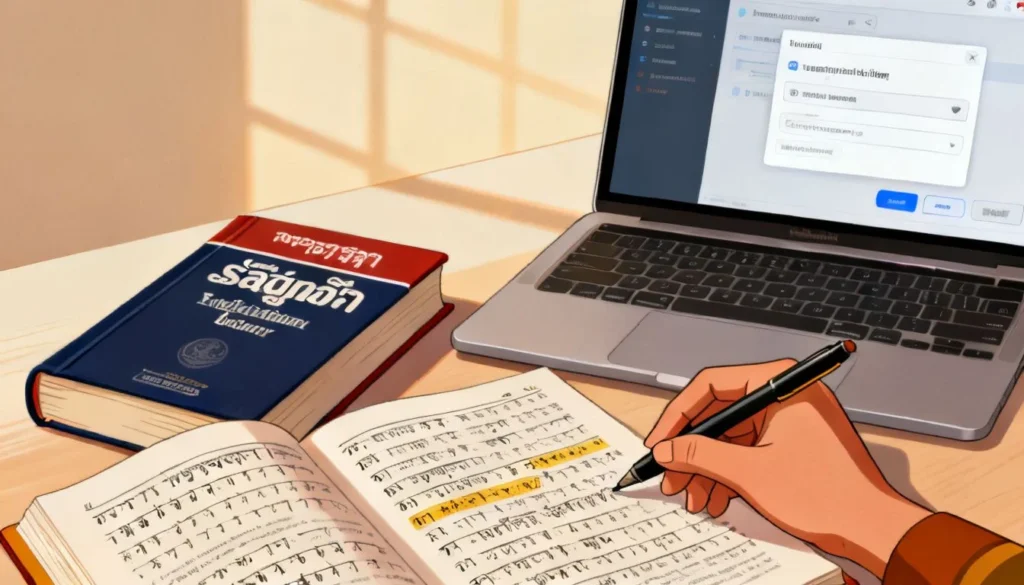
- Identify the context markers. Look for words that change meaning based on context. Burmese has many homonyms. The word “သွား” can mean “to go” or “tooth” depending on context. Japanese has similar issues with kanji readings. Mark these spots for manual review.
- Check the politeness level. This is the biggest failure point for machine translation. Burmese politeness markers do not map cleanly to Japanese keigo. If the Japanese output uses です/ます forms when you need humble or honorific language, fix it manually.
- Verify names and proper nouns. Burmese names like “အောင်ဆန်းစုကြည်” get transliterated into Japanese katakana. Different tools produce different katakana versions. Pick one consistent spelling and stick with it throughout your document.
- Have a native speaker review the output. This is non-negotiable for anything official. Even the best machine translation for this pair has a noticeable error rate.
The whole process takes longer than just hitting “translate” and copying the result. But the difference in quality is substantial, especially for business or legal documents.
Pro Tip: Create a personal glossary of frequently used terms. If you regularly translate Myanmar to Japanese for a specific industry, keep a list of approved translations for technical terms. Feed this glossary to ChatGPT as context for more consistent results.
Common Mistakes to Avoid
Most errors in Myanmar to Japanese translation fall into predictable categories. Knowing these helps you catch them before they cause problems.
Mistake 1: Ignoring the honorific system. Japanese requires you to choose between casual, polite, and honorific speech. Burmese has politeness markers but nothing as complex as keigo. Machine translation often defaults to the polite です/ます form, which is safe but sometimes wrong. For business emails to superiors, you need humble language for your own actions and honorific language for the other person’s actions. Getting this wrong can make you sound arrogant or rude.
Mistake 2: Translating word by word. Burmese and Japanese both use SOV word order, which creates a false sense of similarity. The internal grammar is very different. Burmese particles like “ကို” (object marker) and “မှာ” (location marker) do not have one-to-one equivalents in Japanese particles like を, に, で, and が. You need to understand the function of each particle in context, not just find a “matching” particle.
Mistake 3: Trusting OCR for handwritten Burmese. If you are working with scanned documents, the OCR step is often the weakest link. Burmese handwriting recognition is still unreliable. Handwritten letters get misread as different characters, and those errors carry through to the Japanese output. Always proofread the Burmese text before translation.
Mistake 4: Mixing Zawgyi and Unicode. This is a uniquely Burmese problem. Many older Burmese websites and documents use Zawgyi font encoding, which is not standard Unicode. If you paste Zawgyi text into Google Translate, the output will be complete nonsense. Use a Zawgyi-to-Unicode converter first.
Pro Tip: Test your Burmese text by copying it into a Unicode-aware text editor. If the characters look wrong or the text appears as boxes and gibberish, you are dealing with Zawgyi encoding. Convert it before translating.
When to Hire a Professional Translator
Machine translation has improved dramatically, but there are situations where it is simply not good enough. Here is when you should pay a human.
Legal documents. Contracts, court documents, immigration paperwork. A mistranslated clause can have serious legal consequences. Professional translators who work with Myanmar to Japanese pairs are rare, but they exist. Expect to pay a premium.
Medical records. Patient histories, prescriptions, diagnostic reports. Accuracy here is literally a matter of health and safety. Do not rely on Google Translate for medical information.
Business negotiations. When you are negotiating a deal, nuance matters. A slightly awkward translation can make you seem less competent or, worse, offend your Japanese counterpart. Professional interpreters and translators pay for themselves in these situations.
Literary or marketing content. If you are translating a book, a website, or advertising copy, you need someone who understands both cultures. Direct translation of marketing slogans usually falls flat. A professional will adapt the message, not just translate the words.
For everything else, the tools and process described above will get you 80 to 90 percent of the way there. That is often enough for personal communication, casual emails, and understanding the gist of a document.
Key Takeaways
- Myanmar to Japanese translation is structurally difficult because the two languages share no common script, grammar system, or cultural framework
- Google Translate and ChatGPT work for casual use, but both struggle with politeness levels and complex sentences
- The biggest quality improvements come from preparing the source text properly, especially converting Zawgyi to Unicode
- Japanese honorific language (keigo) has no equivalent in Burmese, making it the most common source of translation errors
- Hire a professional translator for legal, medical, or business-critical documents
Frequently Asked Questions
Q: Is Google Translate good for Myanmar to Japanese?
A: Google Translate works for basic sentences and getting the general meaning of a text. However, it struggles with complex grammar, honorific levels, and context-dependent words. For casual use it is fine. For anything important, use it only as a first draft.
Q: Can I use ChatGPT to translate Myanmar to Japanese?
A: Yes, ChatGPT and Claude perform well for this language pair, especially when you provide context about the situation and desired politeness level. The output is often better than Google Translate for longer, more complex texts. Still review the results carefully.
Q: How do I convert Zawgyi Burmese text to Unicode before translating?
A: Use a free online converter tool. Several websites offer Zawgyi-to-Unicode conversion. Paste your Zawgyi text into the converter, copy the Unicode output, and then paste that into your translation tool. This step is essential because most translation engines only recognize Unicode Burmese.
Q: What is the hardest part of translating Myanmar to Japanese?
A: The honorific system. Japanese keigo requires different verb forms depending on the social relationship between speaker and listener. Burmese politeness is much simpler. Machine translation tools routinely get this wrong, which can make the Japanese output sound rude or inappropriate.
Q: How much does professional Myanmar to Japanese translation cost?
A: Rates vary widely. Freelance translators on platforms like ProZ or Gengo typically charge between $0.08 and $0.15 per word for this language pair. Specialized fields like legal or medical translation cost more. Expect to pay $50 to $150 for a single-page document.
Q: Are there any good Myanmar to Japanese dictionaries online?
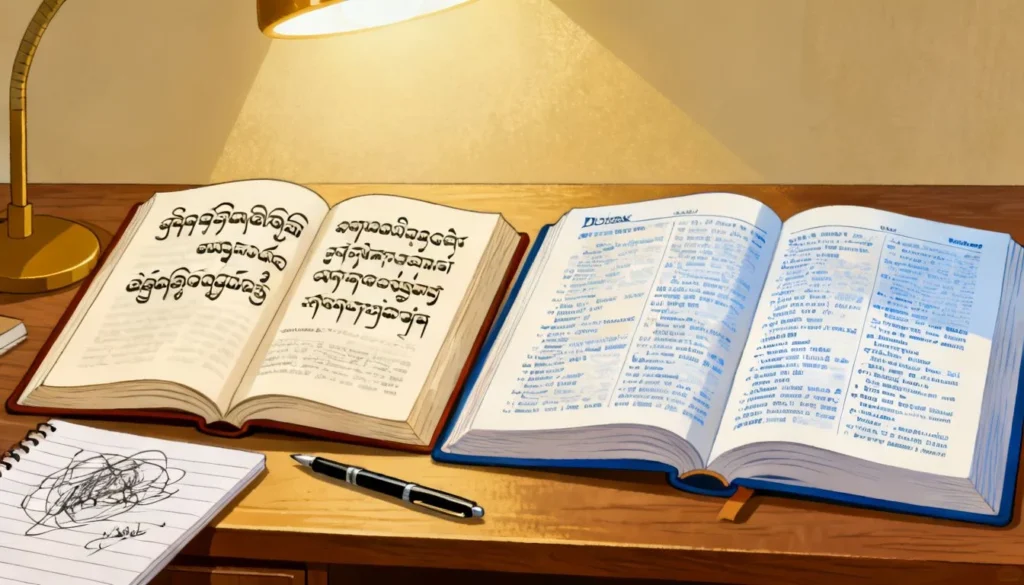
A: Direct Myanmar-Japanese dictionaries are limited. Most people use a two-step approach: Myanmar to English, then English to Japanese. Glosbe offers a basic Myanmar-Japanese dictionary, but the coverage is incomplete. For serious work, build your own glossary over time.
Q: Why does my translated Japanese text sound unnatural?
A: Machine translation tends to produce grammatically correct but stiff Japanese. Natural Japanese uses sentence-ending particles, contractions, and context-dependent omissions that machines rarely replicate. Having a native speaker review and adjust the text is the best fix.
Q: Can I translate a scanned Burmese document to Japanese automatically?
A: You can try, but expect problems. The OCR step for Burmese script is unreliable, especially for handwritten text or older fonts. The OCR errors will carry through to the Japanese translation. Always proofread the OCR output before translating.
References & Further Reading
- Google Translate Documentation: Supported Languages – Official list of supported language pairs including Burmese and Japanese
- Ethnologue: Burmese Language Profile – Linguistic information about the Burmese language and its classification
- Ethnologue: Japanese Language Profile – Linguistic information about Japanese and its writing systems
- The Unicode Consortium: Myanmar Script – Official Unicode standard for the Burmese writing system
- ProZ.com: Burmese to Japanese Translators – Directory of professional translators working with this language pair
—
About This Article: This guide is based on practical experience working with Southeast Asian language translation workflows and research into the structural differences between Sino-Tibetan and Japonic language families. The recommendations reflect current tool capabilities as of the publication date. Translation technology changes quickly, so test your specific use case before committing to a workflow.
Pingback: Myanmar to Korean Translate: A Complete Guide to…
Pingback: Myanmar to Thailand Translate: A Practical Guide to…