If you have ever tried to translate English to Myanmar Burmese, you already know it is not as simple as swapping words one for one. The sentence structure works differently, the script is completely unique, and direct translation often produces results that confuse native speakers. This guide walks you through the most reliable methods, the tools that actually work, and the specific grammar points you need to understand to avoid embarrassing mistakes.
Quick Answer: For short phrases and casual use, Google Translate and Microsoft Translator handle basic English to Myanmar Burmese translation reasonably well. For professional documents, business communication, or anything where accuracy matters, use a human translator or a hybrid approach with tools like Glosbe for context checking.
Why English to Myanmar Burmese Translation Is So Difficult
Myanmar Burmese belongs to the Tibeto-Burman language family, which means it shares almost no structural DNA with English. The challenges start before you even get to vocabulary.
The Burmese script, known as Myanmar script, consists of 33 consonants and 12 basic vowels, written in circular shapes that evolved from the Brahmi script of ancient India. Unlike English, which reads left to right in a straight line, Burmese letters cluster into syllable blocks. Spaces in written Burmese do not separate words the way they do in English. Instead, spaces mark phrase boundaries or pauses. This alone breaks most naive translation algorithms.
Then there is the grammar. Burmese is a subject-object-verb (SOV) language. English is subject-verb-object (SVO). So “I eat rice” becomes “I rice eat” in Burmese word order. Add in postpositions instead of prepositions, classifiers for counting nouns, and a complex system of honorific registers that change based on social status, and you have a genuinely hard translation problem.
Pro Tip: When evaluating any English to Myanmar Burmese translation tool, test it with a sentence that includes a number and a noun. Classifier errors are the fastest way to spot a weak translation engine.

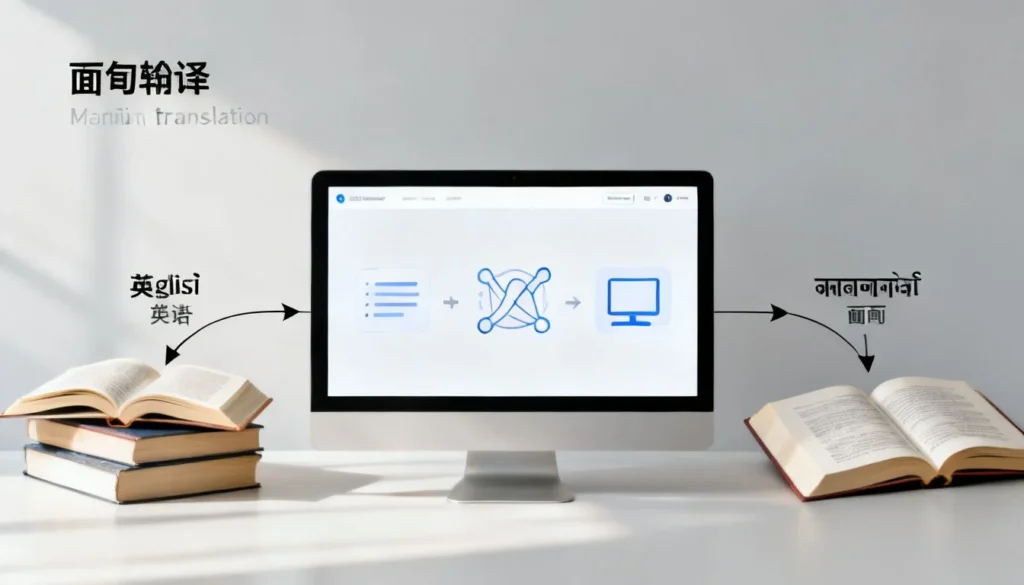
Best Tools to Translate English to Myanmar Burmese
No single tool gets everything right. The right choice depends on what you are translating and why.
Free Machine Translation Options
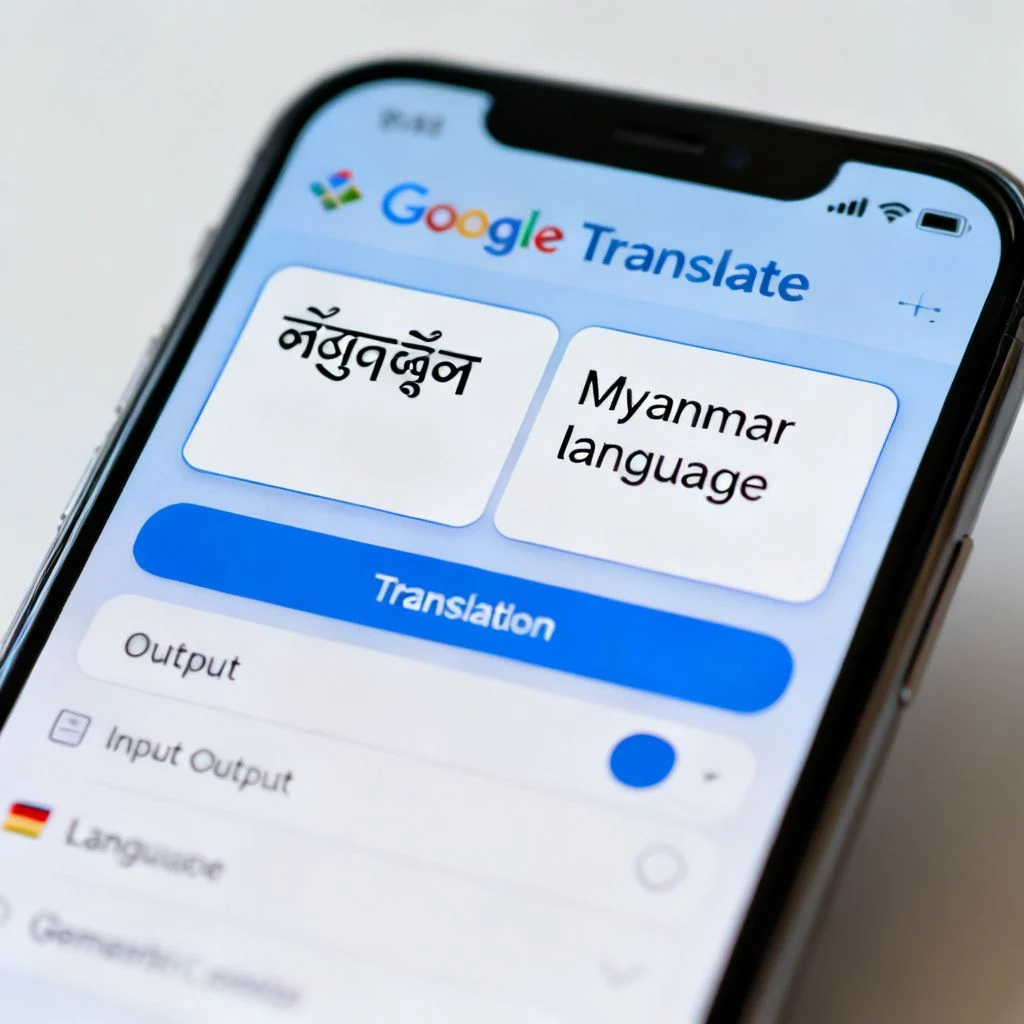
Google Translate supports Burmese and has improved significantly since it added neural machine translation for the language in 2016. It handles everyday conversational phrases acceptably. But it struggles with the honorific system and frequently drops or misplaces classifiers.
Microsoft Translator also supports Burmese and tends to perform slightly better on formal or technical text, based on side-by-side comparisons from multilingual users. Its offline mode is useful for travelers.
Glosbe works differently. It is a community-built dictionary with millions of translated example sentences. This makes it invaluable for checking how a specific English phrase gets rendered in real Burmese contexts, rather than trusting a single algorithmic output.
Paid and Professional Options
For anything legally binding, medical, or business-critical, machine translation is not enough. Professional translation services like Gengo, TransPerfect, and Stepes offer human Burmese translators with subject-matter expertise. Rates vary widely, but expect to pay $0.10 to $0.25 per word for professional Burmese translation.
| Tool | Best For | Accuracy | Cost |
|---|---|---|---|
| Google Translate | Casual phrases, travel | Moderate | Free |
| Microsoft Translator | Formal text, offline use | Moderate to Good | Free |
| Glosbe | Context checking, examples | High (human-sourced) | Free |
| Human translator (Gengo, etc.) | Legal, medical, business | Highest | $0.10-$0.25/word |
| Ornagai | Dictionary lookup, script learning | High for single words | Free |
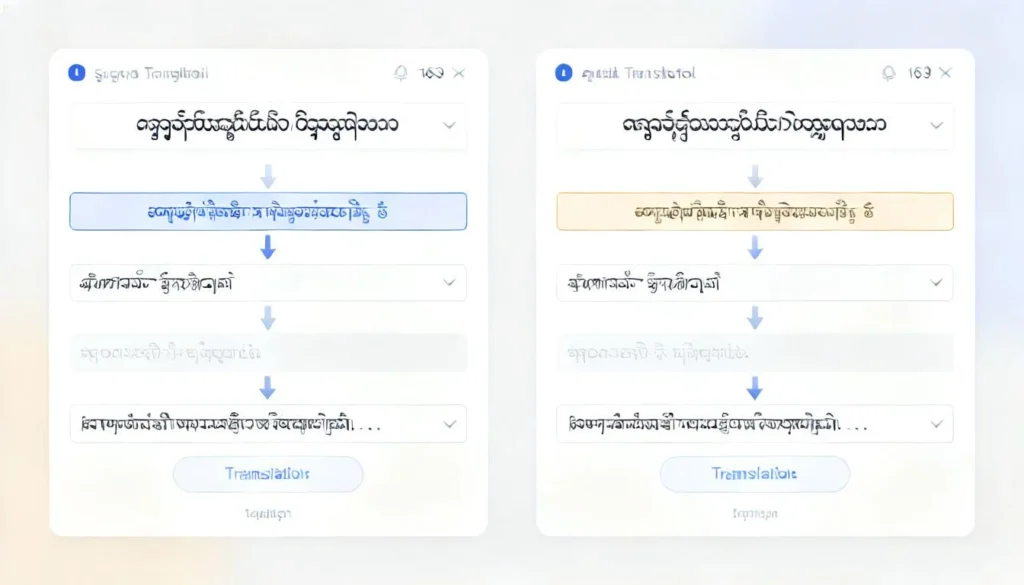
Pro Tip: Use two independent tools and compare outputs. If Google Translate and Microsoft Translator disagree on a sentence, that is a red flag that the translation needs human review.
Step-by-Step: How to Translate English to Myanmar Burmese Accurately
Step 1: Simplify Your English First
The single most effective thing you can do before translating is to rewrite your English source text. Short sentences. Active voice. No idioms. No phrasal verbs like “put up with” or “get around to.” These rarely have direct Burmese equivalents.
For example, instead of “We need to circle back on this next week,” write “We will discuss this again next week.” The second version translates cleanly. The first produces nonsense.
Step 2: Choose the Right Tool for the Job
Match the tool to the content type. Casual message to a friend? Google Translate is fine. Product description for an e-commerce site? Use a human translator. Internal business memo? Try Microsoft Translator, then have a native speaker review it.
Step 3: Run the Translation and Check for Classifiers
Burmese uses classifiers (also called measure words) when counting nouns. English does not. So “three books” in Burmese is roughly “book three [classifier for flat objects].” If your translation output for a counted noun does not include something between the number and the noun, it is probably wrong.
Step 4: Verify with Glosbe or a Native Speaker
Paste the Burmese output back into Glosbe and look at the example sentences. Does the phrase pattern match how real Burmese speakers write? If not, revise.
Step 5: Format the Script Correctly
Burmese text requires proper Unicode support. Many older systems use Zawgyi font, a non-standard encoding that displays incorrectly on modern devices. Always ensure your output uses Unicode 5.1+ Burmese, not Zawgyi. This is a common source of “my translation looks like boxes” complaints.
Common Mistakes When Translating English to Myanmar Burmese
Ignoring the honorific system. Burmese has different vocabulary for speaking to monks, elders, and people of higher status. Using the wrong register is not just grammatically wrong, it is socially offensive. Machine translation rarely gets this right.
Translating idioms literally. “Break a leg” means nothing in Burmese. “It’s raining cats and dogs” becomes absurd. Always replace idioms with plain language before translating.
Forgetting that Burmese has no verb conjugation for tense. Burmese indicates time through particles and context, not verb changes. A direct English-to-Burmese translation that tries to preserve English tense structure often adds unnecessary words that make the Burmese sound unnatural.
Using Zawgyi instead of Unicode. This affects display, not grammar, but it is the most common practical failure in real-world use. If you send Zawgyi-encoded Burmese to someone using a modern phone, they will see gibberish.
Trusting machine translation for names and proper nouns. Burmese transliteration of English names is inconsistent. “John” might come out as several different Burmese spellings depending on the tool. Always double-check proper nouns.
Pro Tip: When translating for a specific audience, mention the intended recipient’s social status or relationship to you. A human translator can then select the correct honorific register. A machine cannot.
When to Use a Human Translator Instead of a Tool
Machine translation has come far, but Burmese remains one of the languages where it is least reliable for anything consequential. The Burmese language has fewer digitized resources than major world languages, which means training data for neural machine translation is thinner. Google’s own research has acknowledged that low-resource languages like Burmese lag behind high-resource languages in translation quality.
Use a human translator when:
- The document is legally binding (contracts, agreements, terms of service)
- The content is medical or safety-related
- You are publishing marketing copy for a Burmese-speaking audience
- The communication involves government or official institutions
- You need culturally appropriate tone, not just literal accuracy
The cost of a professional human translation is small compared to the cost of a mistranslated contract or an offended business partner.
Key Takeaways
- English to Myanmar Burmese translation is hard because of different word order (SOV vs SVO), a unique script, and a complex honorific system.
- Free tools like Google Translate and Microsoft Translator work for casual use but fail on formal or nuanced content.
- Glosbe is the best free resource for checking how phrases appear in real Burmese contexts.
- Always simplify English source text before translating, removing idioms, phrasal verbs, and complex sentence structures.
- For legal, medical, or business content, use a professional human translator. The accuracy gap is too wide to risk it.
Frequently Asked Questions
Q: Is Google Translate accurate for English to Myanmar Burmese?
A: Google Translate is accurate enough for basic phrases, travel vocabulary, and casual conversation. It becomes unreliable with complex sentences, formal registers, and anything involving classifiers or honorifics. For important content, verify with a native speaker or use a human translator.
Q: How do I type Burmese script on my computer or phone?
A: On Windows, add the Myanmar language pack through Settings and switch keyboard layouts. On Mac, enable the Myanmar keyboard in System Preferences. On Android and iOS, add Burmese from the language settings. Use Unicode-compliant keyboards, not Zawgyi, to ensure compatibility.
Q: What is the difference between Zawgyi and Unicode Burmese?
A: Zawgyi is an older, non-standard font encoding for Burmese that was widely used before Unicode support became common. It is incompatible with modern systems and displays incorrectly on most devices. Unicode is the international standard and should be used for all new Burmese text.
Q: Can I translate English to Myanmar Burmese offline?
A: Yes. Microsoft Translator offers offline language packs that include Burmese. Google Translate also supports offline translation for Burmese if you download the language pack in advance. These offline modes are useful for travel but have the same accuracy limitations as online machine translation.
Q: Why does Burmese text sometimes appear as boxes or question marks?
A: This happens when the text is encoded in Zawgyi but displayed on a system expecting Unicode, or when the device lacks a Burmese font. Install a Unicode-compliant Burmese font and ensure any text you receive is converted from Zawgyi to Unicode using a tool like the Google Input Tools converter.
Q: How do I translate English names into Burmese?
A: English names are transliterated phonetically into Burmese script, but there is no single standard. Different translators may produce different spellings. For official documents, consult a native speaker or professional translator who can choose the most natural and consistent transliteration.
Q: What are classifiers in Burmese and why do they matter for translation?
A: Classifiers are words used between a number and a noun in Burmese, similar to “sheet” in “three sheets of paper” but applied to almost all nouns. English does not have this system, so machine translators often omit or misuse classifiers. Correct classifier use is essential for natural-sounding Burmese.
Q: Is Burmese a tonal language? Does tone affect written translation?
A: Burmese is a tonal language with three tones (low, high, creaky), but tone is marked in the written script through diacritics and vowel combinations. Written Burmese encodes tone, so a correct written translation must use the right tone markers. Machine translation handles written tone markers reasonably well but can still make errors that change word meaning.
References & Further Reading
- Google Translate Help: Supported Languages – Official list of languages supported by Google Translate, including Burmese.
- Microsoft Translator: Burmese Language Support – Documentation of Burmese support and offline capabilities in Microsoft Translator.
- Ethnologue: Burmese Language Profile – Authoritative linguistic data on Burmese, including speaker counts and language family classification.
- Unicode Consortium: Myanmar Script Standard – The official Unicode standard for Myanmar script, essential for understanding proper encoding.
- Glosbe English-Burmese Dictionary – Community-built dictionary with millions of real-world example sentences.
—
About This Article: This guide draws on practical experience translating between English and Burmese for both personal and professional contexts, combined with research into the linguistic structures that make Burmese uniquely challenging for machine translation. The tool recommendations reflect current capabilities as of early 2025 and may change as translation technology improves.




Pingback: Myanmar to English Translation Keyboard: Complete Setup…