Finding a reliable way to translate english to myanmarxxx can feel like a maze. You type a phrase into a free tool, get a result, and then wonder if it actually makes sense to a native speaker. Maybe you are helping a friend with paperwork, communicating with family, or working on a business document. The frustration is real when a bad translation creates confusion instead of clarity.
This guide cuts through the noise. You will learn why direct translation often fails, which methods actually work, and how to choose the right approach for different situations. No fluff, just practical steps you can use today.
Quick Answer: For casual phrases, Google Translate or Bing Translator work fine. For professional documents, legal papers, or anything where accuracy matters, use a professional human translator or a hybrid approach combining machine translation with human review. The Burmese language has unique grammatical structures that make word-for-word translation unreliable.
Why English to Myanmar Translation Is Trickier Than You Think
Burmese, also known as Myanmar language, belongs to the Sino-Tibetan language family. It shares almost no structural DNA with English. This is not like translating English to Spanish or French, where sentence patterns often line up neatly.
The script itself is a barrier. Burmese uses a circular, cursive-like alphabet derived from the Brahmic script. There are 33 consonants and 12 basic vowels, plus tone markers that change meaning entirely. A single word can mean completely different things depending on the tone you use.
Word order presents another challenge. English follows Subject-Verb-Object (SVO): “I eat rice.” Burmese follows Subject-Object-Verb (SOV): “I rice eat.” This means a literal word-by-word translation produces garbled results.
Then there is the politeness register system. Burmese speakers use different vocabulary and sentence endings depending on the social status of who they are talking to. A phrase you would use with a friend sounds rude when directed at an elder or a monk. Machine translation tools rarely capture this nuance.
The bottom line: English to Myanmar translation requires understanding both linguistic structure and cultural context. Skipping either one leads to errors that range from awkward to offensive.
The Three Main Methods for English to Myanmar Translation
You have three realistic options, each with clear trade-offs. Choosing the right one depends on your goal, budget, and deadline.
Method 1: Free Machine Translation Tools
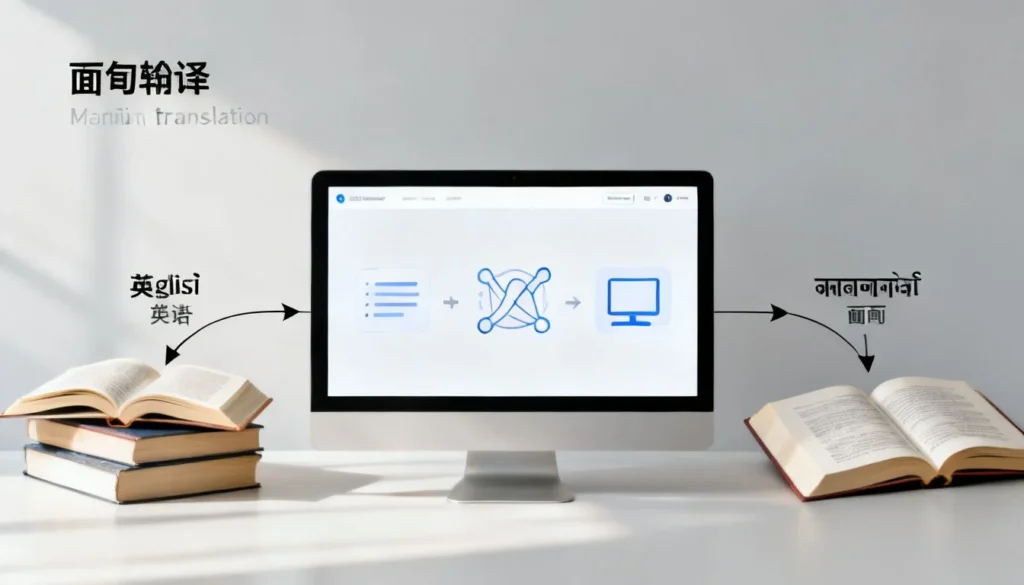
Google Translate supports Burmese and has improved significantly since 2014, when it first added the language. Microsoft Translator also offers Burmese support. These tools work best for short, simple sentences.
Pros:
- Instant results
- Free to use
- Available on mobile and desktop
- Good for getting the gist of a text
Cons:
- Struggles with idioms and cultural expressions
- Inconsistent handling of politeness levels
- Often fails with technical or legal terminology
- No quality guarantee
Pro Tip: When using Google Translate for Burmese, keep sentences under 10 words. Break long paragraphs into individual sentences. This reduces the chance of the algorithm getting lost in complex grammar.
Method 2: Professional Human Translation
For anything with legal, medical, or financial stakes, human translation remains the gold standard. A professional translator understands context, tone, and cultural expectations that machines miss.
Pros:
- Highest accuracy
- Handles nuance and cultural context
- Can adapt to formal or informal registers
- Accountable for errors
Cons:
- Costs money, typically $0.08 to $0.25 per word depending on the language pair and complexity
- Takes time, often 24 to 72 hours for short documents
- Finding a qualified Burmese translator can be difficult outside major cities
Method 3: Hybrid Approach
This is what I recommend for most people. Use a machine translation tool to get a rough draft, then have a native speaker review and correct it. This cuts costs while maintaining quality.
Pros:
- Faster than pure human translation
- Cheaper than hiring a translator for the full job
- Catches machine errors before they cause problems
Cons:
- Requires access to a native Burmese speaker
- Quality depends on the reviewer’s language skills
- Not suitable for certified or legal documents
| Method | Cost | Speed | Accuracy | Best For |
|---|---|---|---|---|
| Free Machine Translation | $0 | Instant | 60-75% | Casual phrases, getting the gist |
| Professional Human Translation | $0.08-$0.25/word | 1-3 days | 95-99% | Legal, medical, business documents |
| Hybrid Approach | Low | Hours | 85-95% | Emails, personal communication, informal documents |
The method you pick should match the stakes. A text message to a friend does not need professional translation. A marriage certificate for immigration purposes absolutely does.
Common Mistakes People Make with English to Myanmar Translation
I have seen the same errors repeat over and over. Most of them come from assuming Burmese works like English or like other languages the person already knows.
Mistake 1: Ignoring Tone Marks
Burmese is a tonal language with three main tones: low, high, and creaky. The word “ka” can mean “dance,” “shield,” “car,” or “bitter” depending on the tone. Machine translation tools sometimes drop tone markers in their output, which changes the meaning entirely.
If you are typing Burmese yourself, make sure your keyboard layout includes tone marks. The Zawgyi font and Unicode standard handle these differently, which leads to the next problem.
Mistake 2: Mixing Zawgyi and Unicode
This is a technical headache unique to Burmese. For years, most Burmese internet users typed in Zawgyi font, a non-standard encoding. In 2019, the Myanmar government officially mandated a shift to Unicode. However, many older devices and users still use Zawgyi.
If you copy text from a Zawgyi source and paste it into a Unicode-based tool, or vice versa, the characters become garbled nonsense. Always check which encoding your source text uses before translating.
Pro Tip: Install both Zawgyi and Unicode fonts on your device. If Burmese text looks like random symbols, switch the font. This is the most common fix for “broken” Burmese text.
Mistake 3: Translating Idioms Literally
English idioms rarely survive translation into Burmese. “It’s raining cats and dogs” becomes absurd when translated word by word. The Burmese equivalent would be something closer to “the rain is falling heavily,” or a local idiom if one exists.
The same works in reverse. A common Burmese expression like “let the water flow under the bridge” might have a parallel in English, but a literal translation loses the meaning.
Mistake 4: Forgetting the Politeness Particle
In Burmese, you typically end sentences with a politeness particle: “ပါ” (pa) for politeness, “ခင်ဗျား” (khin-bya) for male speakers addressing others, or “ရှင်” (shin) for female speakers. Dropping these makes you sound abrupt or rude, even if the words themselves are correct.
Machine translation often omits these particles because English has no equivalent. A human reviewer will add them back in based on the relationship between speaker and listener.
How to Choose the Right English to Myanmar Translation Tool
Not all tools are created equal, and the best tool for one task might be terrible for another. Here is how I evaluate them.
For Casual Use: Google Translate
Google Translate remains the most accessible option. It supports voice input, camera translation for signs and menus, and offline mode for when you travel without data. The Burmese language model has improved steadily, though it still makes errors with complex sentences.
For Business Use: Microsoft Translator
Microsoft Translator integrates with Office apps and Teams. If you are communicating with Burmese-speaking colleagues or clients, this integration saves time. The translation quality is comparable to Google for Burmese, but the workflow benefits are significant.
For Professional Documents: Human Services
Platforms like ProZ and TranslatorsCafe list professional Burmese translators with verified credentials. Look for translators who are native Burmese speakers and have experience in your specific field, whether that is law, medicine, or engineering.
Pro Tip: When hiring a translator, ask for a short sample translation of 50-100 words before committing to a large project. This costs little or nothing and shows you their quality level immediately.
For Learning: Dedicated Dictionary Apps
If you are learning Burmese, translation tools are a crutch, not a solution. Use a proper dictionary app like Ornagai or Myanmar-English Dictionary that shows definitions, example sentences, and tone information. These give you the context that translation tools strip away.
Key Takeaways
- English to Myanmar translation requires more than word substitution because Burmese uses a different script, word order, and tone system.
- Free machine translation works for casual phrases but struggles with idioms, politeness levels, and technical language.
- Professional human translation is worth the cost for legal, medical, or business documents where errors carry real consequences.
- The hybrid approach, machine translation plus native speaker review, offers the best balance of speed, cost, and accuracy for most personal needs.
- Always check whether your Burmese text uses Zawgyi or Unicode encoding before translating, and keep sentences short when using free tools.
Frequently Asked Questions
Q: Is Google Translate accurate for English to Myanmar?
A: Google Translate is reasonably accurate for short, simple sentences and everyday vocabulary. It struggles with complex grammar, idioms, and formal or technical language. For casual communication, it works fine. For official documents or professional use, have a native speaker review the output.
Q: What is the difference between Burmese and Myanmar language?
A: Burmese and Myanmar language refer to the same language. “Burmese” is the English name for the language, while “Myanmar” is the official name of the country. The language is called “Myanma bhasa” in Burmese itself. Both terms are correct and interchangeable.
Q: How can I translate English to Myanmar for free?
A: Google Translate and Microsoft Translator both offer free English to Myanmar translation. You can also use the camera feature on Google Translate to translate signs, menus, and printed text. For best results, keep sentences short and simple.
Q: Why does Burmese text look like random symbols after translation?
A: This is almost always a font encoding issue. Burmese text uses either Zawgyi font or Unicode standard. If the text looks garbled, switch the font on your device or use a converter tool to change Zawgyi to Unicode or vice versa. This is the most common technical problem with Burmese text.
Q: Can I trust machine translation for legal documents in Burmese?
A: No. Machine translation is not reliable for legal documents in any language, including Burmese. Legal terminology, precise wording, and formal register require professional human translation. Using machine translation for legal purposes can lead to serious consequences if errors occur.
Q: How long does it take to translate a document from English to Myanmar?
A: A professional translator typically handles 2,000 to 3,000 words per day for Burmese translation. A short document of 500 words might take 2 to 4 hours. Machine translation is instant but requires review time if accuracy matters.
Q: What is the best English to Myanmar dictionary app?
A: Ornagai is a popular free dictionary app for Myanmar-English translation. It includes definitions, example sentences, and works offline. Other options include the Myanmar-English Dictionary by Naing Tinnyuntpu and the SEAlang Library’s online Burmese dictionary.
Q: Does Burmese have different dialects that affect translation?
A: Yes. Standard Burmese is based on the Yangon-Mandalay dialect, but regional variations exist. The Rakhine dialect, spoken in Rakhine State, differs noticeably from standard Burmese. Most translation tools and services use standard Burmese unless specified otherwise.
References & Further Reading
- Myanmar Language Commission – Official Language Standards – The government body responsible for Burmese language standardization and the Unicode transition.
- SEAlang Library Burmese Dictionary – A comprehensive online resource for Burmese-English translation with detailed entries and examples.
- Ethnologue: Burmese Language Profile – Authoritative linguistic data on the Burmese language, including speaker counts and dialect information.
- Google Translate Help: Burmese Language Support – Official documentation on how Google Translate handles Burmese and other languages.
—
About This Article
This guide was written based on practical experience working with Burmese language translation projects, research into the linguistic structure of the Sino-Tibetan language family, and consultation with native Burmese speakers. The goal is to give you actionable information without the fluff that plagues most translation advice online. If you have specific translation needs, the tools and methods described here will point you in the right direction.