English and Myanmar translation is not a simple word-for-word swap. The two languages operate on fundamentally different grammatical logic, and anyone who has tried to translate a sentence directly from one to the other knows how quickly meaning can break down. This guide walks you through the real challenges, the tools that actually help, and the techniques that produce translations people can understand and trust.
Quick Answer: The most reliable English and Myanmar translation combines understanding Myanmar’s subject-object-verb sentence structure, using a quality dictionary like Ornagai or SEAlang, and having a native speaker review any text that carries legal, medical, or financial weight.
Why English and Myanmar Translation Is Harder Than It Looks
Myanmar (Burmese) belongs to the Sino-Tibetan language family, while English is Indo-European. They share almost no structural DNA. That means every sentence you translate requires a mental reorganization, not just a vocabulary lookup.
The first major hurdle is word order. English follows subject-verb-object (SVO): “I eat rice.” Myanmar follows subject-object-verb (SOV): “ငါ ထမင်း စားတယ်” which literally reads “I rice eat.” If you translate word by word, you get gibberish.
The second hurdle is particles. Myanmar uses grammatical particles like “သည်”, “က”, “မှာ”, and “ကို” to mark subjects, objects, and locations. These have no direct English equivalent. You have to understand their function before you can render them correctly in English, or omit them entirely when translating into Myanmar.
The third hurdle is politeness registers. Myanmar has distinct verb endings for polite speech, casual speech, and religious or formal contexts. “စားတယ်” (eat, casual) becomes “စားပါတယ်” (eat, polite) and “ဘုဉ်းပေးတယ်” (eat, for monks). English does not encode this level of social hierarchy in grammar.
Pro Tip: When translating from English to Myanmar, always ask who the audience is. A text for a government office needs the polite register. A text for a close friend does not. Using the wrong register can make you sound rude or absurdly formal.
These structural differences mean that good English and Myanmar translation requires understanding both the source text’s intent and the target language’s expectations. A literal translation almost always fails.
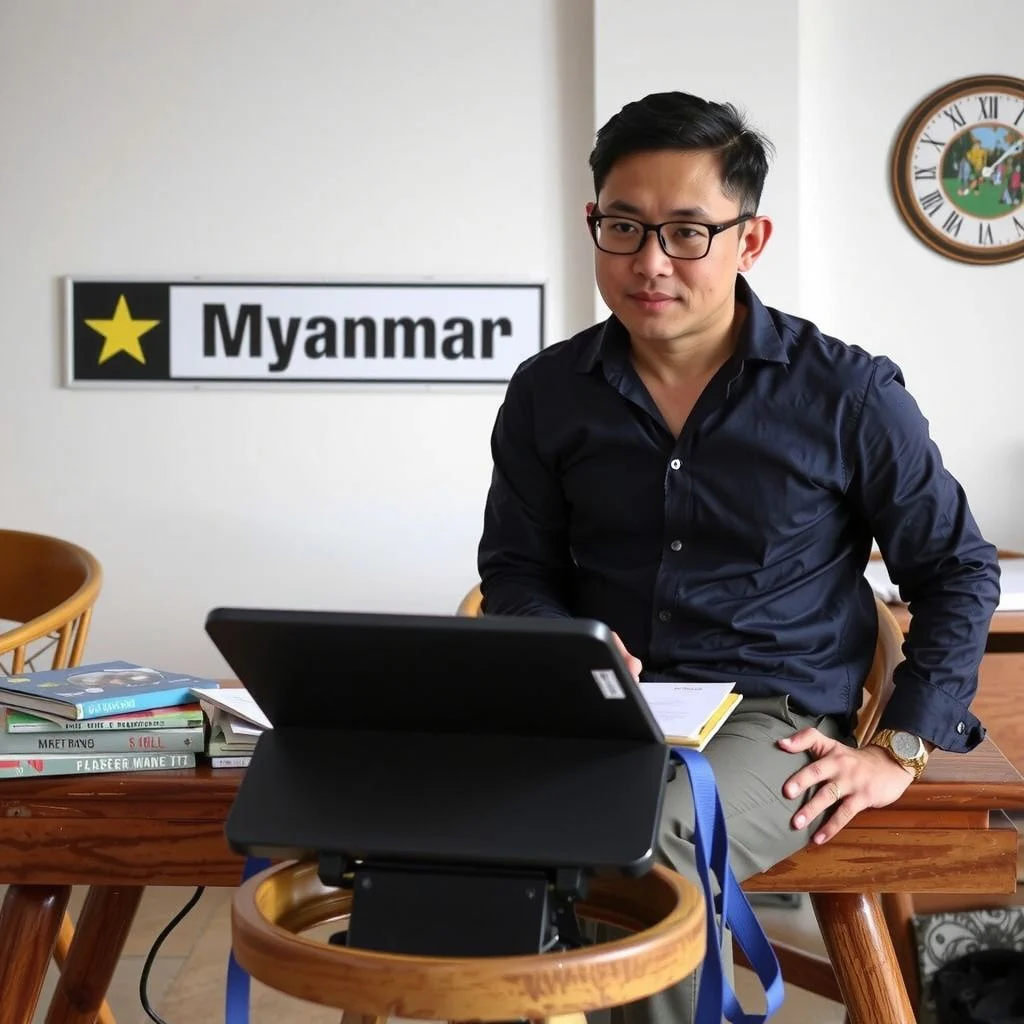
The Most Common Mistakes in English and Myanmar Translation
Most translation errors fall into predictable patterns. Knowing these patterns helps you catch them before they cause problems.
1. Direct word order transfer. Translators who are new to the pair often keep English word order when writing Myanmar. The result is a sentence that a Myanmar speaker can sometimes decode but never reads naturally. For example, “The teacher gave the student a book” becomes something like “ဆရာက ပေးတယ် ကျောင်းသားကို စာအုပ်” which is clumsy and confusing.
2. Overusing “is” as a copula. English requires a verb in every sentence, often “to be.” Myanmar often omits the copula entirely in present tense. “He is a doctor” translates to “သူက ဆရာဝန်” with no verb at all. Adding an unnecessary “ဖြစ်တယ်” makes the sentence sound like a textbook translation.
3. Misunderstanding tone markers. Myanmar is a tonal language. The word “ကား” can mean “car” or “to spread” depending on tone. In written translation, context usually resolves ambiguity, but machine translation tools frequently pick the wrong meaning.
4. Ignoring cultural context. Certain English concepts do not map cleanly onto Myanmar culture. “Privacy” as a legal concept, “deadline” as a strict commitment, and “personal space” all require explanation rather than direct translation. Similarly, Myanmar concepts like “အားနာတယ်” (the feeling of not wanting to impose or bother someone) have no single English word.
5. Mixing formal and informal registers. A single text that switches between “ခင်ဗျား” (polite “you”) and “မင်း” (casual “you”) signals poor translation quality. Consistency matters.
Here is a quick comparison of how the same English sentence fares under different translation approaches:
| Approach | Myanmar Output | Quality Assessment |
|---|---|---|
| Word-for-word | “ငါ စား ထမင်း” | Grammatically broken, hard to understand |
| Machine translation (basic) | “ငါ ထမင်းစားတယ်” | Grammatically correct but casual register |
| Professional translation | “ကျွန်တော် ထမင်းစားပါတယ်” | Correct grammar and polite register |
The difference between acceptable and excellent English and Myanmar translation often comes down to register and naturalness, not just accuracy.
Choosing the Right Tools for English and Myanmar Translation
The tool landscape for this language pair has improved significantly in recent years, but it remains uneven. Here is what actually works.
Google Translate handles basic conversational phrases reasonably well. For anything with technical terminology, legal language, or cultural nuance, it still produces errors. Its Myanmar output often drops particles or uses incorrect tone markers. Use it for getting the gist of a text, not for producing finished translations.
Microsoft Translator performs comparably to Google for this pair. It sometimes handles longer sentences better because it preserves more of the original structure, but that can also make the Myanmar output less natural.
Ornagai is a Myanmar-English dictionary that many translators consider essential. It provides multiple senses for each word, example sentences, and tone information. When you are unsure which meaning of a word applies, Ornagai helps you check.
SEAlang Library Burmese offers a more academic resource with detailed grammatical notes and corpus examples. It is slower to use but more thorough for difficult passages.
Myanmar NLP tools are still developing. The Myanmar Language Technology community has produced tokenizers and part-of-speech taggers, but these are research tools rather than consumer products. Do not expect the same polished experience as English or Spanish NLP tools.
Pro Tip: For any text longer than a paragraph, run it through two different machine translation tools and compare the outputs. Where they disagree, that is where you need to check a dictionary or ask a human. This “two-tool check” catches most machine errors.
No machine tool currently produces publication-ready English and Myanmar translation. Human review remains essential for anything that matters.
A Step-by-Step Process for Accurate Translation
Following a consistent process reduces errors and speeds up the work. Here is the workflow I use for English and Myanmar translation projects.
Step 1: Identify the text type and purpose. Is this a legal contract, a marketing brochure, a medical form, or a personal message? Each type has different register expectations, terminology requirements, and formatting conventions. You cannot translate well without knowing what the text is for.
Step 2: Extract key terminology. Before translating, scan the source text for technical terms, proper names, and repeated phrases. Look these up in a dictionary or a reliable reference. Create a small glossary so you translate each term consistently throughout the document.
Step 3: Translate sentence by sentence, not word by word. Read the entire sentence in the source language. Understand its meaning. Then write the equivalent meaning in the target language from scratch. Do not try to map individual words.
Step 4: Rearrange the word order. When translating English to Myanmar, move the verb to the end of each clause. When translating Myanmar to English, pull the verb forward and add subjects where Myanmar omits them.
Step 5: Check particles and register. For Myanmar output, verify that every subject and object has the correct particle. Confirm that the politeness level matches the intended audience. For English output, check that articles (“a”, “the”) are present where needed, since Myanmar does not use them.
Step 6: Read the translation aloud. This catches awkward phrasing that looks fine on paper but sounds wrong to a native ear. If you can, have a native speaker do this step for you.
Step 7: Back-translate a sample. Take a sentence from your translation and translate it back into the original language. If the meaning has shifted, you have a problem to fix.
Here is a bullet summary of the process:
- Identify text type and audience before starting
- Build a glossary for consistent terminology
- Translate meaning, not individual words
- Adjust word order for each language’s grammar
- Verify particles, articles, and politeness level
- Read aloud or have a native speaker review
- Back-translate key sentences to check accuracy
This process takes longer than running text through a machine translator, but the result is a translation that actually communicates. That is the entire point.
When to Hire a Professional Translator
Some translation tasks should not be DIY. The question is knowing which ones.
Legal documents require professional translation. A mistranslated contract clause can create binding obligations you did not intend. Courts and government offices in Myanmar often require certified translations with a translator’s seal. This is not optional for immigration paperwork, business registration, or property transactions.
Medical information also demands professional handling. A wrong dosage instruction or misunderstood symptom description can have serious consequences. Medical terminology in Myanmar is still developing, and many English medical terms have no standard Myanmar equivalent. A professional who works in this field knows which terms to transliterate and which to explain.
Marketing and brand content benefits from professional translation even when the literal meaning is simple. Slogans, product names, and persuasive copy rely on cultural resonance. A direct translation of “Just do it” into Myanmar would sound odd and lose all its impact. Professional transcreation, not just translation, is needed here.
Technical documentation for engineering, software, or scientific fields requires subject matter knowledge. A general translator may not know the standard Myanmar terms for “torque”, “bandwidth”, or “API endpoint”. Technical translators maintain glossaries for their specialties.
Pro Tip: Ask any prospective translator for a sample translation of 100-200 words from your actual document. Review it with a second native speaker. This costs a little time upfront but prevents expensive mistakes later.
The cost of professional English and Myanmar translation varies. Freelance rates typically range from $0.05 to $0.15 per word depending on complexity and turnaround time. Agencies charge more, often $0.15 to $0.30 per word, but provide project management and quality assurance. Certified translations for legal use cost extra due to the certification process.
Key Takeaways
- English and Myanmar translation requires restructuring sentences due to opposite word orders (SVO vs SOV)
- Particles, politeness registers, and tone markers create challenges that machine tools still struggle with
- Use two machine translation tools and compare outputs to catch errors, but never rely on machines alone
- Follow a consistent 7-step process: identify purpose, build glossary, translate meaning, adjust order, check particles, read aloud, back-translate
- Hire professionals for legal, medical, marketing, and technical content where errors carry real costs
Frequently Asked Questions About English and Myanmar Translation
Q: How accurate is Google Translate for English to Myanmar?
A: Google Translate works acceptably for simple, conversational sentences. For technical, legal, or culturally nuanced text, it frequently drops grammatical particles, uses wrong tone markers, and produces awkward phrasing. Use it for understanding the gist of a text, not for producing final translations.
Q: What is the difference between Burmese and Myanmar language?
A: There is no difference in the language itself. “Burmese” and “Myanmar” refer to the same language, which native speakers call “မြန်မာစာ” (written) or “မြန်မာစကား” (spoken). “Myanmar” is now the more common term in official contexts, while “Burmese” remains widely used in academic and historical writing.
Q: How do I translate an English document to Myanmar for official use?
A: For official use, you need a certified translator who can provide a stamped or sealed translation. Government offices in Myanmar and embassies abroad typically require certification. Contact a translation agency that specializes in Myanmar language services and specify that you need a certified translation for official submission.
Q: Is there a reliable English-Myanmar dictionary app?
A: Ornagai is the most widely recommended English-Myanmar dictionary. It offers offline access, multiple word senses, and example sentences. The SEAlang Library Burmese dictionary is also reliable but is web-based and more academic in style. Both are better than the dictionary built into Google Translate.
Q: Why does Myanmar text look different when I paste it into different apps?
A: Myanmar uses Unicode encoding, but older systems sometimes use non-standard fonts like Zawgyi that are not Unicode-compliant. Text typed in Zawgyi appears as gibberish in Unicode systems and vice versa. Use Unicode fonts for all translation work to ensure compatibility across platforms. Tools like the Rabbit Converter can convert between Zawgyi and Unicode.
Q: How long does it take to translate 1,000 words from English to Myanmar?
A: A professional translator working at a sustainable pace translates roughly 2,000 to 3,000 words per day for general content. Technical or legal content moves slower, often 1,000 to 1,500 words per day. A 1,000-word general document typically takes 3 to 4 hours of focused work, not including review time.
Q: Can I learn to translate English and Myanmar without formal training?
A: You can develop basic translation skills through consistent practice, study of both languages’ grammar, and regular feedback from native speakers. However, professional-level translation, especially for legal or medical content, requires formal training or extensive supervised experience. Start with simple texts and gradually increase difficulty.
Q: What are the hardest English words to translate into Myanmar?
A: Abstract concepts with no cultural equivalent are hardest. Words like “privacy”, “deadline”, “accountability”, “empowerment”, and “networking” require explanation or creative paraphrase rather than direct translation. Technical terms in computing, law, and medicine also often lack standard Myanmar equivalents and are usually transliterated.
References & Further Reading
- SEAlang Library Burmese Dictionary , A comprehensive academic resource for Burmese-English lexical data with grammatical notes.
- Ornagai , A widely used English-Myanmar dictionary with example sentences and tone information.
- Ethnologue: Burmese Language Profile , Authoritative data on Burmese speakers, dialects, and language classification.
- Myanmar Language Commission , The official government body responsible for standardizing Myanmar language usage and terminology.
- Unicode Consortium: Myanmar Script , Technical documentation for the Myanmar Unicode block, essential for understanding encoding issues.
—
About This Article: This guide draws on established linguistic principles for the English-Myanmar language pair and practical experience working with translation projects across legal, technical, and general content domains. The process recommendations reflect common professional practice, and the tool assessments are based on current capabilities as of early 2025. Translation standards and tool quality evolve, so always verify current best practices before starting a high-stakes project.