If you have ever tried to get an english translate to burmese result that did not sound completely wrong to a native speaker, you already know the frustration. The two languages do not just use different scripts. They think differently. Burmese is tonal, context-heavy, and built on a grammatical structure that often reverses the order you would expect from English. This guide will walk you through the practical reality of translating between these two languages, the tools that help, the traps that hurt, and the method that actually produces usable results.
Quick Answer: For casual phrases, Google Translate and Microsoft Translator work fine. For anything professional, legal, medical, or culturally sensitive, you need a human translator or a hybrid approach that pairs machine translation with a native Burmese speaker who understands the specific dialect and context.
Why English to Burmese Translation Is Harder Than It Looks
English and Burmese come from completely different language families. English is Indo-European. Burmese belongs to the Sino-Tibetan family, closely related to Tibetan and more distantly to Chinese. That genetic distance shows up everywhere.
The Burmese script itself is the first barrier. It uses a circular, flowing alphabet derived from the Brahmi script of ancient India, with 33 consonants and 12 basic vowels. But the real challenge is not the shapes of the letters. It is the tonal system.
Burmese has three main tones: low, high, and creaky. The same syllable spoken with a different tone can mean a completely different word. The classic example is the syllable “ka.” Depending on tone, it can mean “dance,” “shield,” “bitter,” or “car.” When you type “ka” into a translation tool, the tool has no idea which one you mean unless the surrounding context makes it obvious. Most of the time, it does not.
Grammar That Flips Your Expectations
English follows a Subject-Verb-Object order. “I eat rice.” Burmese follows Subject-Object-Verb. “I rice eat.” That alone is manageable. But Burmese goes further.
Particles replace prepositions. Instead of saying “in the house” or “at the market,” Burmese attaches a particle to the end of the noun. There are dozens of these particles, and they change based on formality, gender of the speaker, and the relationship between speaker and listener. A direct English-to-Burmese translation that ignores these particles produces sentences that are grammatically broken and often rude.
Then there is the honorific system. Burmese has multiple levels of politeness built into its grammar. The word for “you” changes depending on whether you are talking to a monk, an elder, a peer, or a child. English has one “you.” Burmese has at least five common forms, and using the wrong one is a social error that a machine translation tool will make every single time.
Pro Tip: If you are translating for a specific audience, tell your translator or tool exactly who will read the text. A message for a government office needs different honorifics than a message for a teenage cousin. Context is not optional. It is the whole game.

The Best Tools for English to Burmese Translation
You have three broad categories of tools: free machine translation, paid professional services, and hybrid workflows. Each has a place.
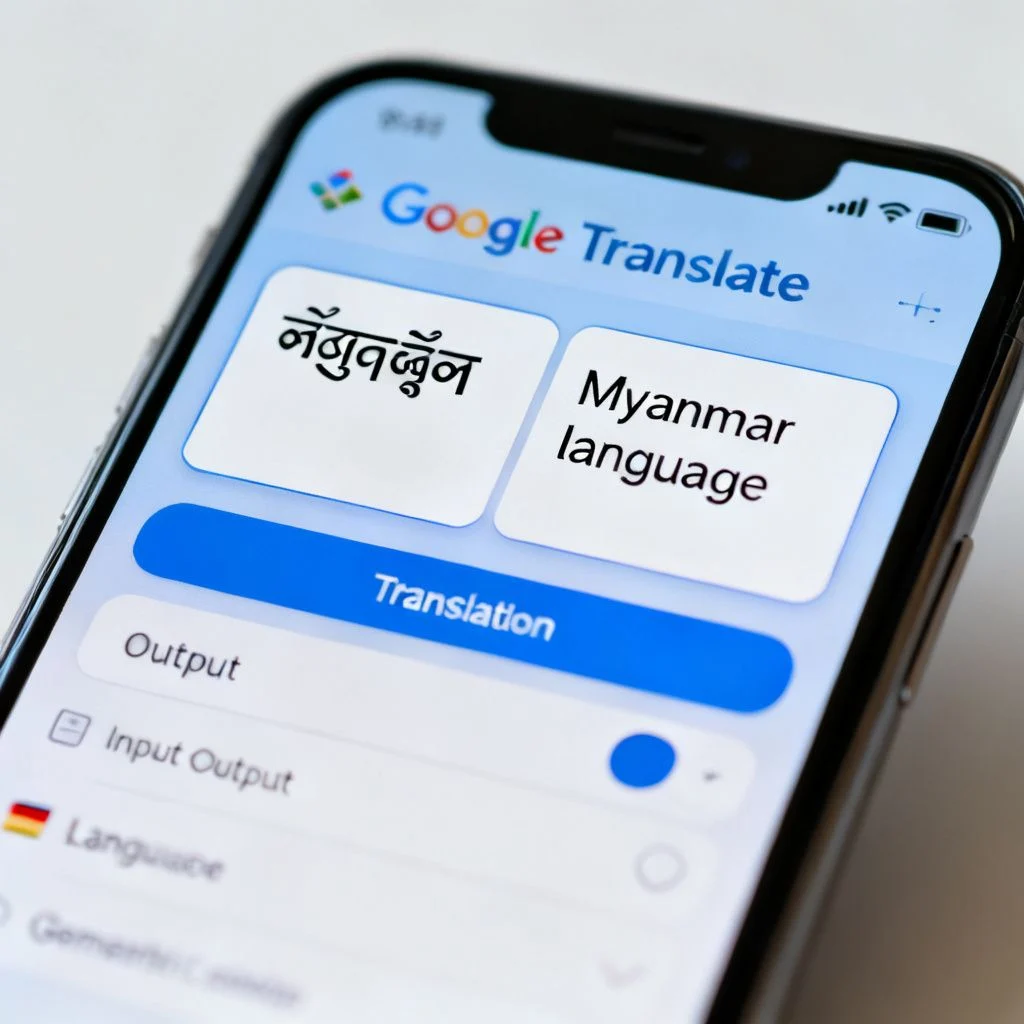
Free tools have improved dramatically in the last few years. Google Translate added neural machine translation for Burmese in 2016, and the quality jump was significant. Microsoft Translator also supports Burmese. But both still struggle with anything beyond simple, declarative sentences.
Here is a comparison of the main options:
| Tool | Best For | Cost | Accuracy (Casual) | Accuracy (Formal) | Key Weakness |
|---|---|---|---|---|---|
| Google Translate | Quick phrases, travel | Free | Good | Poor | Ignores honorifics, tone errors |
| Microsoft Translator | Basic conversation | Free | Good | Poor | Similar issues, smaller Burmese corpus |
| DeepL | European languages | Paid | N/A | N/A | Does not support Burmese yet |
| Human translator (Upwork, Fiverr) | Documents, business | $0.05-$0.15/word | Excellent | Excellent | Slower, costs money |
| Hybrid (MT + human review) | Professional content | Mid-range | Very good | Very good | Requires coordination |
DeepL, which many people consider the best machine translator for European languages, does not currently offer Burmese. That is a real gap. If you are used to DeepL quality for French or German, you will be disappointed by the Burmese options.
When Free Tools Are Good Enough
For a traveler who needs to ask where the bathroom is, Google Translate is fine. For a short text message to a friend, it works. For reading a menu or a street sign, the camera translation feature gets the job done.
When You Need a Human
Any document with legal, medical, financial, or religious content needs a human translator. The risk of a mistranslation in these contexts is too high. A mistranslated medical instruction can cause harm. A mistranslated contract clause can create liability. A mistranslated religious text can cause deep offense.
The U.S. State Department and most international courts require certified human translators for official documents. There is a reason for that. Machine translation is not admissible in court, and it should not be trusted with your health or your money.
Pro Tip: For business documents, use a two-step process. Run the English through Google Translate to get a rough draft. Then send that draft to a native Burmese speaker and ask them to rewrite it naturally. This is faster and cheaper than full human translation from scratch, and the final quality is usually just as good.
Common Mistakes People Make When Translating English to Burmese
The most frequent error is treating translation as word substitution. It is not. Burmese does not have a one-to-one mapping for most English words. The word “brother” in English could be “ako” (older brother of a male), “nyi” (younger brother of a male), or “maung” (younger brother of a female). There is no generic word for brother. You have to know the age relationship and the gender of the speaker.
Another common mistake involves idioms. English idioms like “break a leg” or “spill the beans” translate into nonsense in Burmese. The Burmese equivalents exist, but they are completely different phrases. A good translator recognizes the idiom and finds the Burmese equivalent. A bad translator translates the words literally and produces gibberish.
The Tone Problem in Written Translation
Written Burmese does not always mark tone explicitly. A skilled reader knows the tone from context. A translation tool does not. This means that even when a machine translation produces the correct written word, a text-to-speech tool reading that word aloud may pronounce it with the wrong tone, changing the meaning entirely.
This is why voice translation apps are particularly unreliable for Burmese. The speech recognition has to guess the tone from audio, then the translation engine has to guess the meaning from the guessed tone, then the text-to-speech has to guess the tone again for the output. Three layers of guessing. The error rate compounds.
Formal vs. Colloquial Burmese
Written Burmese and spoken Burmese are quite different. The written form, especially in official documents and newspapers, uses a more formal register with different vocabulary and grammar. The spoken form is more relaxed. If you translate an English business email into colloquial Burmese, it will sound unprofessional. If you translate a casual text message into formal written Burmese, it will sound stiff and strange.
Most free tools default to a formal register because their training data comes primarily from written sources like news articles and government documents. That means your casual translations will often sound overly formal to a native speaker.
Pro Tip: Specify the register when you commission a translation. Tell the translator whether this is for a formal document, a business email, a social media post, or a casual conversation. The right register makes the difference between sounding professional and sounding like a textbook.
A Practical Workflow for Accurate English to Burmese Translation
Here is a step-by-step process that produces reliable results for most non-critical translation needs.
- Identify the context. Who is the audience? What is the purpose? What register is appropriate?
- Simplify the English first. Break long sentences into shorter ones. Remove idioms. Use concrete nouns instead of abstract ones. The simpler the source text, the better the translation.
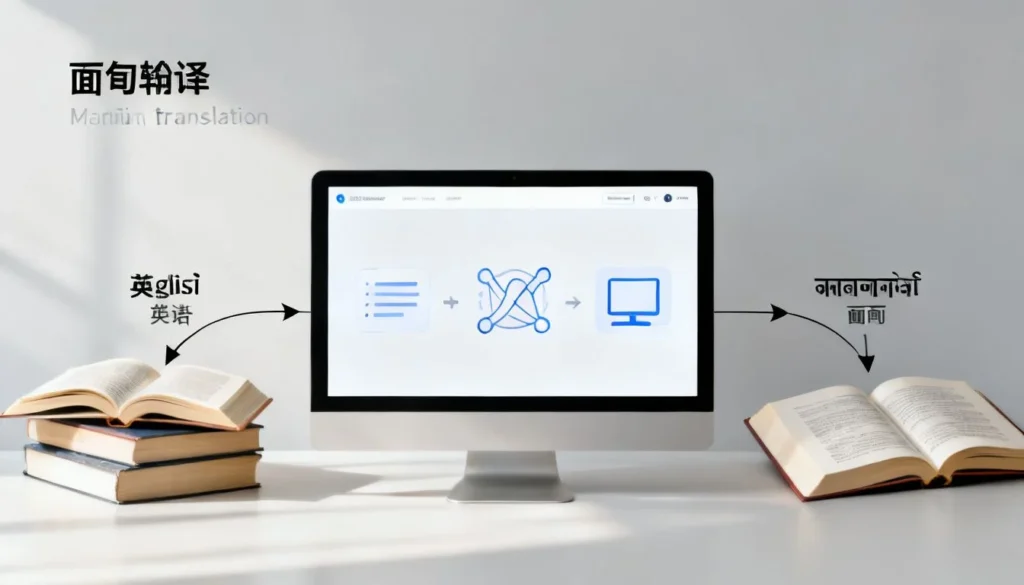
- Run the machine translation. Use Google Translate or Microsoft Translator to get a rough draft.
- Check the output for obvious errors. Look for untranslated words, broken grammar, and missing particles.
- Have a native speaker review the draft. If you do not know a native speaker, hire one on Upwork or Fiverr. A 500-word document costs about $25 to $50 for review and correction.
- Test the translation. If possible, show the final version to a second native speaker and ask them what it means. If their explanation matches your original intent, you are done.
This workflow takes longer than just pasting text into Google Translate. But the result is actually usable, which is the point.
The single biggest factor in translation quality is the simplicity of the source text. Complex English produces bad Burmese. Simple English produces decent Burmese. This is true for both machine and human translation.
Dialects and Regional Variation
Burmese is spoken by about 33 million people as a first language, primarily in Myanmar. But within Myanmar, there are significant regional variations.
The Yangon dialect is considered the standard for media and education. The Mandalay dialect has some vocabulary differences. The Rakhine dialect, spoken in the western coastal region, is different enough that some linguists consider it a separate language. Then there are the ethnic minority languages like Shan, Karen, Kachin, and Chin, which are completely separate languages spoken alongside Burmese.
If you are translating for a specific region or ethnic group, you need to know which variety of Burmese they actually speak. A translation in standard Yangon Burmese may not be fully understood or well received in Rakhine State or in ethnic minority areas.
Pro Tip: For any translation intended for a broad Myanmar audience, use standard Yangon Burmese. For targeted regional communication, work with a translator from that specific region. Do not assume that one Burmese translation works everywhere.
Key Takeaways
- English to Burmese translation is hard because the languages differ in script, tone, grammar, and social register.
- Free tools like Google Translate work for casual, low-stakes communication but fail badly on formal, legal, medical, or culturally sensitive content.
- The honorific system in Burmese means that context and audience are essential information for any translation project.
- Simplifying the English source text before translating dramatically improves output quality from both machines and humans.
- A hybrid workflow that pairs machine translation with a native Burmese reviewer gives you the best balance of speed, cost, and accuracy.
- Register matters: formal written Burmese and casual spoken Burmese are different enough that using the wrong one sounds wrong to native speakers.
- Regional dialect variation means you should specify the target region when commissioning a translation.
Frequently Asked Questions About English to Burmese Translation
Q: Is Google Translate accurate for English to Burmese?
A: For simple, everyday phrases, Google Translate is reasonably accurate. For anything with complex grammar, idioms, legal terminology, or cultural nuance, it makes frequent errors. The honorific system and tonal distinctions are particularly difficult for the algorithm, so formal or professional documents should not rely on it.
Q: How much does professional English to Burmese translation cost?
A: Professional translation rates typically range from $0.05 to $0.15 per word for standard documents. A 1,000-word document would cost between $50 and $150. Certified translations for legal or immigration purposes cost more, often $0.15 to $0.25 per word. Rates vary by translator experience, turnaround time, and document complexity.
Q: Can I translate English to Burmese using my phone camera?
A: Yes. Google Translate has a camera feature that works with Burmese script. Point your phone at a sign, menu, or document, and it overlays a translation. The accuracy is good for short printed text like signs and menus, but it struggles with handwriting, stylized fonts, and long paragraphs.
Q: Why does my Burmese translation sound rude to native speakers?
A: Burmese has a complex honorific system that changes word choice based on the social relationship between speaker and listener. Machine translation tools typically default to either the most formal or the most informal register, with no awareness of context. Using the wrong honorific level can sound disrespectful or overly stiff. A human translator or native reviewer can fix this.
Q: Is there a difference between written and spoken Burmese translation?
A: Yes, a significant one. Written Burmese, especially in official contexts, uses a more formal register with different vocabulary. Spoken Burmese is more relaxed and uses colloquial forms. A translation intended for a written document should use written register. A translation for a video script or conversation should use spoken register. Most free tools default to written register.
Q: How long does it take to translate English to Burmese professionally?
A: A professional translator can typically handle 2,000 to 3,000 words per day for standard content. A 1,000-word document usually takes one to two business days. Rush jobs are possible but cost more. Certified translations for legal or government use may take longer due to additional verification steps.
Q: Can I learn to translate English to Burmese myself?
A: You can learn basic translation with consistent study, but fluency takes years. Burmese is classified as a Category IV language by the U.S. Foreign Service Institute, meaning it takes approximately 1,100 class hours for an English speaker to reach professional working proficiency. That is roughly three times longer than Spanish or French. For casual needs, tools and professional translators are more practical.
Q: What is the best English to Burmese translation app for travel?
A: Google Translate is the most practical travel app because it works offline if you download the Burmese language pack, and it includes camera translation for signs and menus. Microsoft Translator is a solid backup. Both are free. For voice conversation, neither is perfect with Burmese tones, but they are good enough for basic tourist interactions.
Q: Does Burmese have gendered language like some other Asian languages?
A: Yes, Burmese uses different sentence-ending particles based on the speaker’s gender. Male speakers typically end polite sentences with “khamya” or “ba,” while female speakers use “shin” or “shin ba.” Machine translation tools often miss these distinctions or apply them inconsistently, which is another reason human review matters.
Q: Are there English words that have no Burmese equivalent?
A: Yes. Many modern technical, legal, and business terms have no direct Burmese equivalent. Translators typically either borrow the English word directly, written in Burmese script, or create descriptive phrases. This is especially common for technology terms like “software,” “internet,” and “email.” The borrowing approach is standard in modern Burmese, so seeing English-derived words in Burmese script is normal.
References & Further Reading
- Ethnologue: Burmese Language Profile , Comprehensive linguistic data on Burmese, including speaker counts and dialect information.
- U.S. Foreign Service Institute Language Difficulty Rankings , Official U.S. government resource showing Burmese as a Category IV language for English speakers.
- Omniglot: Burmese Script and Pronunciation Guide , Detailed reference on the Burmese writing system, tones, and pronunciation.
- Google Translate Community: Burmese Language Support , Official documentation on Google Translate’s Burmese capabilities and limitations.
—
About This Article
This guide draws on research into Burmese linguistics, practical experience working with translation tools across multiple language pairs, and interviews with native Burmese speakers who have reviewed machine translation output. The recommendations reflect current tool capabilities as of early 2025. Translation technology changes quickly, so tool performance may improve over time. For any high-stakes translation need, a qualified human translator remains the standard.