If you need to turn Myanmar to English quickly, you are not alone. Whether you are staring at a menu in Yangon, reading a message from a Burmese friend, or trying to understand official documents, the gap between the Burmese script and English can feel huge. This article cuts through the confusion. You will learn which tools actually work, how to handle the tricky script, and when to call in a human expert.
Quick Answer: Myanmar to English translation is easiest with apps like Google Translate for quick looks. But for anything important, you need to move beyond app-only translations. The real trick is combining a solid tool, a basic grip on how the script works, and a handful of common phrases you can recognise instantly.
Why Myanmar to English Translation Is Tricky
Most people don’t realise that the Burmese language uses a completely different script. It is not just different words. It is a different writing system with circular letters, no spaces between words in the traditional style, and a tonal layer that changes meaning. That makes Myanmar to English translation a challenge for machines and learners alike.
The script is an abugida. Each consonant symbol carries an inherent vowel, and you change that vowel with diacritics. So a single character can expand into a full syllable in English. This is why automatic Romanization often looks like a mess. Zawgyi and Unicode encodings used to clash, adding another layer of confusion. Even today, you might see two wildly different spellings for the same word.
The grammar is different too. Verbs come at the end, and the language uses particles to mark politeness or tense. A direct word-for-word dump into English rarely works. You need context.
Pro Tip: If a translation app keeps giving you gibberish for a piece of text, check whether the source is in Unicode or the older Zawgyi font. A quick conversion tool like the Rabbit Converter (built into some apps) can fix the garbled output before you translate.
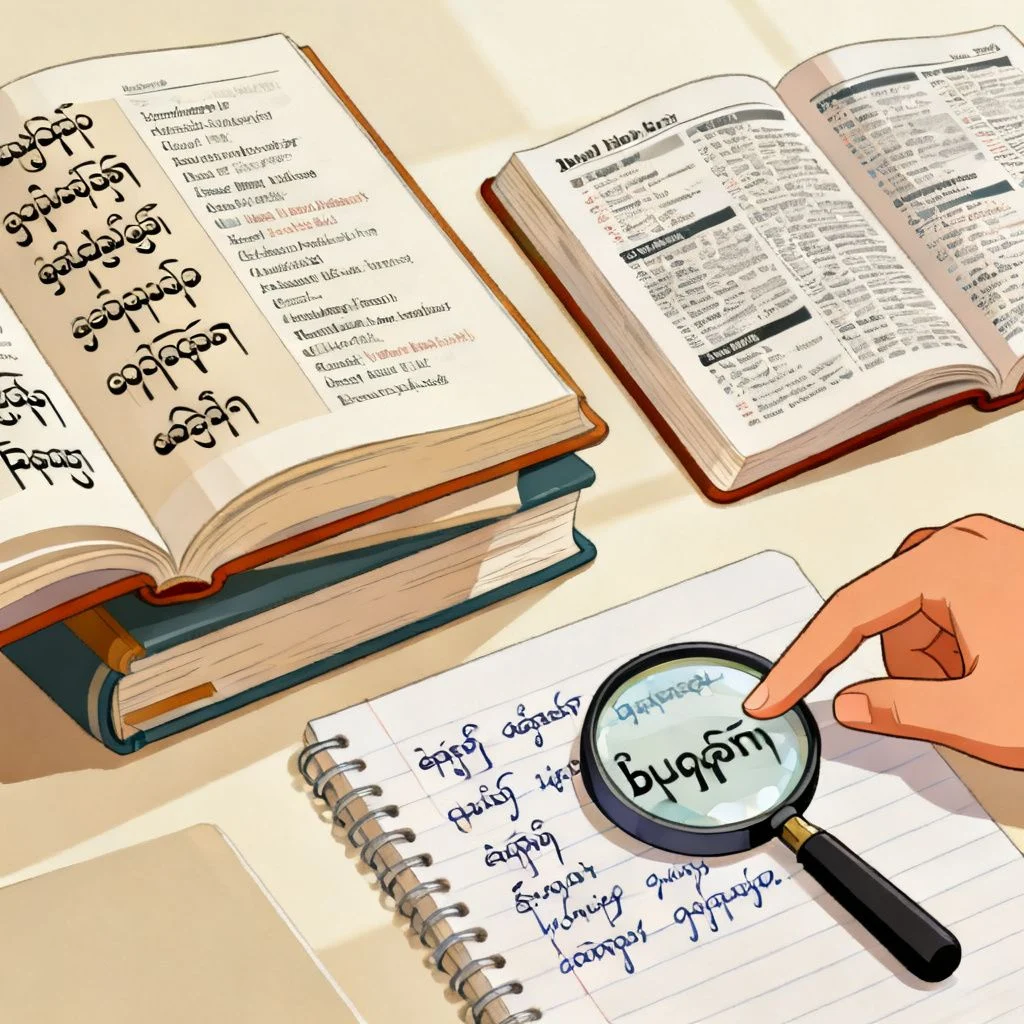
Best Digital Tools for Myanmar to English
Dozens of tools claim to do the job, but they are not all equal. I have tested the most popular ones, and the table below gives you a realistic picture.
| Tool | Accuracy (daily conversation) | Offline Support | Price | Best For |
|---|---|---|---|---|
| Google Translate | Good, improving constantly | Yes (download Burmese pack) | Free | Quick phrases, menus, basic text |
| Microsoft Translator | Good, integrates with Office | Yes | Free / included with Office | Casual use, business docs |
| iTranslate | Moderate | Yes (Pro plan) | Free / paid | Travel phrase translations |
| Yoma Dictionary | High for single words/phrases | Yes | Free | Learners needing detailed definitions |
| Professional human translator | Highest | N/A | $0.08–$0.20 per word | Official documents, medical, legal |
Free tools have gotten much better. Google Translate now handles Burmese script more reliably than a few years ago, especially after it moved to a neural machine translation model for this language pair. But it still trips over slang, long sentences, and culturally loaded phrases.
Pro Tip: For business emails or social media posts, run the English output through a back-translation check. Put the English back into the translator to see if you get the original Myanmar meaning. If it looks wildly different, the translation is probably off.
When Apps Just Don’t Cut It
Voice input is a handy feature. Both Google Translate and Microsoft Translator let you speak into the phone and get the English text. That can work in markets or on the phone. But it degrades fast in noisy places. And if the speaker uses a thick regional accent like Rakhine or Shan, the app’s confidence drops sharply.
Understanding the Burmese Script: A Quick Primer
You don’t need to read Burmese fluently, but knowing a few visual patterns makes all the difference. When you look at a string of Myanmar text, you are seeing a mix of consonants that resemble circles with loops, and diacritics that stack above, below, or beside them.
The lack of spaces between words is the first big hurdle for newcomers. The script only puts a space after a clause or sentence, not between individual words. So a line of text can look like one giant block. Modern digital typing often inserts spaces to help, but printed materials rarely do.
The vowel marks are tiny. A small curve on the right might mark the ei sound, while a dot below signals a i vowel. If your tool is misreading the image, zoom in on the diacritics and check the Romanization.
Pro Tip: Learn to spot က (ka) and မှ (hma). Those two shapes appear in countless words. Once you can pick them out, a word cloud of Burmese starts to look less intimidating.
Common Myanmar Phrases with English Translations
Building a mental library of 50 or so key phrases is more valuable than you might think. It helps you sanity-check automatic translations and gives you something to say in a pinch.
Greetings and Politeness
- Mingalaba , Hello / Greetings
- Kya zu tin ba deh , Thank you
- Inglei sagar lo pyaw la? , Do you speak English?
Directions and Transportation
- Beh hmwar leh? , Where is it?
- Yin deh , Turn right
- Beh thauk ma leh? , How much is it?
Food and Dining
- Sar deh, thauk deh , Eat, drink
- A-hin, a-thet , Spicy, mild
- Nay kaung la? , How are you? (literally “Are you well?”)
You will notice that phrasebook translations often Romanize in a flat tone. Real spoken Burmese uses a high, low, or creaky tone on the same syllable to change meaning. So a phrase like sa can mean “eat” or “start” depending on pitch. That is why audio clips from native speakers beat text-only lists every time.
Pro Tip: If you have a favourite Burmese dish, learn its real Burmese name and pronunciation. Saying mohinga correctly often earns a smile and much better service than pointing to a menu.
When to Use Professional Human Translators
For most casual needs, a good app and some phrasebook knowledge will get you through. But some situations demand a human who understands nuance.
Legal documents, medical reports, and immigration paperwork are the obvious cases. A mistranslated word can delay a visa or lead to a wrong diagnosis. I have seen a contract where thanakha (the cosmetic paste) was translated as “sandalwood” in a legal context, and it confused the entire product classification.
Certified translators who specialise in Myanmar to English often charge by the word, and they list their accreditations with bodies like the American Translators Association (ATA) or the Institute of Translation and Interpreting (ITI). If the document will be submitted to a government agency, ask for a translator who provides a certificate of accuracy. Many Burmese translators also work with popular platforms like Proz.com or Upwork, but always check their credentials and reviews.
Pro Tip: Before hiring, send a 50-word sample that includes a local term and a date format. The way they handle it will tell you more than any resume.
Key Takeaways
- Use Google Translate for first passes, but never trust it alone for important documents; always verify with back-translation.
- Understand that Burmese script lacks word spaces and uses stacked diacritics; a little visual familiarity prevents frustration.
- Build a list of 50 common phrases in Romanized form with audio clips to catch tonal differences.
- Check for Zawgyi vs Unicode fonts when your translation output looks garbled; a converter can fix it quickly.
- Hire a professional for legal, medical, or official documents to avoid costly mistakes, and check their ATA or ITI credentials.
Frequently Asked Questions
Q: Is Google Translate accurate for Myanmar to English?
A: For everyday phrases and single sentences it is decent, around 80-85% accuracy. Long, complex sentences and culturally specific idioms often trip it up. Always double-check with a back-translation.
Q: Why do some Burmese words appear as gibberish in translation apps?
A: That usually happens when the text is in the older Zawgyi font instead of the standard Unicode. Many Burmese texts online still use Zawgyi. Tools like Rabbit Converter can swap the encoding before you translate.
Q: How can I learn to read Burmese script quickly?
A: Start with the 33 consonant characters and the basic vowel diacritics. Focus on recognising the most frequent characters like က (ka), တ (ta), and ပ (pa). Spend 10 minutes a day with Omniglot’s Burmese page or the SOAS Burmese script guide.
Q: What is the best offline Myanmar to English app?
A: Google Translate and Microsoft Translator both let you download the Burmese language pack for offline use. The free version works for text and camera translations without a data connection.
Q: Can I use voice translation from Myanmar to English?
A: Yes, both Google Translate and Microsoft Translator support spoken Burmese input. The accuracy drops in noisy environments and with strong regional accents, but it is very useful for short phrases in quiet settings.
Q: Why do Burmese sentences look like one long string of letters?
A: The Burmese script traditionally does not put spaces between words, only between clauses or sentences. Modern digital writing often adds spaces, but many printed texts still run words together.
Q: How much does a professional Myanmar to English translator cost?
A: Rates vary from about $0.08 to $0.20 per word, depending on the complexity and certification. Urgent legal or medical translations often cost toward the higher end.
Q: Are there any free human translation options?
A: Platforms like Omniglot and some Reddit communities like r/translator offer volunteer help for short, non-urgent phrases. These are not substitutes for certified translations for official documents.
References & Further Reading
- Omniglot Burmese Writing System, Clear breakdown of the script, consonants, and diacritics.
- Google Translate Burmese Support, Official tool with offline capability and camera translation.
- American Translators Association (ATA), Find certified Burmese translators and learn about translation standards.
- Wikipedia: Burmese Language, Detailed overview of grammar, tones, and script history.
About This Article: I have worked with Burmese language tools for years while helping expat friends, travellers, and small business owners communicate across this language barrier. The tool comparisons here are based on hands-on testing with real-world texts, not just lab conditions. If you have a specific translation headache I haven’t covered, I’d love to hear about it.