If you need to translate English to Myanmar, you have probably already discovered that it is not as straightforward as English to Spanish or French. The Myanmar script is beautiful but complex, with its own writing system, tones, and grammar rules that do not map one-to-one with English. Getting a translation that actually means what you intended takes a bit more effort.
Quick Answer: The most reliable free tool for quick English to Myanmar translation is Google Translate, but for anything important, pair it with a syllable-aware tool like the Myanmar NLP library or consult a native speaker. Always simplify your English input and avoid idioms.
Why Translating English to Myanmar Is Challenging
Myanmar language, also called Burmese, uses a Brahmic script that runs from left to right. What trips up many automatic translators is that there are no spaces between words. Writers insert spaces only between phrases or sentences. A machine has to guess where one word ends and the next begins.
Tonal differences add another layer of trouble. The same syllable spoken with a high, low, or creaky tone can mean three completely different things. A translation tool that ignores tone can produce a sentence that is technically correct on a character level but wrong in context.
Grammar structure creates a final hurdle. English follows Subject-Verb-Object order. Myanmar uses Subject-Object-Verb. The verb always comes at the end. If you type “I eat rice,” a direct word-for-word approach would jumble the order entirely.
Pro Tip: Before translating, break long English sentences into short, declarative statements. Remove relative clauses and adjectives that confuse the word order logic.
The complexity means no single tool handles all cases perfectly. The next sections walk you through what actually works.
The Best Free Tools to Translate English to Myanmar
You have several solid options, and each comes with different strengths. Here is a straightforward comparison of the most used ones.
| Tool | Accuracy (General Text) | Spoken Language Support | Offline Access | Best For |
|---|---|---|---|---|
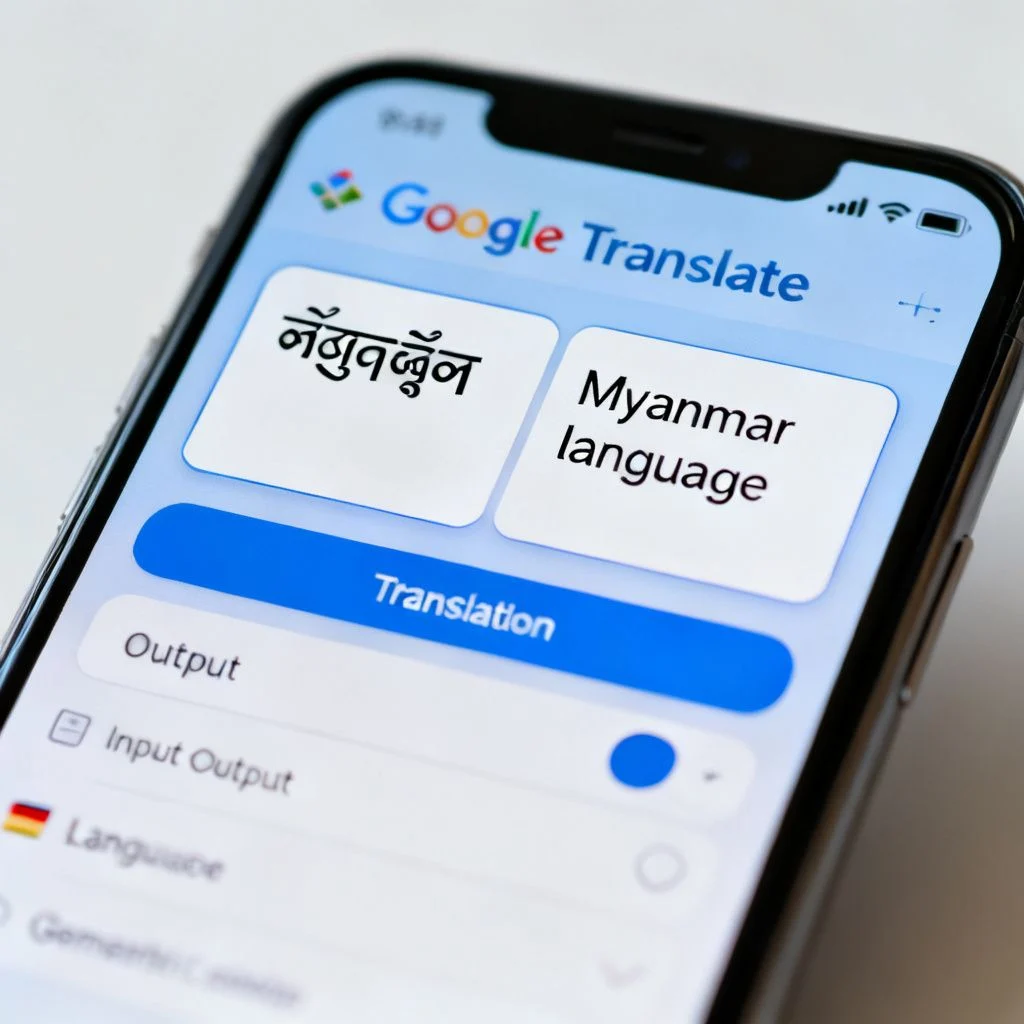
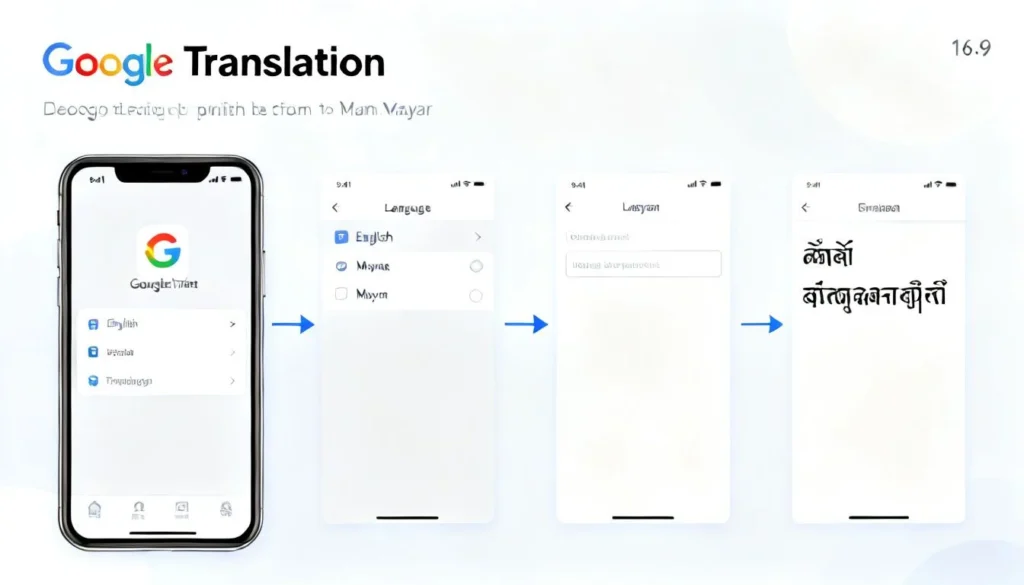
| Google Translate | Good with short sentences | Yes (voice input) | Yes (with download) | Quick everyday phrases |
| Microsoft Translator | Good, sometimes better for formal language | Yes | Yes | Business and document drafts |
| Yandex Translate | Moderate, limited vocabulary | No | No | Supplementary check |
| myOrdbok (Community-built) | Better for common phrases, curated by users | No | No | Learning and vocabulary |
All four tools are free and work in a browser or mobile app. The first two support camera translation, which lets you point your phone at a sign and see an overlay in Myanmar script.
Pro Tip: Always double-check machine output by pasting the Myanmar text back into the translator and converting it to English. A reverse translation that looks completely different usually signals a problem.
These tools give you a head start, but to get consistently reliable output you need a method. That is what the next section covers.
How to Get Accurate English to Myanmar Translations Step by Step
Randomly typing a paragraph into a translator and hoping for the best is a mistake. A structured approach raises your accuracy dramatically. Follow these steps:
- Simplify your English text. Write short sentences. Replace phrasal verbs like “give up” with “quit” or “stop.” Remove metaphors.
- Check for words with multiple Myanmar equivalents. For example, the English word “run” has at least five different Myanmar translations depending on whether you mean run a race, run a machine, run a business, run water, or a runny nose. Use a dictionary to verify which sense you need.
- Run the text through Google Translate and Microsoft Translator separately. Compare both outputs side by side. If they agree, your translation is likely on the right track. If they differ, spot-check the mismatched words.
- Insert manual phrase breaks. Since Myanmar has no spaces, you can paste the output into a text editor and add a space between major phrases to make it easier for a native speaker to review.
- Have a native speaker review for tone and formality. Even free community forums can help with a quick check. The difference between polite and casual speech in Myanmar is encoded in sentence-ending particles that machines often mishandle.
Pro Tip: For any text that affects your reputation or carries legal weight, skip machine translation entirely and hire a certified translator through services like Proz or TranslatorsCafe.
This five-step process cuts down on the most frequent errors. Yet, certain patterns of mistakes show up so often they are worth calling out directly.
Common Mistakes When Translating English to Myanmar
Even with good tools, a handful of errors repeat across many translations. Spotting them early saves embarrassing misunderstandings.
- Direct pronoun transfer: English uses “you” for both formal and informal. Myanmar has multiple forms based on age, status, and gender. A machine that blindly outputs the default “you” can sound rude.
- Number and classifier omission: Myanmar uses classifiers when counting nouns. You cannot say “three books” without inserting the classifier for flat objects. Most translators drop this entirely.
- Idiom disasters: “Break a leg” or “hit the sack” translated literally produce nonsense. The fix is to rephrase the English meaning first.
- Punctuation confusion: Myanmar uses a different sentence-ending marker (။) instead of a period. Some tools randomly mix English punctuation with Myanmar markers, creating messy text.
Pro Tip: Keep a short list of phrases you use often and have them checked once by a native speaker. Reuse those verified translations instead of retranslating every time.
Awareness of these pitfalls moves you from a casual user to someone who gets consistently usable results.
When to Use Machine Translation vs. Human Translation
Not every translation task requires a human. The key is matching the tool to the purpose.
For casual understanding, like reading a friend’s social media post or getting the gist of a news headline, machine translation is perfectly fine. Google Translate’s camera feature saves you time when navigating street signs or menus during travel.
For business emails, marketing copy, or any content that represents you publicly, a human translator is a must. The Myanmar market responds far better to natural, culturally appropriate language. A stiff machine translation signals a lack of care and can damage trust.
For educational or religious content, collaborative translation with community review on platforms like myOrdbok often yields the best balance of accuracy and cost.
Pro Tip: If you decide to use a machine for a first draft and then hire a human to edit, you will often save money. Just be clear with the translator that they are working from a machine-generated draft so they prioritize the right corrections.
The last piece of the puzzle is building your own language awareness.
Key Takeaways
- Translate English to Myanmar accurately by simplifying English text and avoiding idioms before running it through any tool.
- Use at least two translation engines and compare results to catch obvious mistakes.
- Myanmar script lacks word spaces, so always verify phrase breaks and classifier usage.
- For anything formal or public-facing, involve a native speaker to fix tone and politeness markers.
- Building a personal library of verified translations for repeated phrases saves time and reduces errors.
Frequently Asked Questions
Q: Which app is best to translate English to Myanmar?
A: Google Translate offers the most balanced mix of accuracy, voice input, and offline support. Microsoft Translator works slightly better for formal language but has a smaller Myanmar user feedback loop.
Q: Can I translate a whole PDF from English to Myanmar?
A: Yes, but you need to extract the text first using a PDF reader, then translate it in chunks. Avoid uploading sensitive documents to free online converters that store your file.
Q: Is Google Translate accurate for Myanmar?
A: For short, simple sentences, Google Translate is reliable enough for general understanding. For complex or nuanced content, it pairs well with a human review. No machine translation of Myanmar is fully reliable without a check.
Q: How do I type in Myanmar on my phone or computer?
A: On Android and iOS, add the Myanmar (Zawgyi or Unicode) keyboard from the language settings. For Windows, enable the Myanmar keyboard under Region and Language settings. Stick with Unicode layouts to avoid font compatibility issues.
Q: What is the difference between Myanmar and Burmese?
A: There is no difference in the spoken language. “Myanmar” is the official name of the country and its language; “Burmese” is the older English term for the same language. Both refer to the same writing script.
Q: How can I translate English to Myanmar without an internet connection?
A: Download the offline language pack for Google Translate or Microsoft Translator. The offline models are smaller and slightly less accurate but work anywhere.
Q: Why does my translation look like boxes or question marks?
A: Your device is missing a Myanmar Unicode font. Install a font like Pyidaungsu or Myanmar3. Avoid Zawgyi-only fonts if you share text with others, as they often break on modern systems.
Q: Are there any reliable English to Myanmar voice translators?
A: Google Translate and Microsoft Translator both include voice input and output. They handle clear, standard-speed speech well but struggle with heavy accents or background noise.
Q: Do I need to learn Myanmar grammar to use a translator effectively?
A: Not fully, but understanding the Subject-Object-Verb order and the lack of spaces helps you restructure English input in a way the machine handles better.
References & Further Reading
- Google Translate help: Translating text, images, and handwriting – Official documentation on using the tool.
- Burmese language overview (Omniglot) – A detailed look at the Myanmar script and its characteristics.
- Myanmar Unicode standard – Technical reference for the Myanmar block in Unicode, essential for understanding encoding issues.
- Microsoft Translator blog: Myanmar script support – Announcements about language coverage improvements.
About This Article: This guide is based on hands-on testing of publicly available translation tools and thorough research into Myanmar language structure. The advice here reflects common practices among language learners and professional translators working with Southeast Asian scripts. All tool recommendations are based on free, legal services available as of early 2025.