Translation english to myanmar is one of those tasks that looks simple until you actually try it. You paste a sentence into a free tool, get something back, and then a Burmese speaker tells you it reads like a robot wrote it. This guide walks through what actually works, what fails, and how to get translations you can trust for real situations.
Quick Answer: For casual phrases, Google Translate or Bing Translator works fine. For anything professional, legal, or culturally sensitive, use a human translator or a paid service that specializes in Burmese. The language has formal and informal registers, a unique script, and significant dialect variation that machine tools often miss.
Why English to Myanmar Translation Is Harder Than It Looks
Burmese is not a simple word-for-word swap from English. The sentence structure, the script, and the cultural context all create friction points that trip up both machines and beginners.
The most obvious challenge is the script itself. Myanmar uses a circular, Brahmic-derived writing system with 33 consonants and 12 vowels. It looks nothing like the Latin alphabet. That visual difference alone makes it hard for English speakers to spot errors. You cannot glance at a Burmese sentence and intuitively know if something is off the way you might with Spanish or French.
Grammar adds another layer. Burmese is a subject-object-verb language, while English is subject-verb-object. So “I eat rice” becomes “I rice eat” in Burmese word order. Machine translation tools have gotten better at this, but they still stumble on long, complex sentences with multiple clauses.
Then there is the politeness register system. Burmese has different verb endings and particles depending on who you are talking to. Speaking to a monk uses different forms than speaking to a friend. A generic translation tool often defaults to a flat, neutral register that sounds unnatural or even rude in certain contexts.
Pro Tip: If you are translating something for a specific audience, always tell your translator or note in your prompt whether the text is for a formal document, a casual conversation, or a religious or ceremonial context. Register matters enormously in Burmese.
Key challenge: The combination of a non-Latin script, different word order, and sociolinguistic registers means English to Myanmar translation requires more than a dictionary lookup. It requires judgment.

Translation Tools Compared: What Works for What
You have several options, and they are not all equal. Here is a breakdown of the main categories.
Free Machine Translation Tools
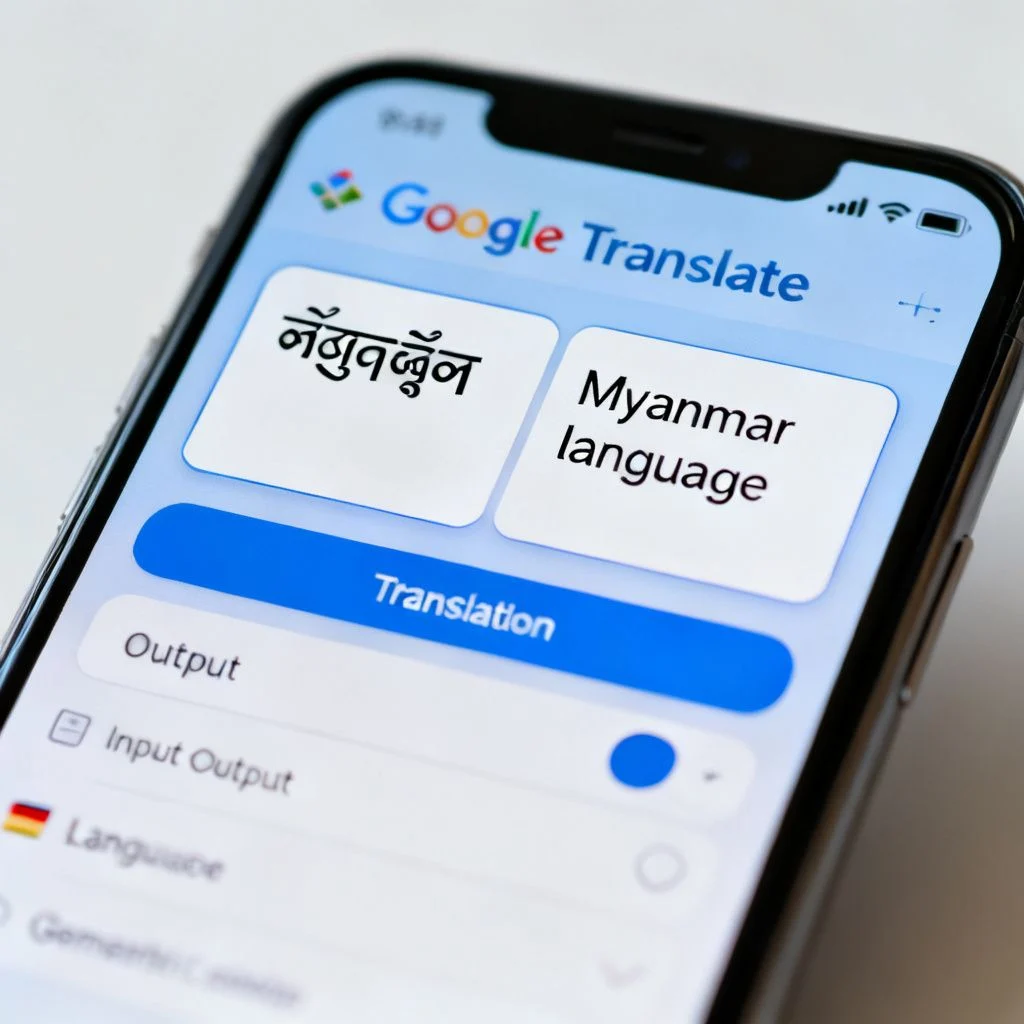
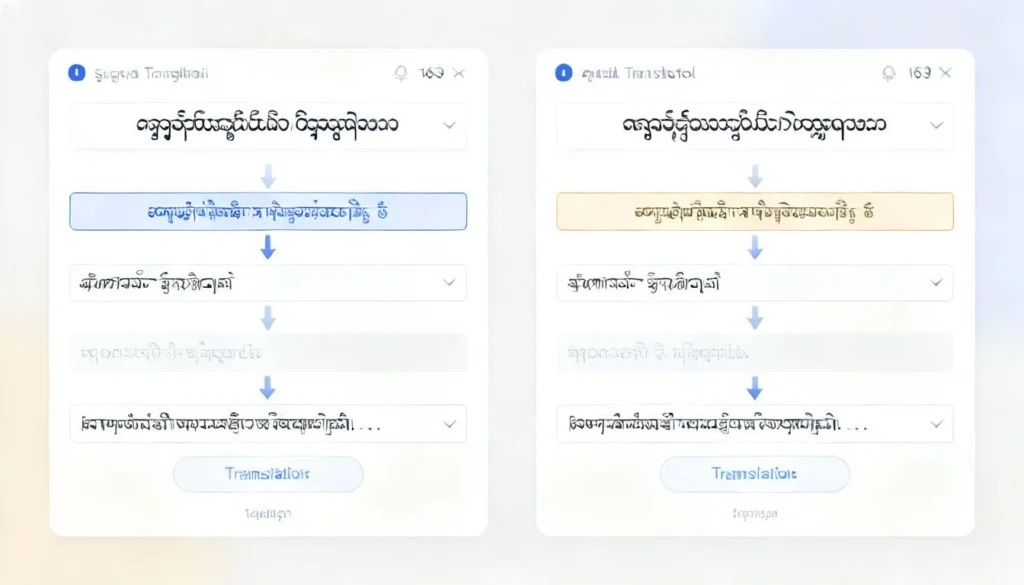
Google Translate supports Myanmar and has improved significantly since it added neural machine translation for the language. For basic sentences and getting the gist of a text, it is serviceable. Bing Translator also supports Burmese and sometimes produces slightly different results worth comparing.
The catch: these tools struggle with:
- Idioms and figurative language
- Technical or legal terminology
- Long paragraphs with complex sentence structures
- Names of local places, foods, and cultural concepts
Paid Professional Translation Services
For documents that matter, paid services are the safer route. Companies like Gengo, Translated.net, and Stepes offer English to Myanmar translation with human translators. Prices typically range from $0.08 to $0.15 per word depending on turnaround time and complexity.
Local agencies in Yangon and Mandalay also offer translation services, often at lower rates. If you need certified translation for legal or immigration purposes, you will likely need a registered translator in Myanmar or a service that provides notarized certification.
Hybrid Approaches
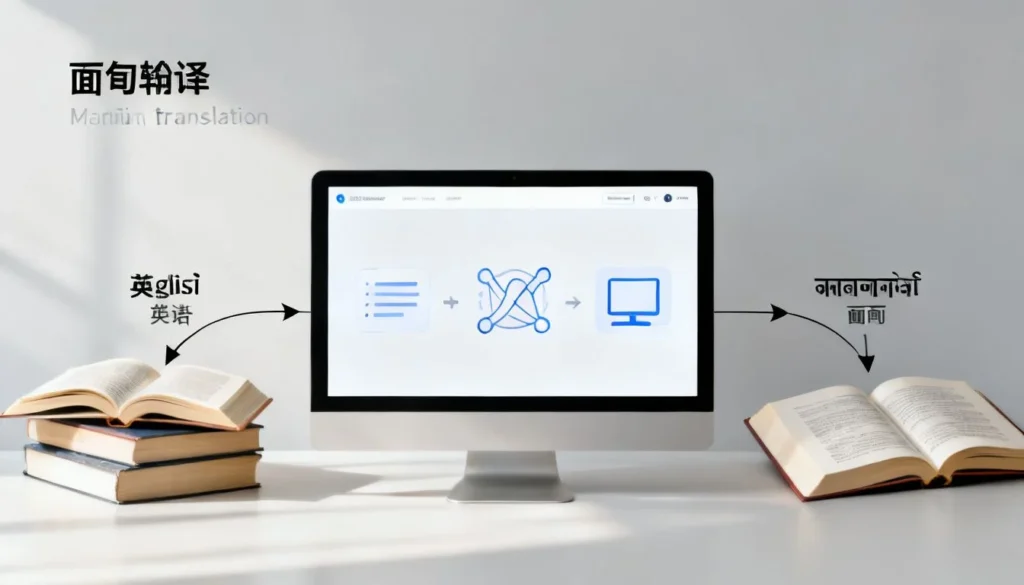
A practical workflow many people use: run the text through a machine tool first to get a rough draft, then have a human translator review and polish it. This saves time and money while catching the errors that machines make.
| Tool / Service | Best For | Cost | Accuracy Level | Notes |
|---|---|---|---|---|
| Google Translate | Casual phrases, quick understanding | Free | Moderate | Struggles with formal register and idioms |
| Bing Translator | Cross-checking Google results | Free | Moderate | Sometimes better on short sentences |
| Gengo | Business documents, websites | $0.08-$0.12/word | High | Human translation, quality controlled |
| Local Yangon agencies | Certified legal docs, local context | Varies, often lower | High | May require in-person pickup |
| ChatGPT / Claude | Drafting, explaining grammar | Free to $20/mo | Moderate to high | Better at context than rule-based tools |
Summary: Free tools handle casual needs. Paid human translation handles anything where accuracy has consequences. There is no single tool that does everything well.
Step-by-Step: Getting a Reliable Translation
Here is a practical process that works whether you are translating a text message or a business contract.
Step 1: Clarify Your Purpose
Ask yourself what the translation is for. A text to a friend? A menu? A legal agreement? A marketing website? The purpose determines the level of formality, the vocabulary choices, and whether you need a human involved at all.
Step 2: Run a First Pass with a Machine Tool
Even if you plan to use a human translator, running the English text through Google Translate or a similar tool gives you a baseline. It helps you spot potential problem areas, like sentences that come out garbled or terms that clearly did not translate.
Step 3: Identify Problem Spots
Look for:
- Idioms that got translated literally
- Sentences where the word order looks reversed
- Terms that stayed in English instead of translating
- Cultural references that make no sense in Myanmar
Step 4: Have a Human Review
If the translation matters, find a native Burmese speaker to review it. This could be a paid translator, a colleague, or a language exchange partner. Ask them specifically to check for register, naturalness, and any words that feel wrong.
Step 5: Verify with Back-Translation
Take the Burmese output and translate it back to English using a different tool. Compare the back-translation to your original. If the meaning shifted, something went wrong in the first pass.
Pro Tip: Back-translation is not a substitute for human review, but it is a fast way to catch major errors. If the back-translation says something completely different from your original sentence, that is a red flag.
Summary: A structured process with machine first pass and human review catches the most errors while keeping costs reasonable.
Common Mistakes People Make with English to Myanmar Translation
Knowing what goes wrong helps you avoid it. These are the most frequent errors I see.
Literal Translation of Idioms
English idioms rarely carry over. “Break a leg” translated literally into Burmese makes no sense. The equivalent Burmese expression for good luck is different. Similarly, “it’s raining cats and dogs” has no direct Burmese equivalent. A good translator finds the Burmese idiom that conveys the same meaning.
Ignoring the Politeness Register
Burmese uses particles like “ပါ” (pa), “ခင်ဗျား” (khin bya), and “ရှင်” (shin) to indicate respect and politeness. Using the wrong particle can make a sentence sound rude or overly familiar. A generic translation often drops these entirely, producing text that is technically correct but socially awkward.
Mixing Dialects
Myanmar has significant regional variation. The standard written form taught in schools is based on the Yangon-Mandalay dialect, but spoken Burmese varies widely. If you are translating for a specific community, like the Rakhine or Shan regions, using standard Burmese may not connect as well.
Over-Reliance on Single Words
English words often have multiple Burmese equivalents depending on context. “Bank” could mean a financial institution or a river bank. “Run” has dozens of possible translations. A dictionary lookup without context produces errors.
Forgetting the Script Direction and Formatting
Burmese script has no spaces between words in the same way English does. Spaces in Burmese indicate phrase or clause boundaries. If you are formatting translated text in a document, the spacing rules are different. This trips up people who try to manually edit machine output.
Summary: The biggest mistakes come from treating translation as a mechanical process rather than a contextual one. Meaning, register, and audience all matter.
When to Use a Human Translator vs. Machine Translation
This is the question I get asked most often. Here is a simple decision framework.
Use Machine Translation When:
- You need to understand the gist of a Burmese text
- You are sending a casual message to a friend
- You are translating a single word or short phrase
- The stakes are low and errors will not cause harm
- You are doing preliminary research
Use a Human Translator When:
- The document is legal, medical, or financial
- The translation will be published or distributed publicly
- You are translating marketing copy where tone matters
- The text contains cultural references, humor, or wordplay
- You need certified translation for official purposes
- The audience is a specific dialect group or formal context
A useful rule: if a translation error could cost you money, damage a relationship, or create legal liability, use a human. If you just need to understand something, a machine is fine.
Pro Tip: For business websites targeting Myanmar customers, invest in professional translation. A poorly translated site signals low quality and drives away customers. The cost of professional translation is small compared to the cost of lost trust.
Summary: Match the tool to the stakes. Machine translation is for understanding. Human translation is for communication that matters.
Key Takeaways
- Burmese script and grammar create unique translation challenges that machine tools handle imperfectly, especially for long or complex sentences.
- Free tools like Google Translate work for casual use but struggle with idioms, formal registers, and cultural context.
- A hybrid workflow using machine first pass plus human review offers the best balance of cost and accuracy for most needs.
- The politeness register system in Burmese matters and generic translations often get it wrong, producing text that sounds unnatural.
- For anything legal, medical, financial, or public-facing, use a professional human translator to avoid costly errors.
Frequently Asked Questions About English to Myanmar Translation
Q: Is Google Translate accurate for English to Myanmar translation?
A: Google Translate is moderately accurate for short, simple sentences and basic vocabulary. It handles the Burmese script well and has improved significantly since 2016. However, it struggles with formal register, idioms, technical terminology, and long sentences with multiple clauses. For casual understanding, it works. For anything professional, use a human translator.
Q: How much does professional English to Myanmar translation cost?
A: Professional translation typically costs between $0.08 and $0.15 per word for standard documents. Rush jobs cost more, often 25-50% extra. Certified translation for legal or immigration purposes costs more due to the additional verification steps. Local agencies in Myanmar often charge less than international services.
Q: Can I translate English to Myanmar using my phone?
A: Yes. Google Translate has a mobile app that supports camera translation, voice input, and offline translation for Myanmar. You can point your camera at English text and see a Burmese translation overlaid. The same accuracy limitations apply, so use it for casual needs rather than formal documents.
Q: What is the difference between Burmese and Myanmar language?
A: Burmese and Myanmar refer to the same language. “Burmese” is the older English term, while “Myanmar” is the official name used by the government and in most formal contexts. The language itself is called “မြန်မာစာ” (Myanma sa) in Burmese. Both English terms are correct and interchangeable.
Q: Why does my translated Burmese text look different from what I expected?
A: Burmese uses a circular script that looks completely different from English. The word order is also different, with verbs typically coming at the end of sentences. Additionally, Burmese uses different spacing rules. Spaces in Burmese often mark phrase boundaries rather than word boundaries, which can make the text look unusual to English speakers.
Q: Can I translate English to Myanmar offline?
A: Yes. Google Translate allows you to download the Myanmar language pack for offline use. You can also find offline dictionary apps like Ornagai and Burmese-English dictionaries on app stores. For document translation offline, dedicated translation software with downloaded language packs is the best option.
Q: How do I type in Burmese on my computer or phone?
A: On Windows, add the Myanmar language pack through Settings, then switch keyboard layouts. On Mac, add Burmese in System Preferences under Keyboard and Input Sources. On phones, add Burmese as an additional keyboard language. The most common keyboard layout is the Myanmar3 layout, though others exist.
Q: What are the best resources for learning to translate English to Myanmar myself?
A: Start with the Ornagai online dictionary for word lookups. The “Burmese by Ear” course by John Okell is available free online and teaches spoken Burmese. For grammar, “Burmese: A Comprehensive Grammar” by Mathias Jenny and San San Hnin Tun is the standard reference. Practice with native speakers through language exchange apps like HelloTalk or Tandem.
Q: Does Myanmar use simplified or traditional characters?
A: Myanmar uses a single script with no simplified and traditional distinction like Chinese. The script has remained relatively stable, though there are some differences between standard written Burmese and the forms used in older texts or inscriptions. Modern digital fonts follow the standard Unicode encoding.
Q: Are there different dialects of Burmese I should know about for translation?
A: Yes. Standard Burmese is based on the Yangon-Mandalay dialect, but there are significant regional variations. Rakhine State has a distinct dialect, as do parts of Shan State and the Irrawaddy Delta. For most written translation, standard Burmese is appropriate. For spoken or community-specific content, dialect matters and you should consult a native speaker from that region.
References & Further Reading
- Google Translate Help: Supported Languages – Official list of supported languages and features for Google Translate, including Myanmar.
- Ethnologue: Burmese Language Profile – Linguistic data on Burmese, including speaker population, dialects, and language classification.
- Omniglot: Burmese Script – Detailed guide to the Burmese writing system, including alphabet charts and pronunciation guides.
- Burmese by Ear (John Okell) – Free audio course from SOAS University of London for learning spoken Burmese.
- Ornagai Burmese-English Dictionary – Free online dictionary with extensive Burmese-English and English-Burmese entries.
—
About This Article: This guide draws on practical experience with Burmese translation workflows, linguistic research on the Burmese language, and documented capabilities and limitations of widely used translation tools. The recommendations reflect current best practices for anyone needing English to Myanmar translation for personal, business, or official purposes.


Pingback: Myanmar Typing Test: How to Measure Your Burmese Speed…
Pingback: Morse Code Translator: How to Decode and Encode Messages…